Home Records & Documents Family Records, 1962
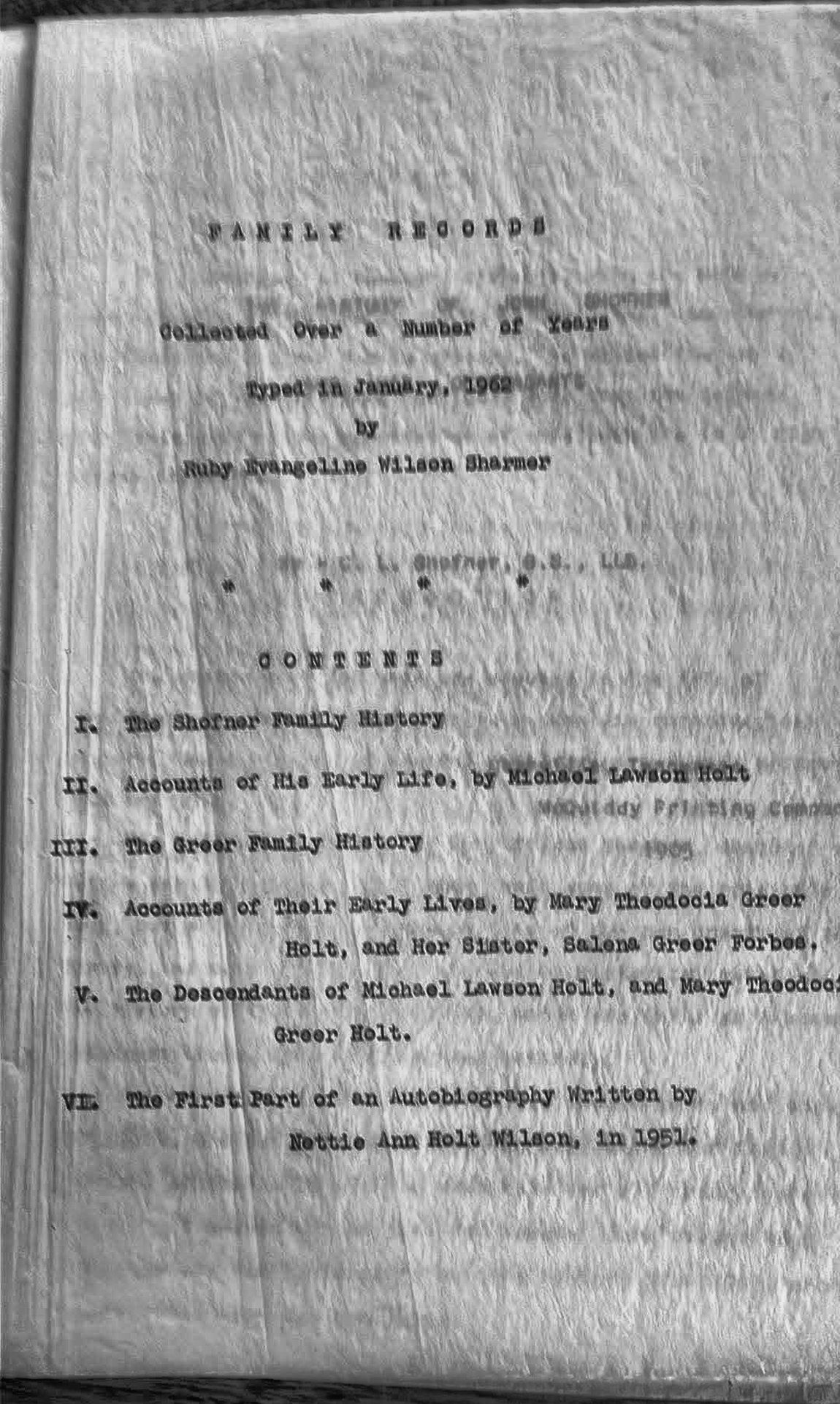
In January 1962 Ruby Evangeline Wilson Sharmer typed up a book of Family Records, “collected over a number of years,” about her mother’s side of the family: the Shofners of Tennessee, the Holts and Greers of Texas, and her mother Nettie’s own childhood. Laurel Sharmer photographed the pages in November 2026, along with the Holt family Bible.
Below is the book chapter by chapter, with the people in it, a passage from each, and every page. Tap any page to read it, or open a chapter to read the full transcription beside the scans.
Stories from the book
The bonnet on the barn roof
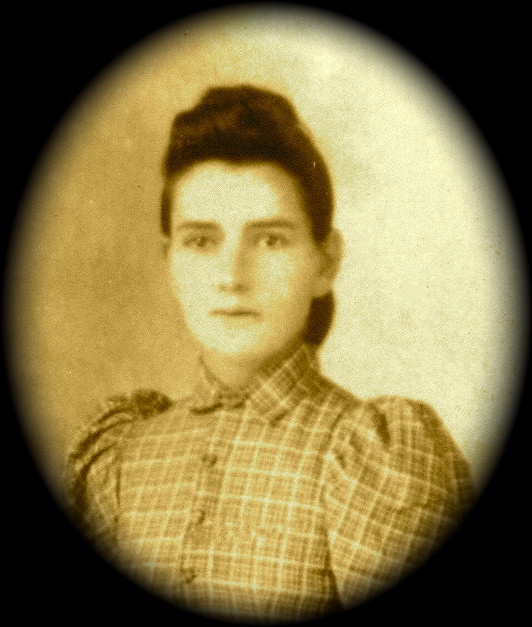
Michael Holt was a teenager living in the house he’d just built, raising his little brother and sister, when the pretty girl from a quarter mile down the road came by to look at it. They took to riding together, she side-saddle. One afternoon he wanted her to stay a little longer, so he threw her bonnet up on the barn roof.
Six months later they were married, though some of her brothers were against it. Years afterward he still liked to tease:
“I guess I would have been a heap better off to have married the other girl, but maw was the most beautiful girl I had ever seen, so I married her.”
They were married for 67 years.
Burned out for siding with the Union
When the Civil War came to Tennessee, the family split. Jordan Holt, a six-foot-two miller, stood with the North. His neighbors didn’t forget it.
“The southerners who were Rebels burned his home and mills, and he lost everything he had. That is why we came West to Texas.”
He started over on the Texas frontier with a log house, a few cows and a mill, and his little boy Michael watched the first train come into Dallas.
“Run, Mike, the Rebels are coming!”
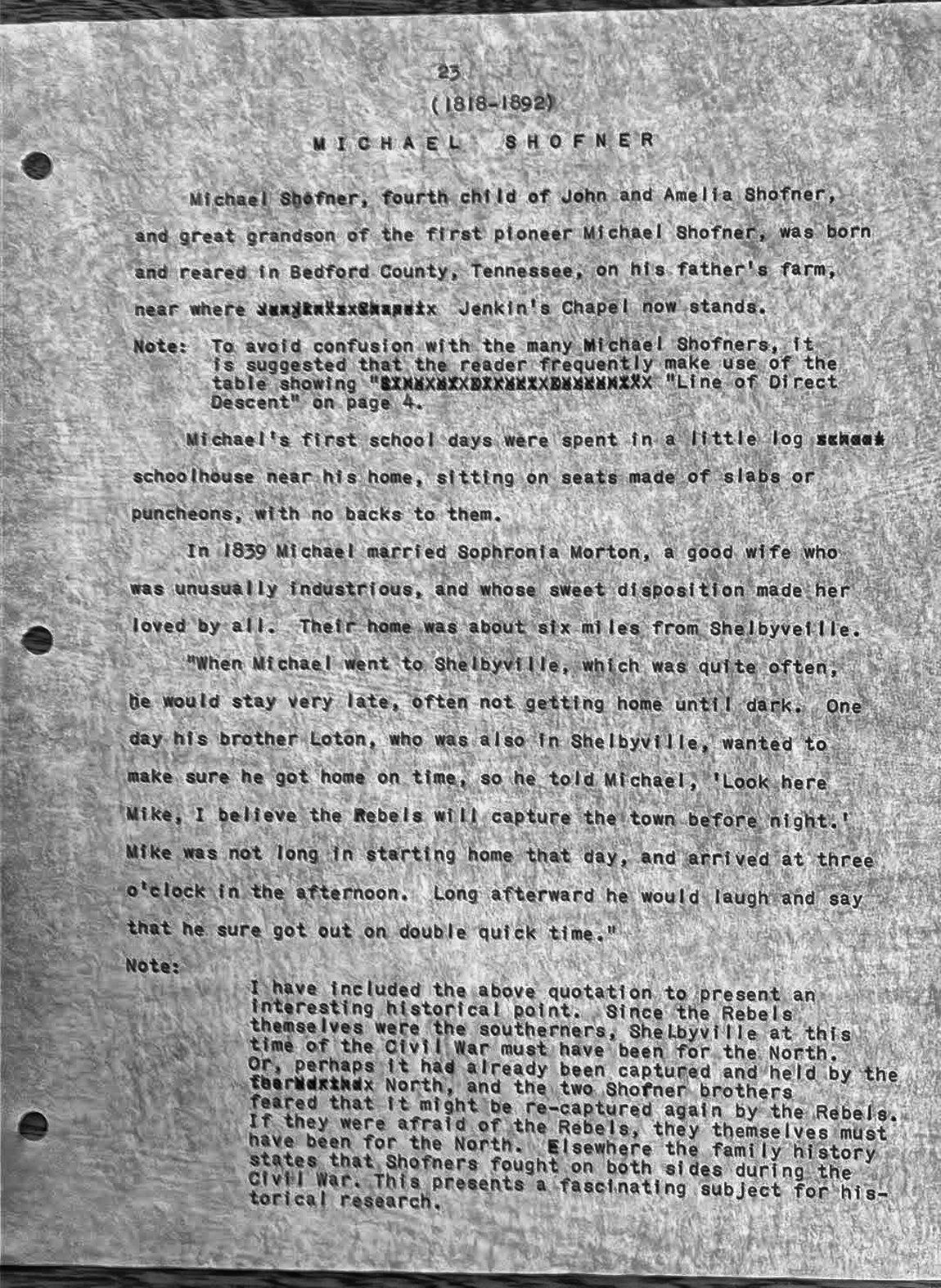
Ann’s father, Michael Shofner, liked to linger in Shelbyville until long after dark. One day during the war his brother Loton wanted him home on time, so he warned him the Rebels would probably capture the town before night. Mike was home by three o’clock. Years later he’d laugh and say he “sure got out on double quick time.”
The wedding-morning whipping
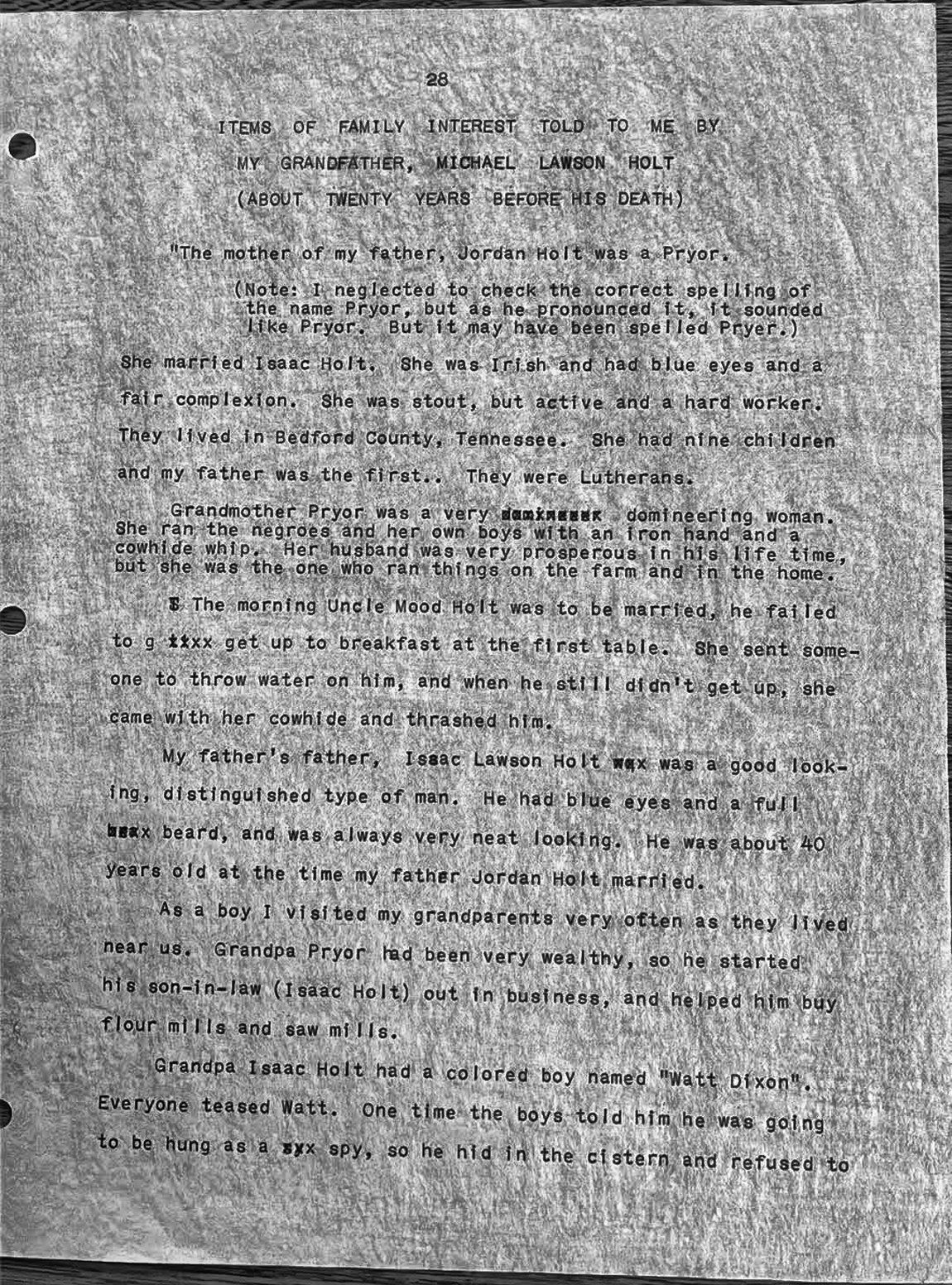
Great-great-great-great-grandmother Fannie Pryor Holt ran her farm, her household and her boys “with an iron hand and a cowhide whip.” On the morning her son Mood was to be married, he slept through the first breakfast table. She sent someone to throw water on him. When that didn’t work, she came with the cowhide herself.
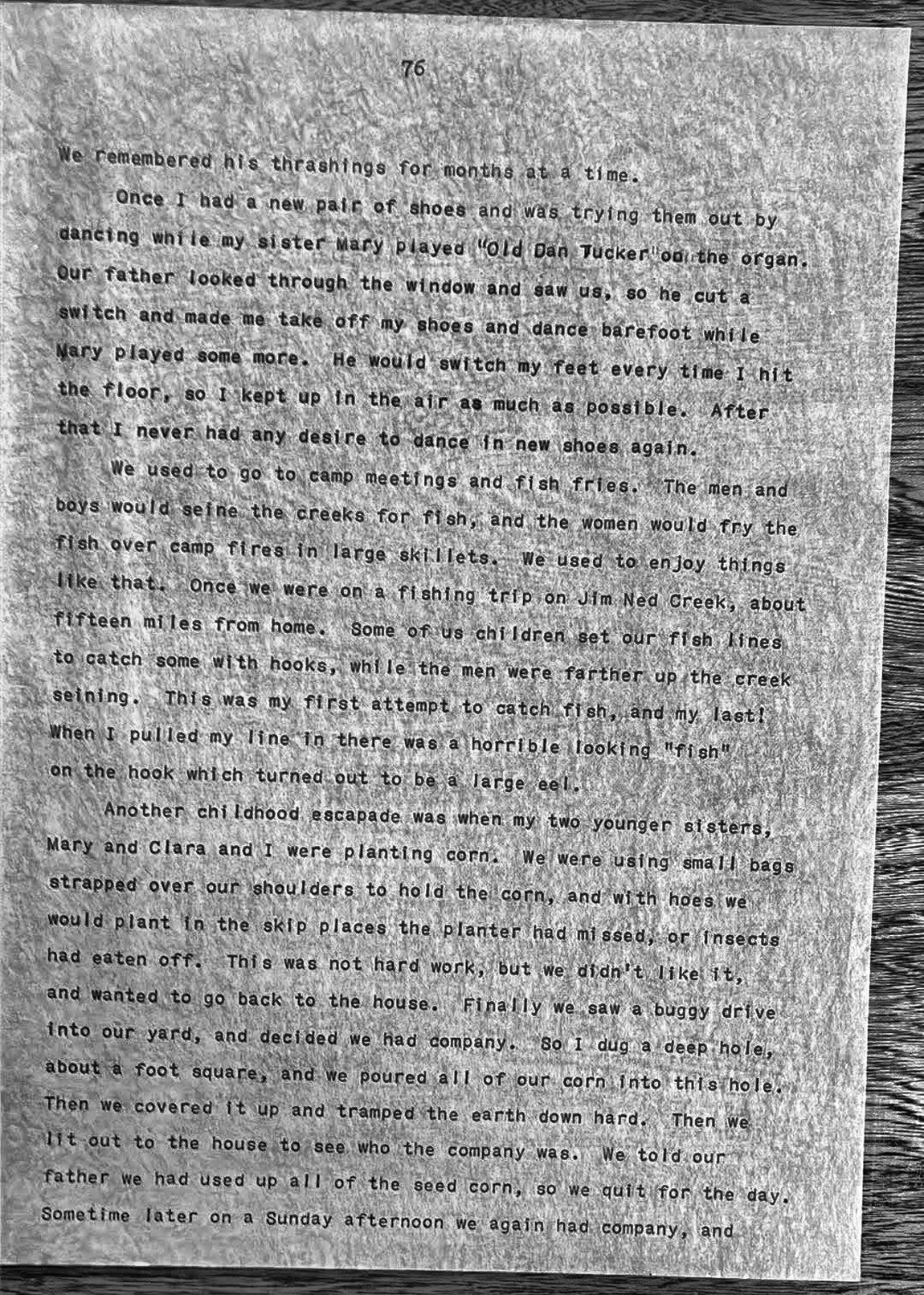
Dancing in new shoes
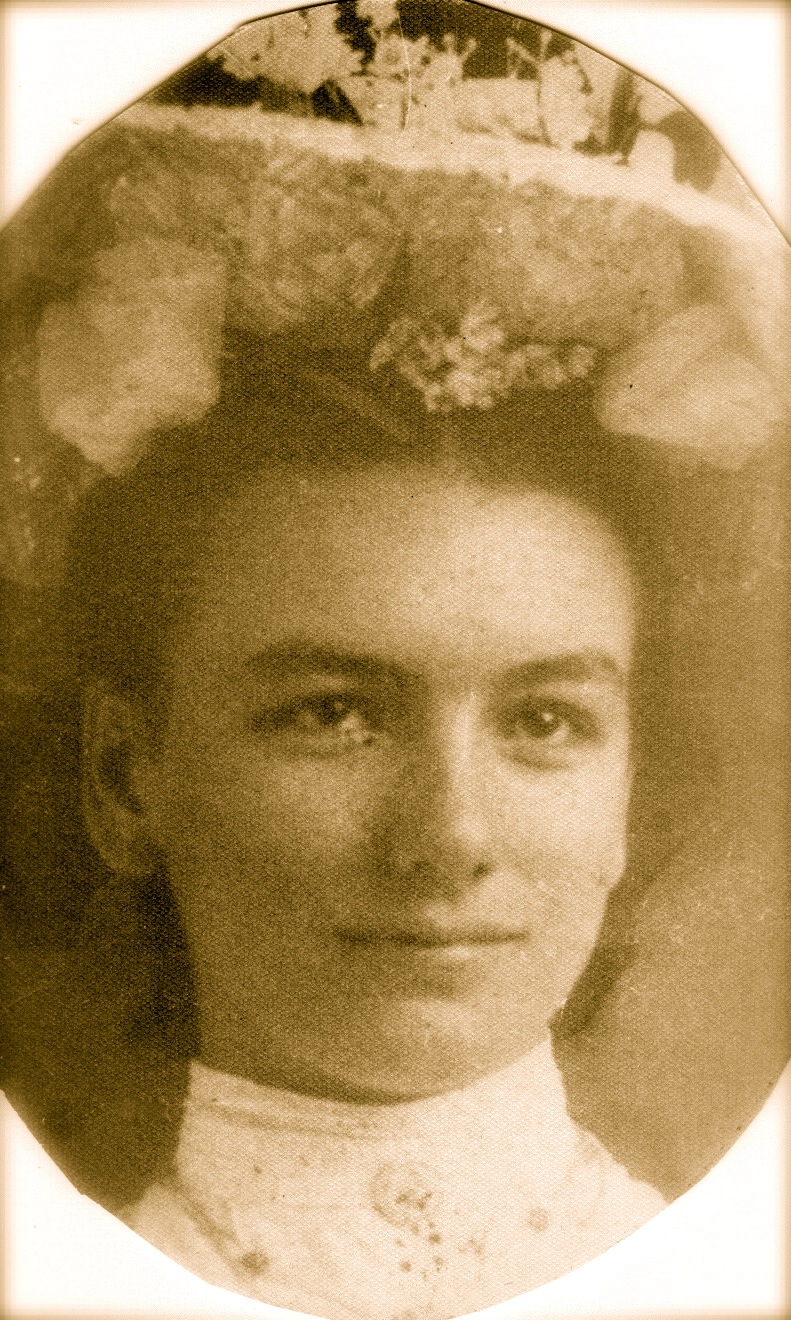
Little Nettie had a brand-new pair of shoes and couldn’t resist trying them out, dancing while her sister Mary played “Old Dan Tucker” on the organ. Her father saw them through the window. He cut a switch, made her take the shoes off, and had Mary play on while he switched Nettie’s bare feet every time they touched the floor.
“I kept up in the air as much as possible. After that I never had any desire to dance in new shoes again.”
The great seed-corn caper
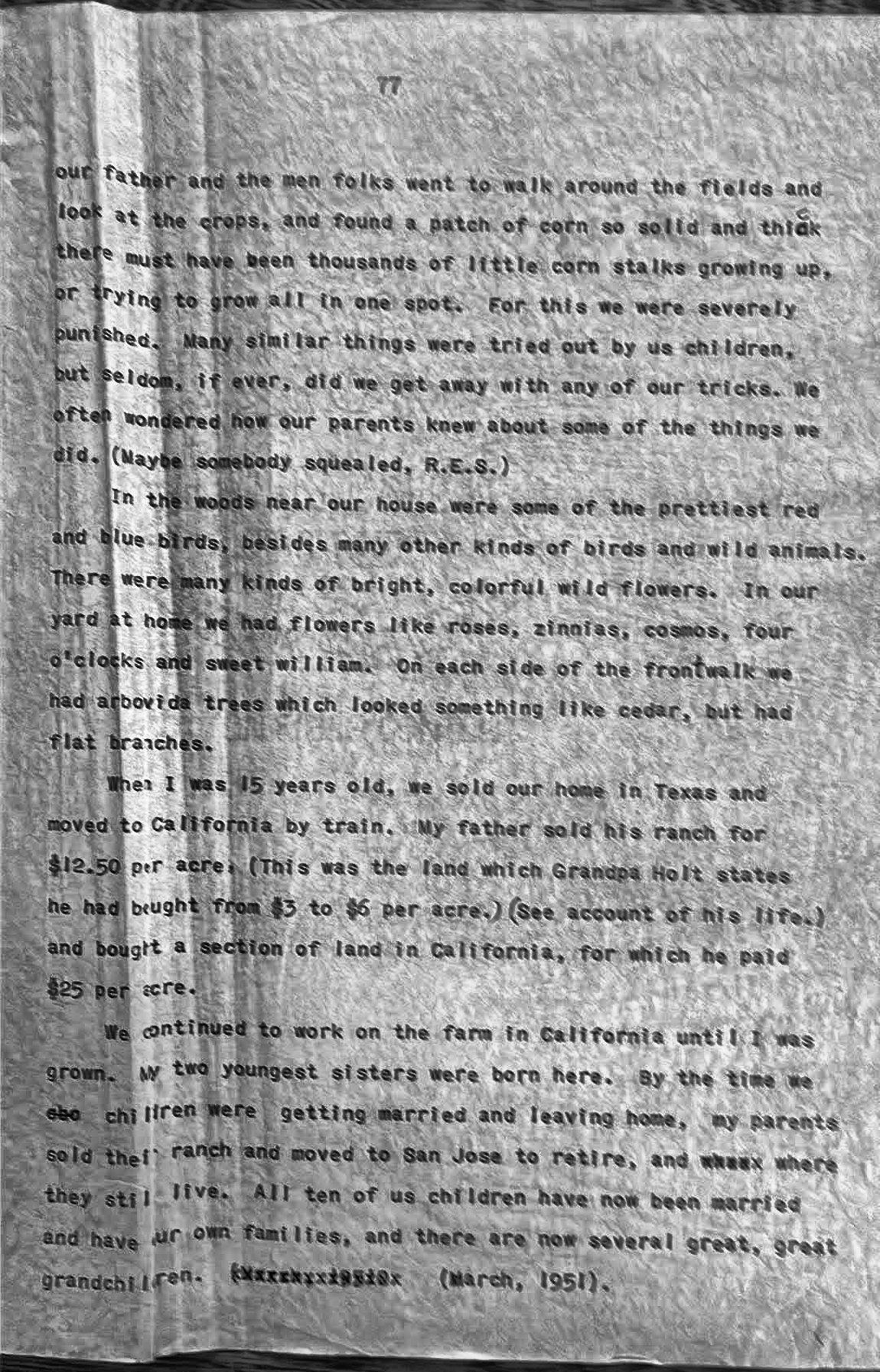
Sent out to plant corn in the gaps, Nettie and her sisters Mary and Clara spotted a buggy pulling into the yard and decided company was more fun. Nettie dug a hole a foot square, they poured in every kernel, stamped the dirt down, and told their father they’d used up all the seed.
A few Sundays later the men walked out to look at the crops and found one patch of ground so thick with corn that thousands of little stalks were fighting to grow in a single spot. The girls were “severely punished.” Ruby, typing it up years later, couldn’t resist adding her own note about who told: “Maybe somebody squealed.”
Nearly trampled at eleven
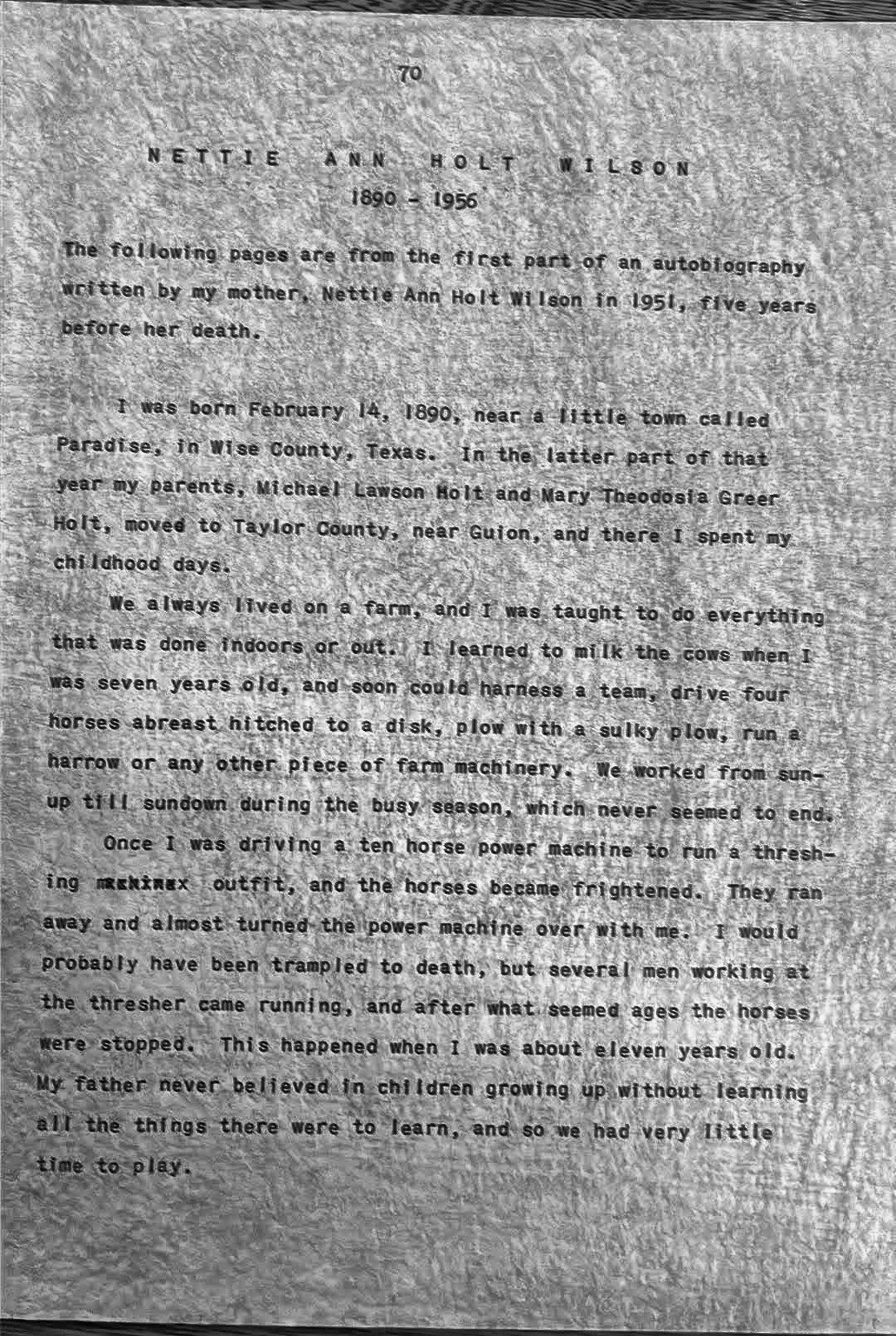
Nettie learned to milk at seven and was soon driving four horses abreast. At eleven she was driving the team that powered a threshing machine when the horses took fright and bolted, nearly turning the machine over on top of her. The men at the thresher came running, and after “what seemed ages” they got the horses stopped.
The gander at the well
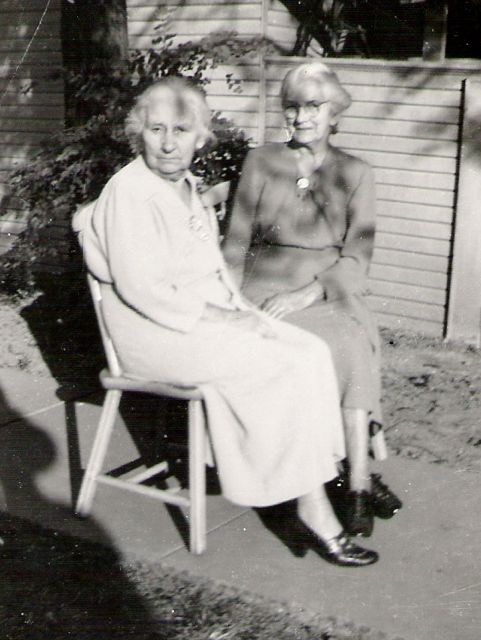
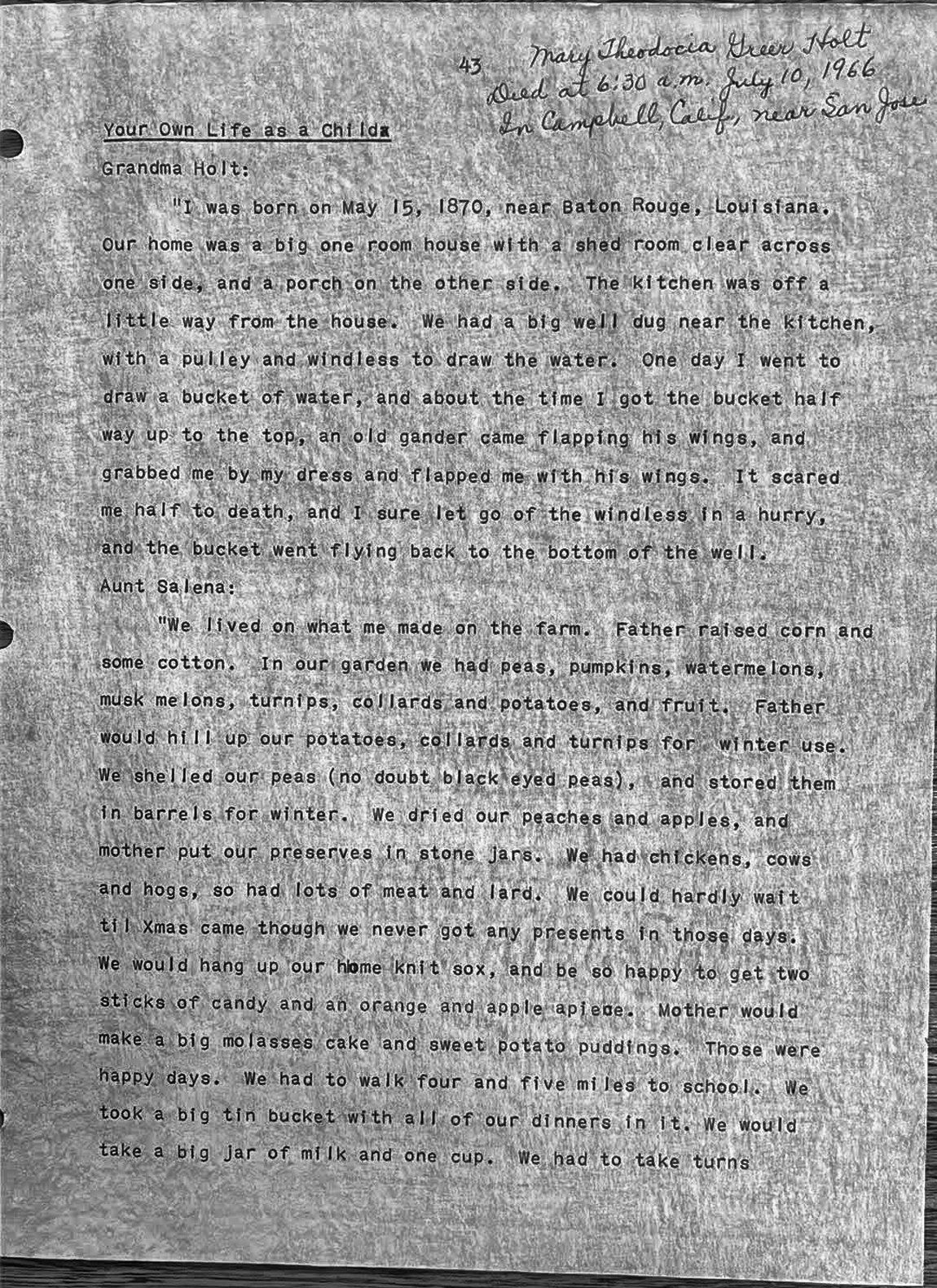
As a little girl near Baton Rouge, Grandma Holt was halfway through hauling up a bucket of water when an old gander came flapping at her, grabbed her by the dress and beat her with his wings. “It scared me half to death.” She let go of the windlass, and the bucket went flying back to the bottom of the well.
Two sticks of candy and an orange
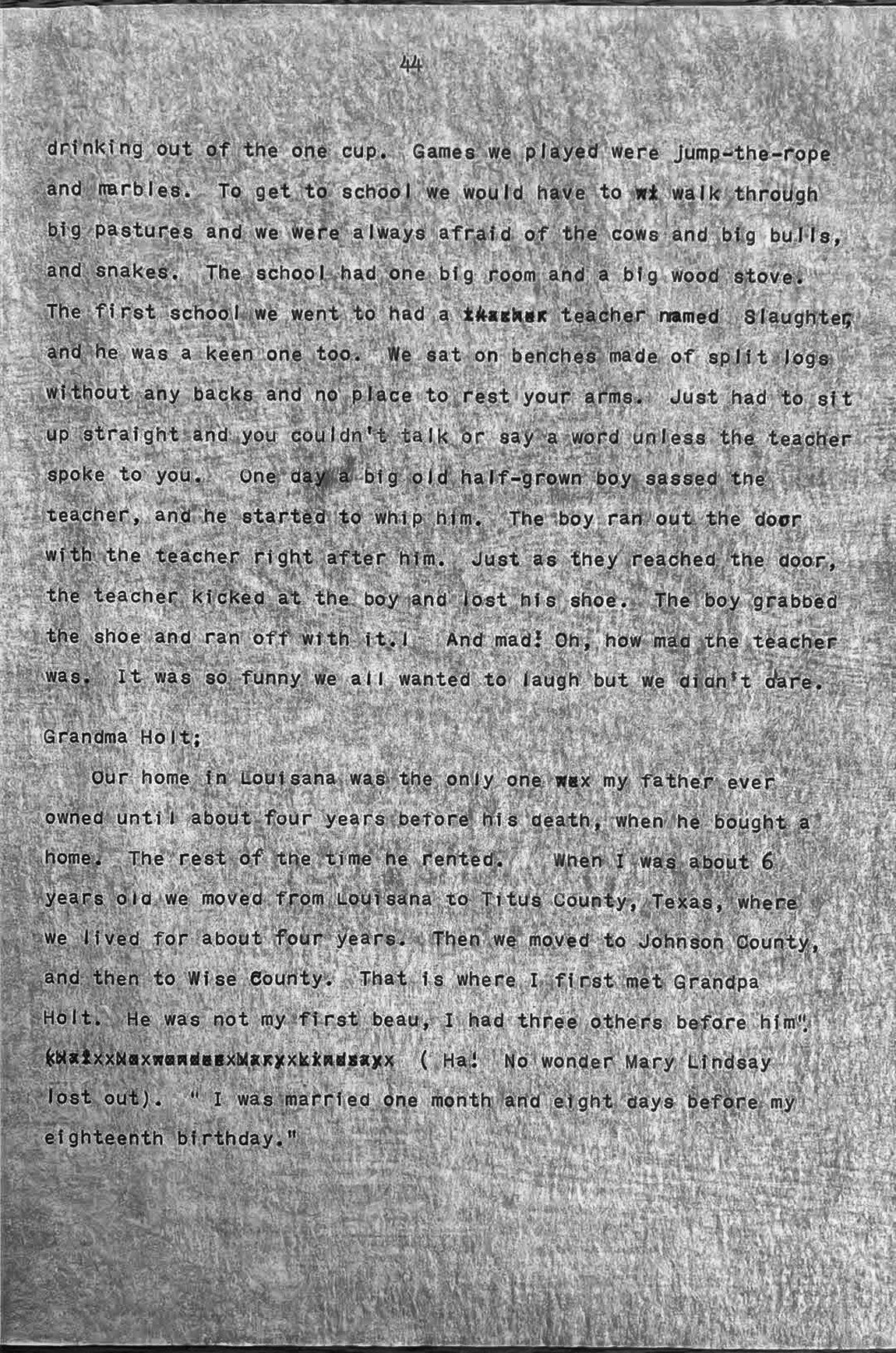
Aunt Salena remembered Christmas in the Louisiana woods. There were no presents, so the children hung up their home-knit socks and were thrilled to find two sticks of candy, an orange and an apple, with their mother’s molasses cake and sweet-potato pudding. “Those were happy days.” They walked four or five miles to school with one big tin bucket for everyone’s dinner, one jar of milk, and one cup they took turns drinking from.
Longhorns turned the mill wheels
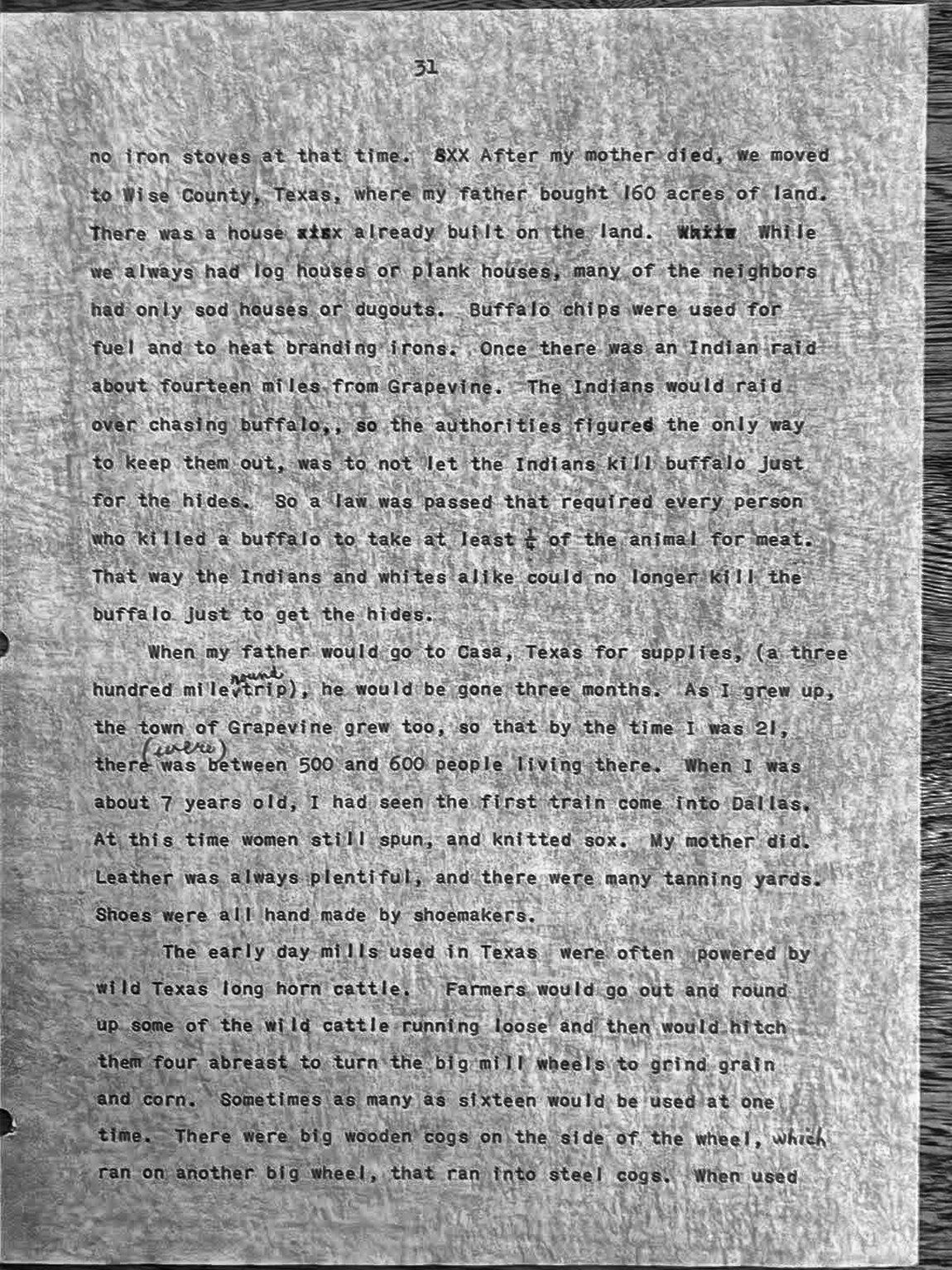
In early Texas, Grandpa Holt said, mills were powered by wild longhorns, rounded up off the open prairie and hitched four abreast, sometimes sixteen at a time, to turn the great wheels. The wild cows saved lives too. When a mother died giving birth miles from any neighbor, a cup of milk squeezed from a scrawny wild cow could keep the baby alive.
A poisoned well and a stranded train
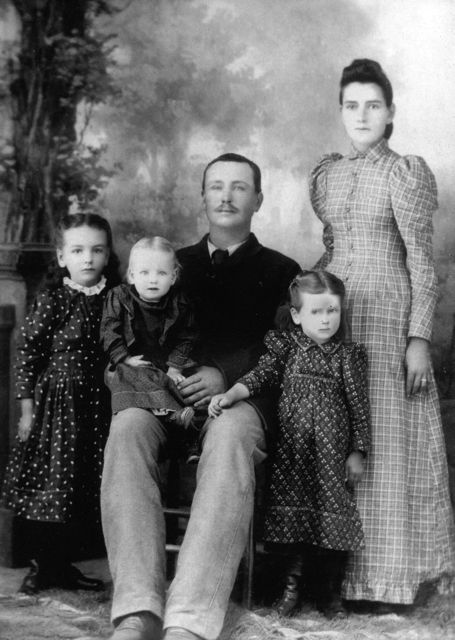
As a later family account tells it, Grandpa Holt came home one day around 1902 with blood all over his clothes after a fight with another rancher in a saloon. A couple of days later the family well was poisoned with strychnine. He moved everyone out without explanation, sold the ranch for $17,000, and loaded the family and the cattle on a train for California.
Somewhere along the way a storm had washed out the tracks, and the train sat for a week. Grandma Holt got out her big iron pot and cooked over a campfire for her family and for the railroad crew.
A hard page in the family story
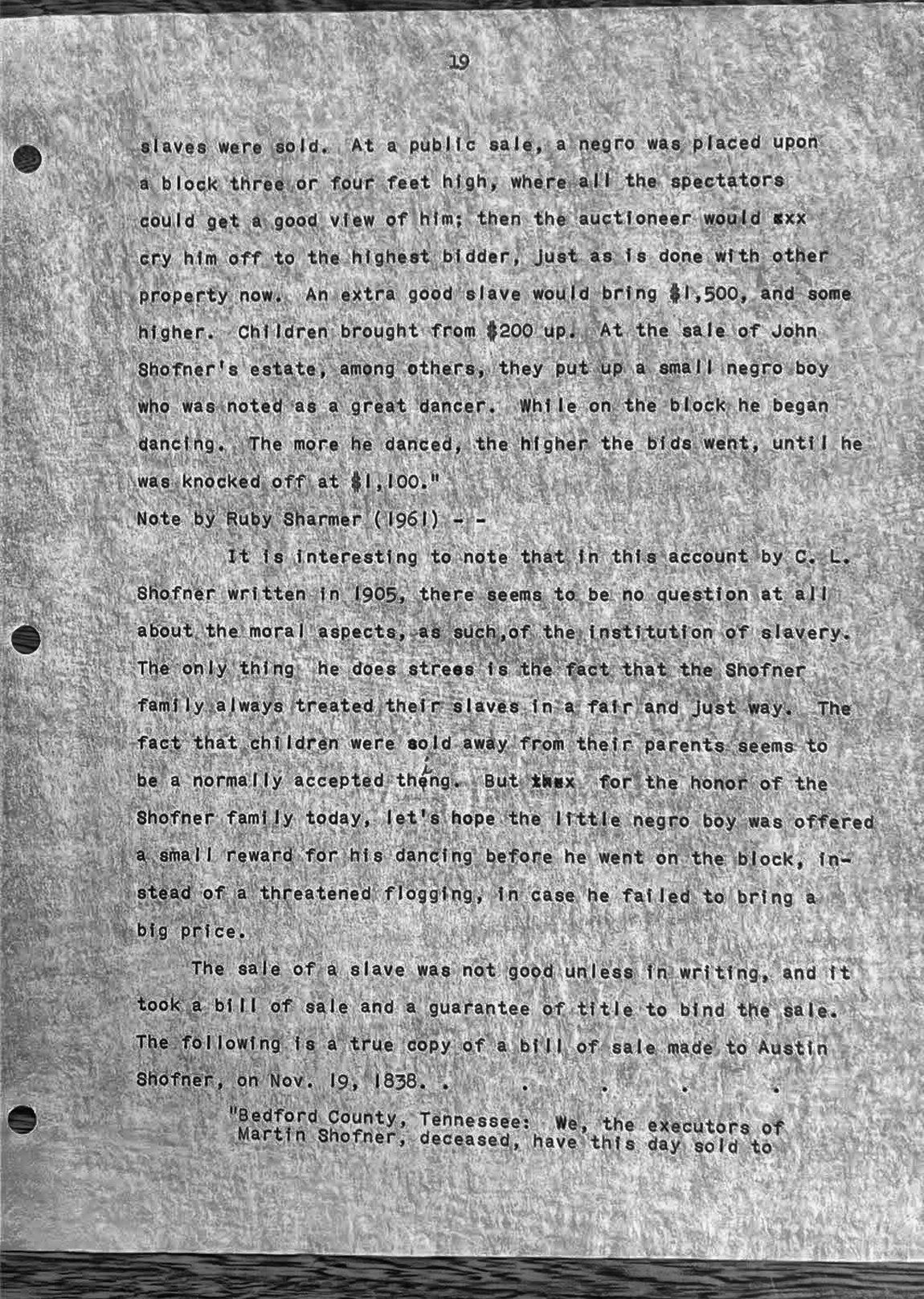
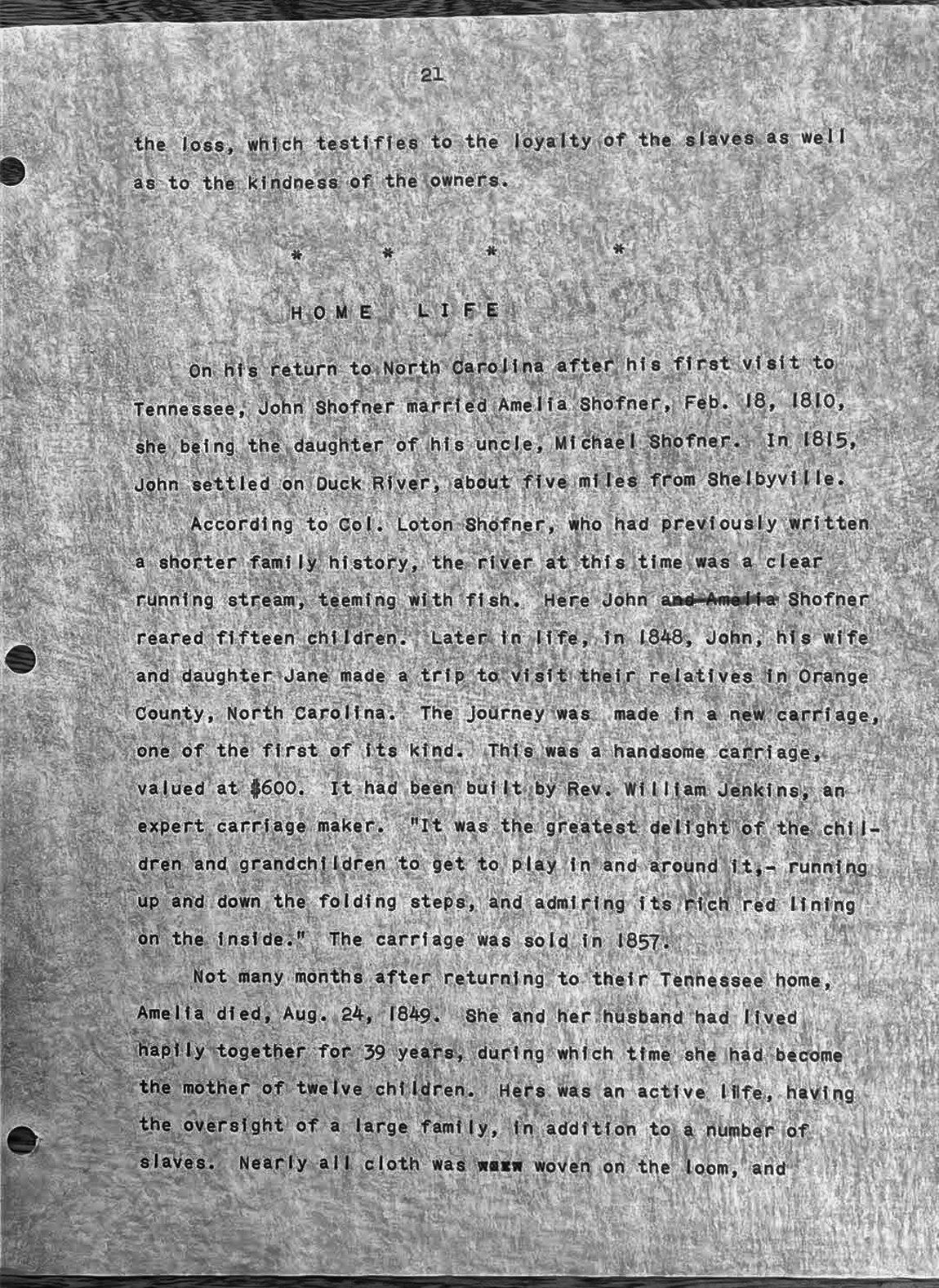
The 1905 Shofner history describes the family’s slaves without a word of doubt. It tells how, at John Shofner’s estate sale, a small boy known as a great dancer began to dance on the auction block, and the bids rose until he was sold for $1,100. When Ruby copied it in 1961 she added a note of her own, pointing out that the old book never questioned slavery, or children being sold away from their parents, and hoping the boy had been offered a reward rather than threatened with a flogging.
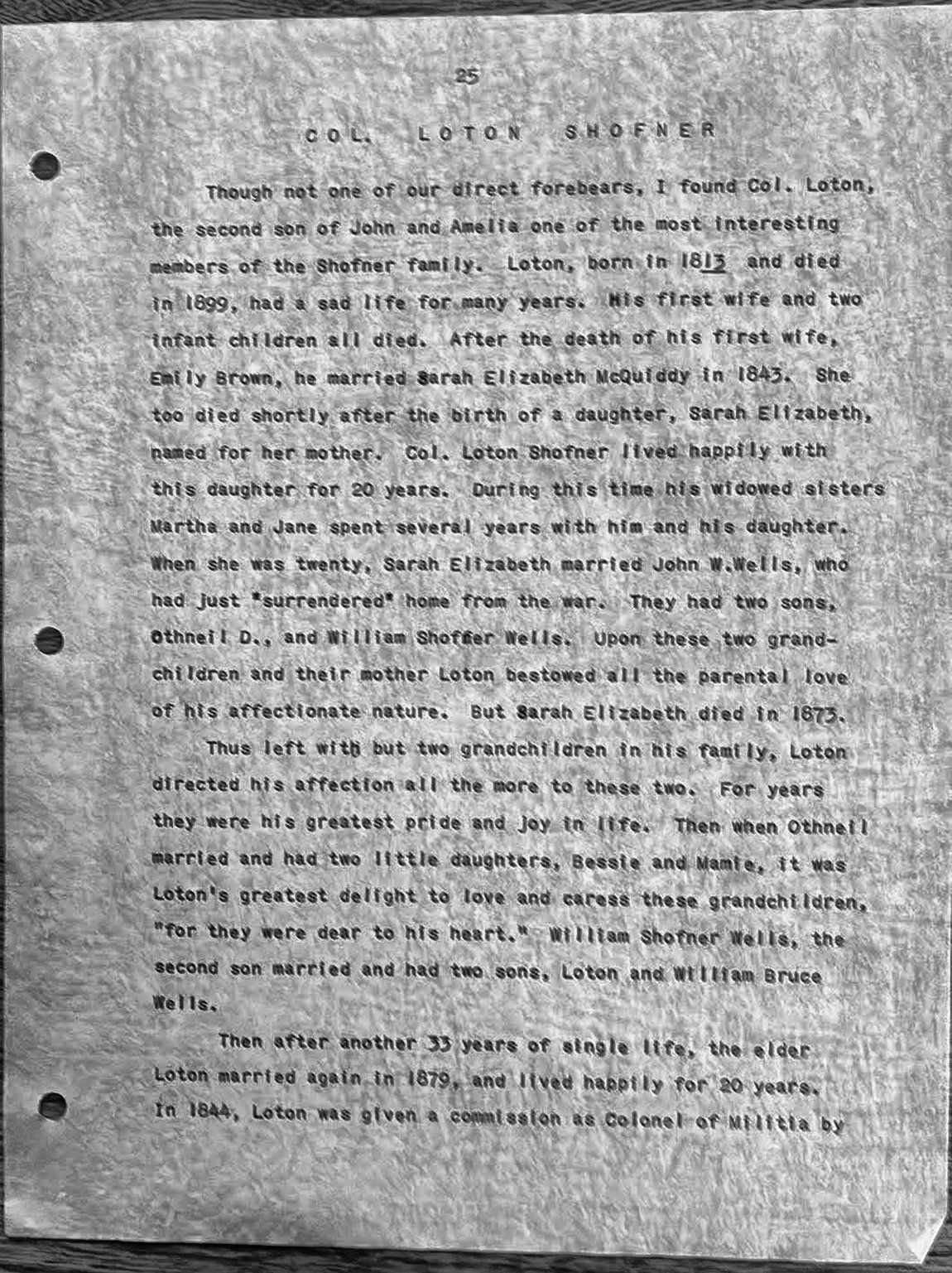
The colonel’s last wish
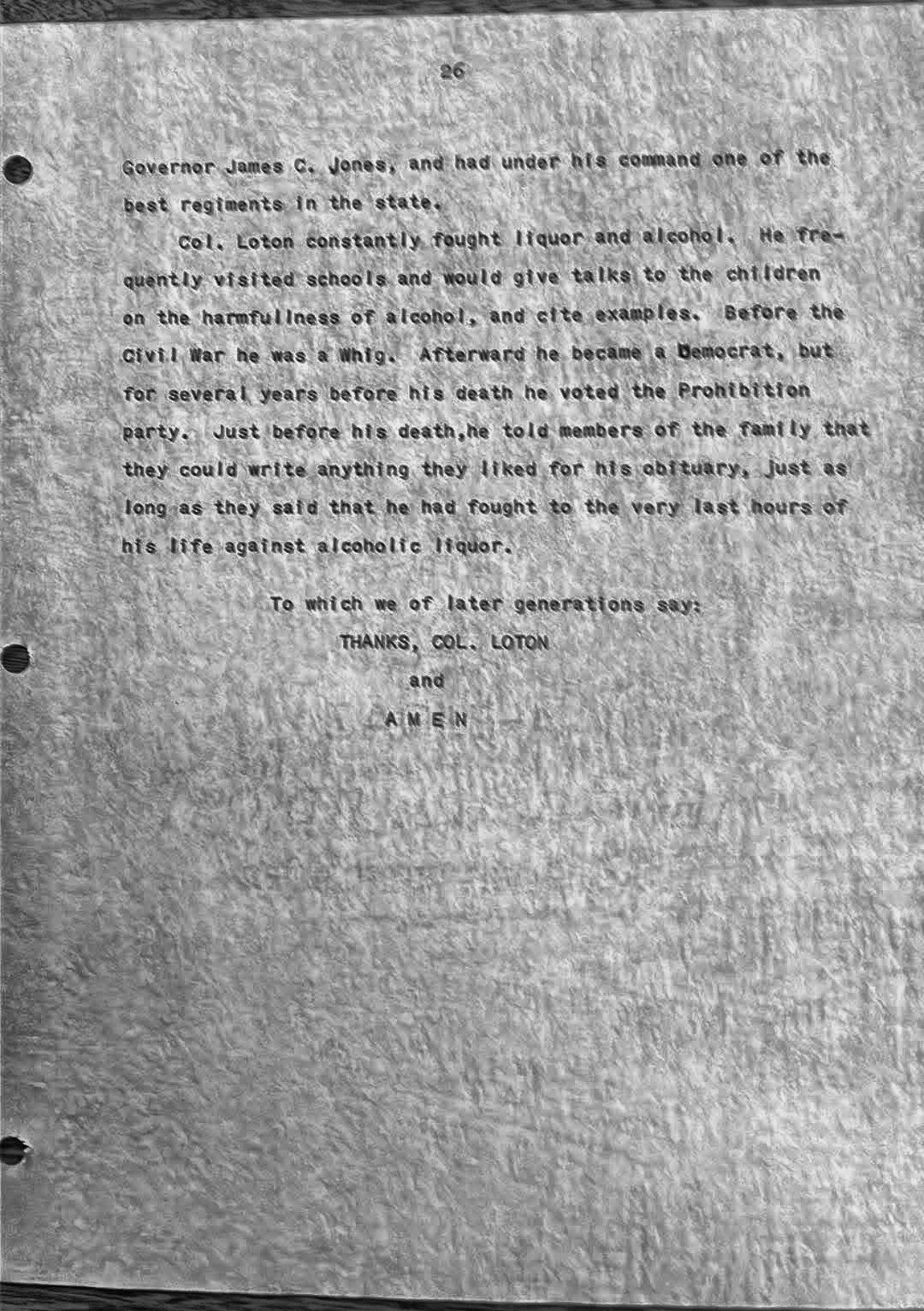
Col. Loton Shofner buried two wives and two babies, and made a habit of visiting schools to warn children against drink. Just before he died he told the family they could write anything they liked in his obituary, as long as they said he had fought liquor to the very last hours of his life. Ruby’s comment: “Thanks, Col. Loton, and amen.”
The big picture
Put together, it’s the story of a family that kept moving west: from a village near Frankfurt to the Carolina backwoods, over the mountains to Tennessee, burned out to the Texas frontier, and finally by train to a farm town in California’s San Joaquin Valley. Michael and Mary Holt, the couple with the bonnet on the barn, were Joe Sharmer IV’s great-great-grandparents. Nettie, who danced in new shoes and buried the seed corn, was his great-grandmother. Ruby, who typed it all up so it wouldn’t be lost, was his grandmother.
Read the book
Each chapter below has a short summary and every page; tap a page to read it, or open the chapter for the full transcription.
The people in these records

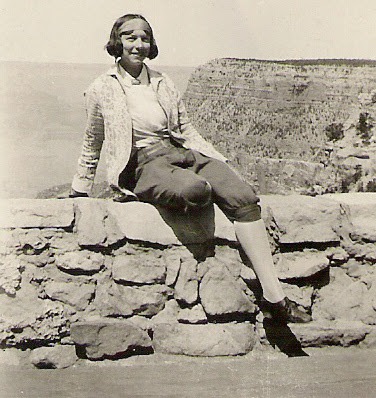
Chapter I · pages 2–12
The Shofner family
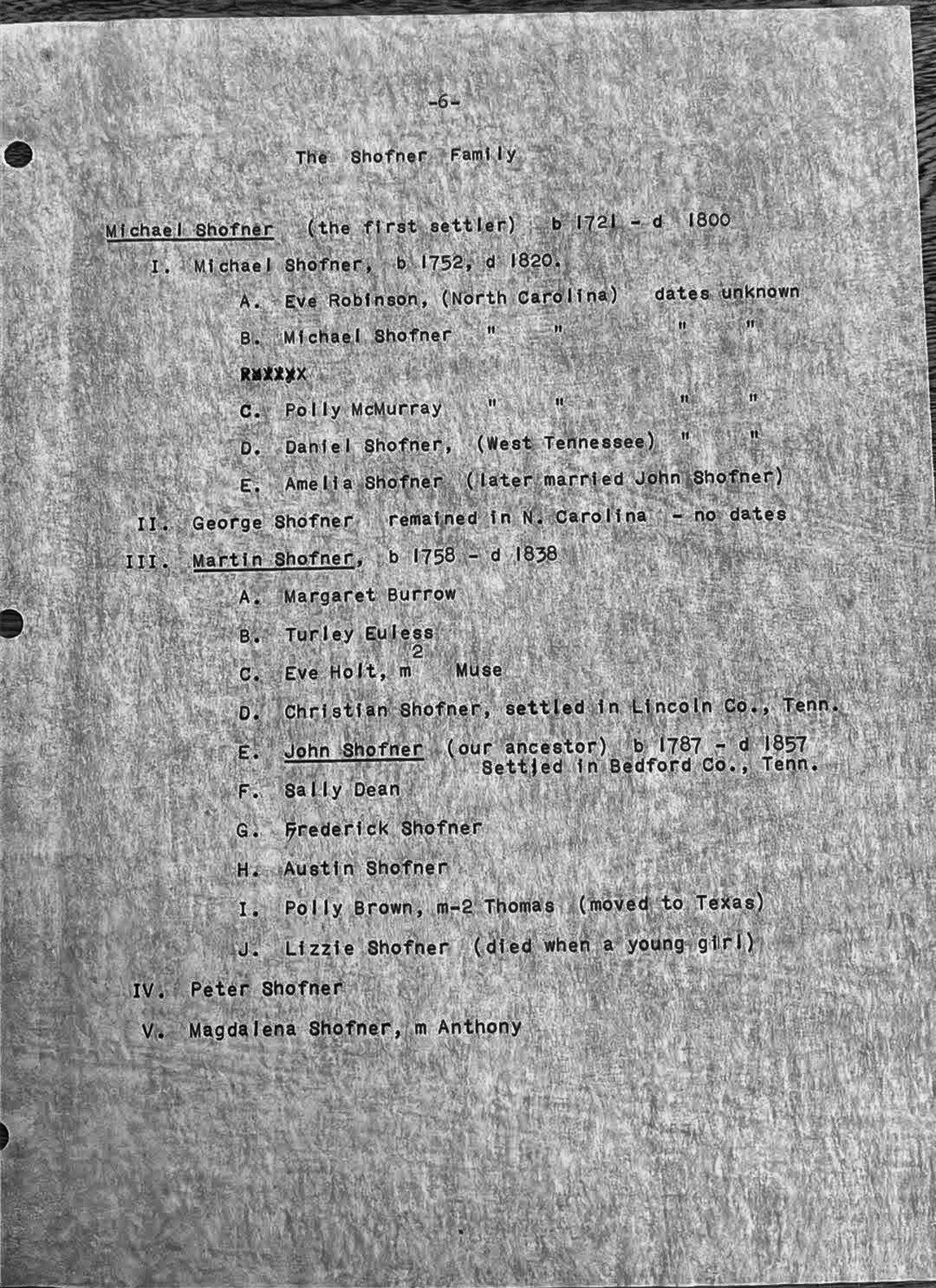
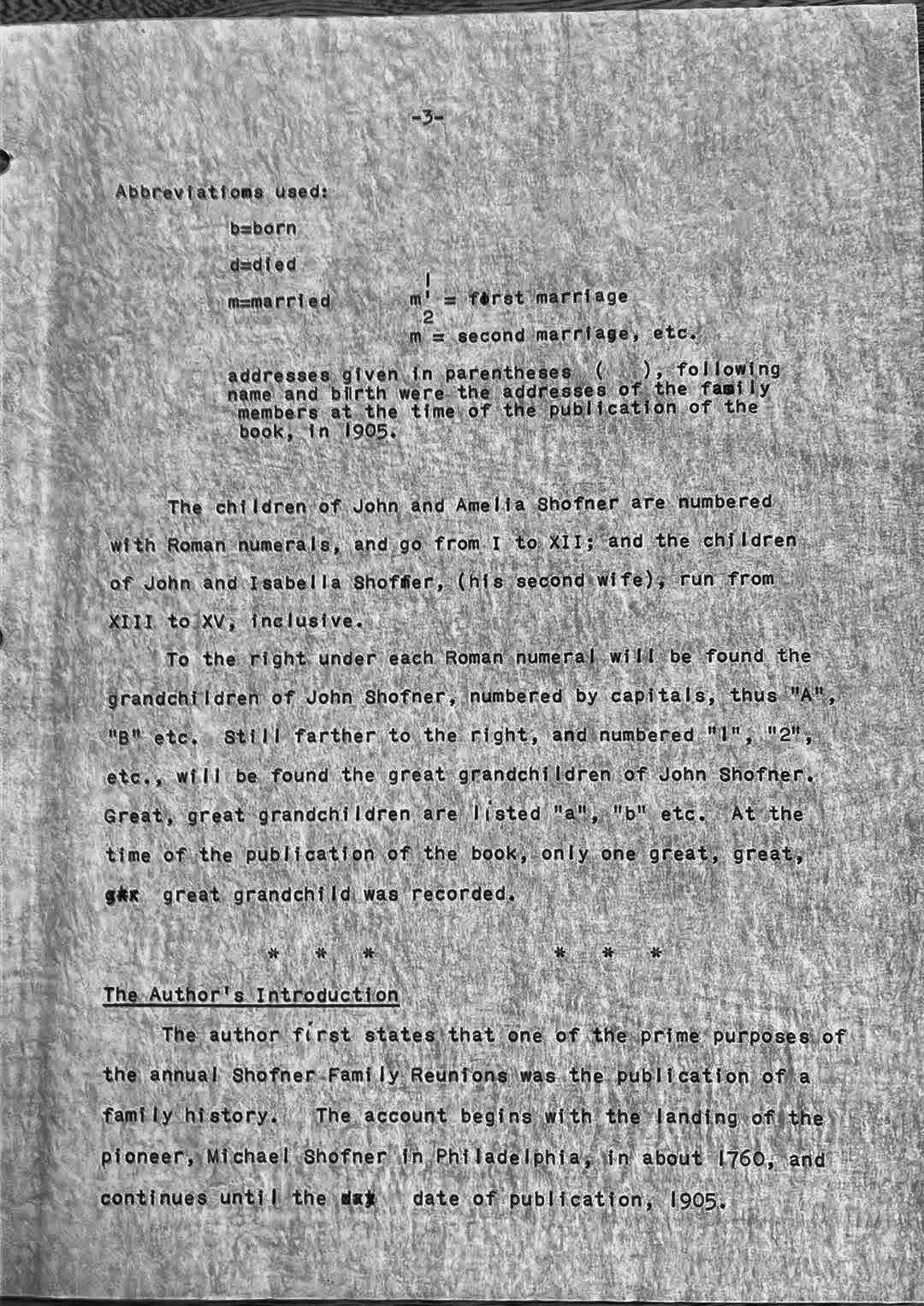
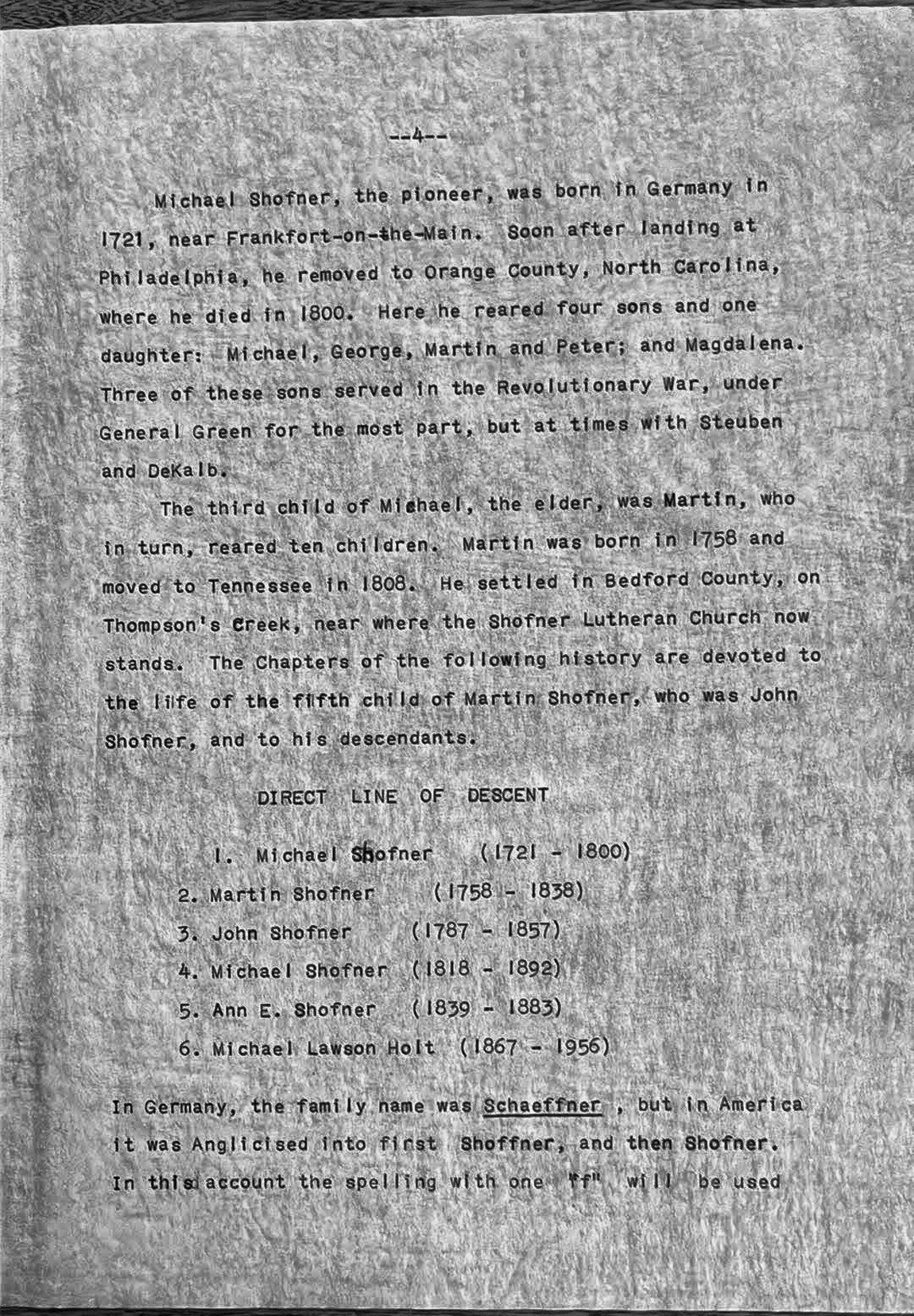
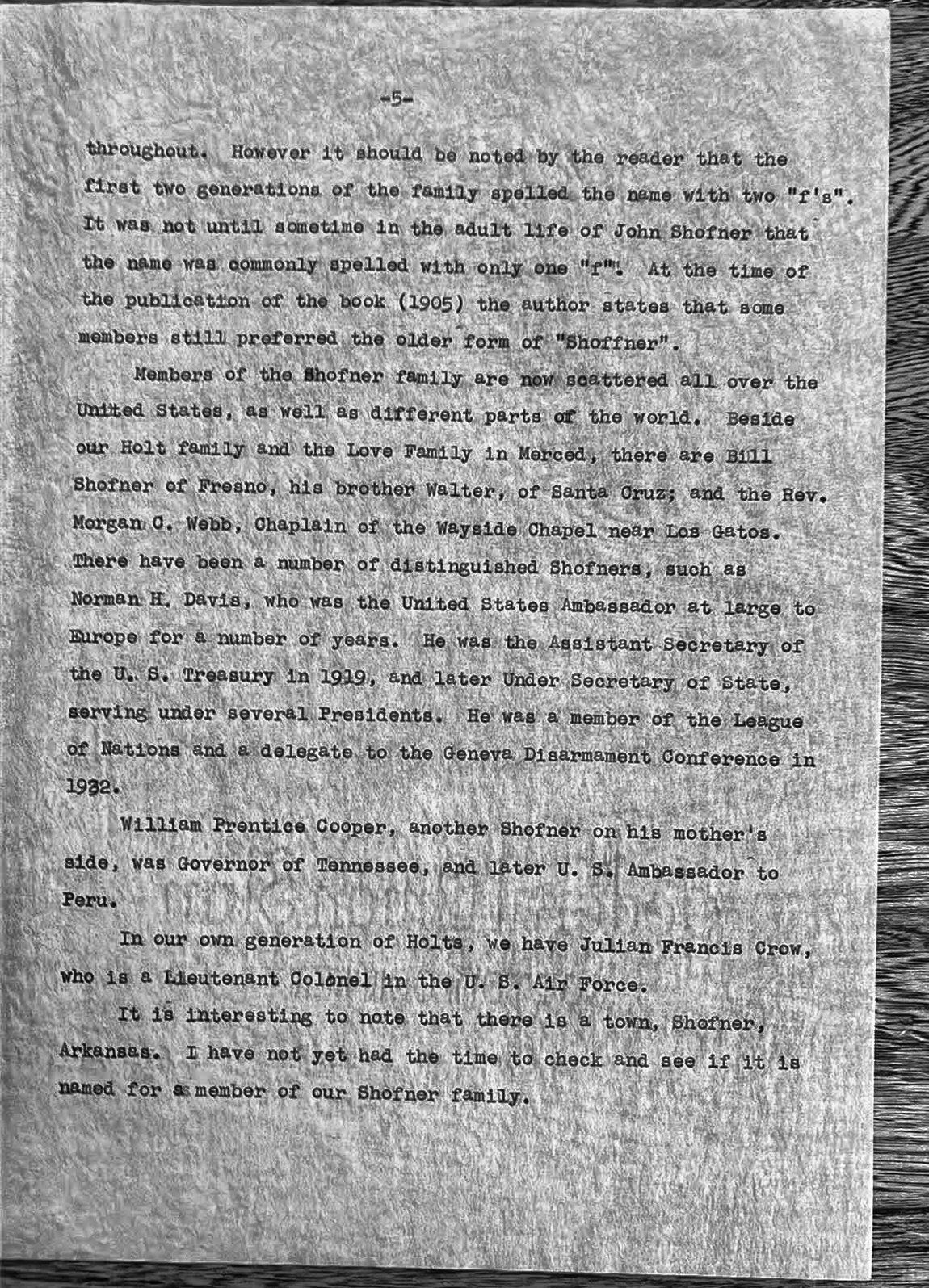
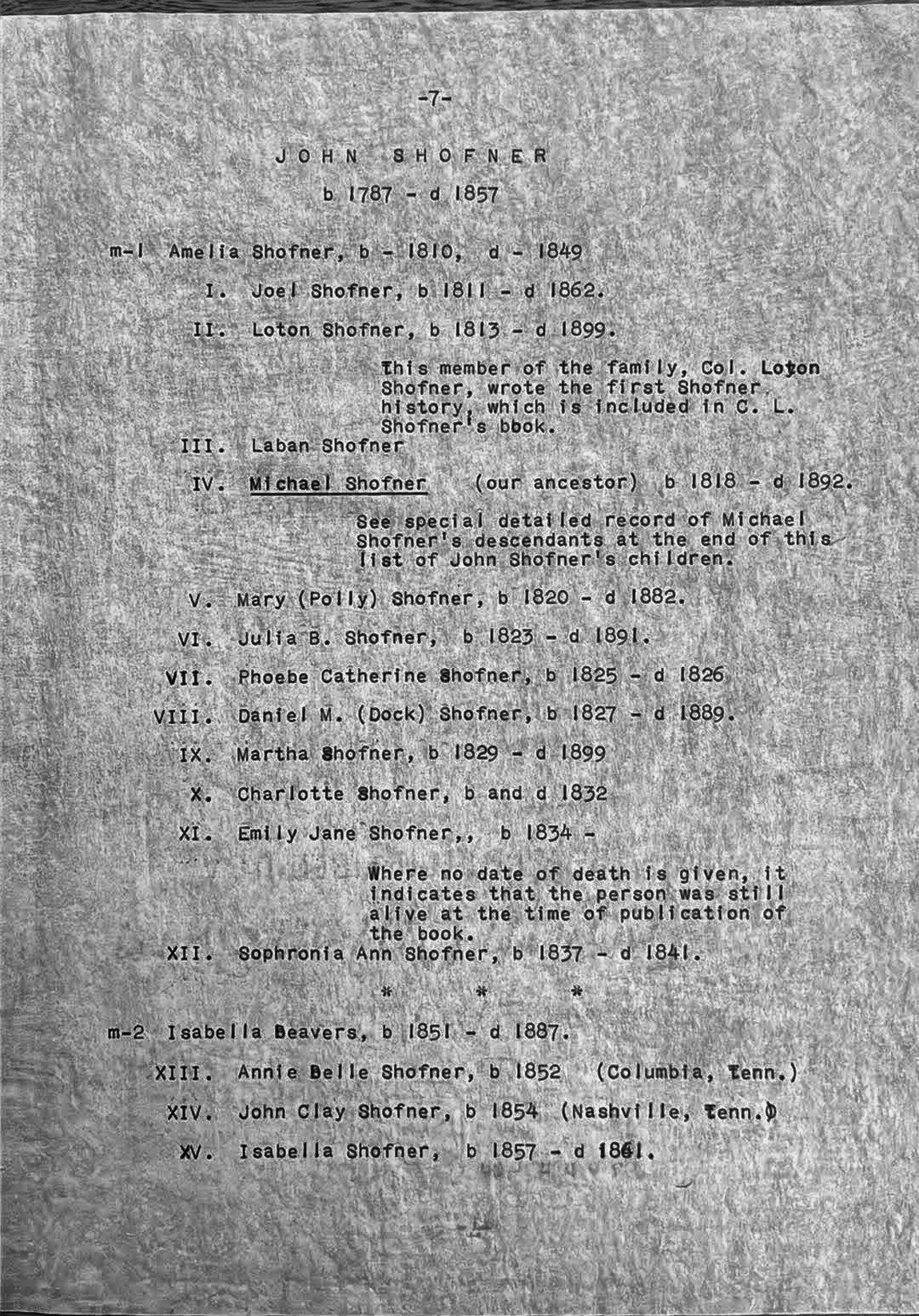
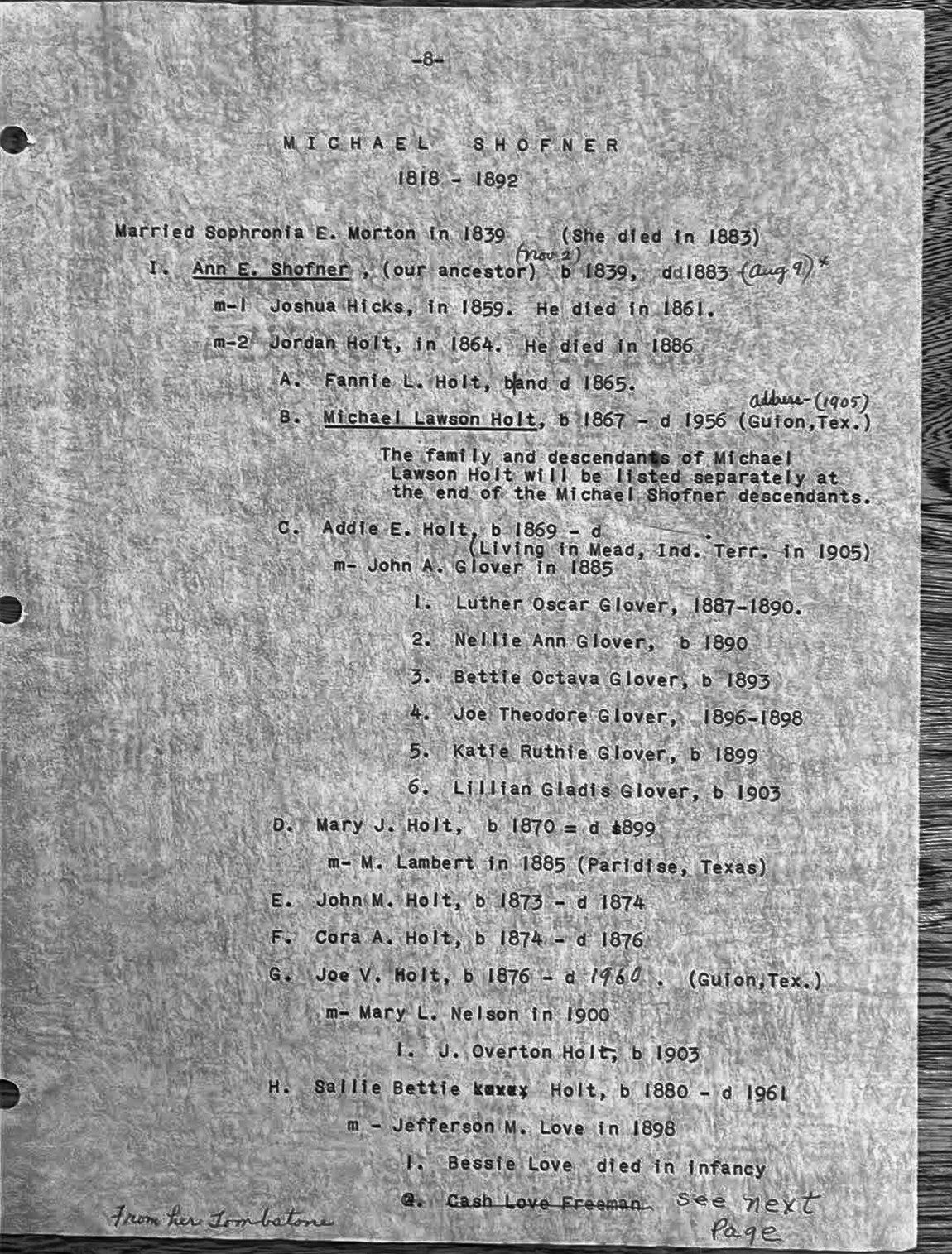
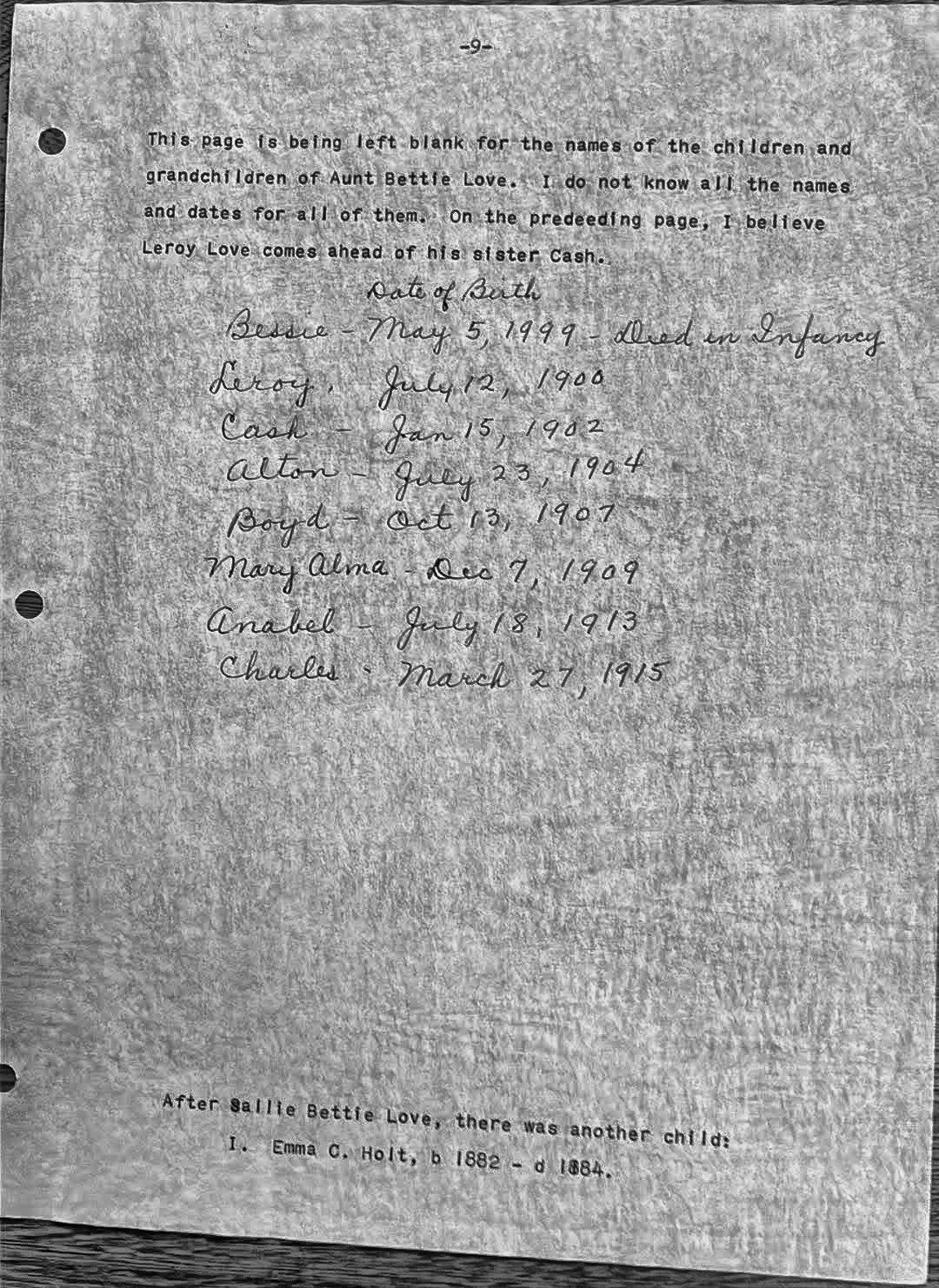
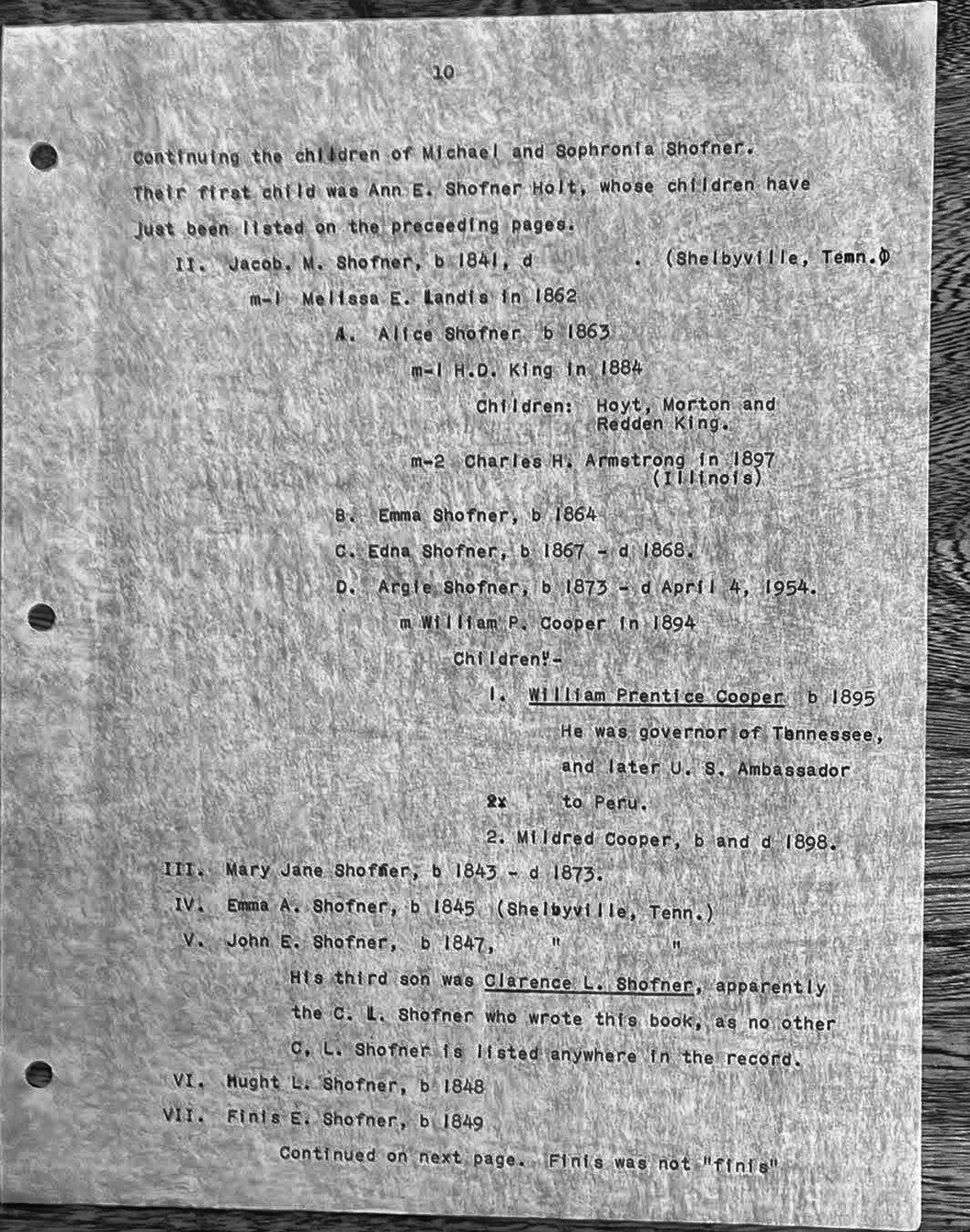
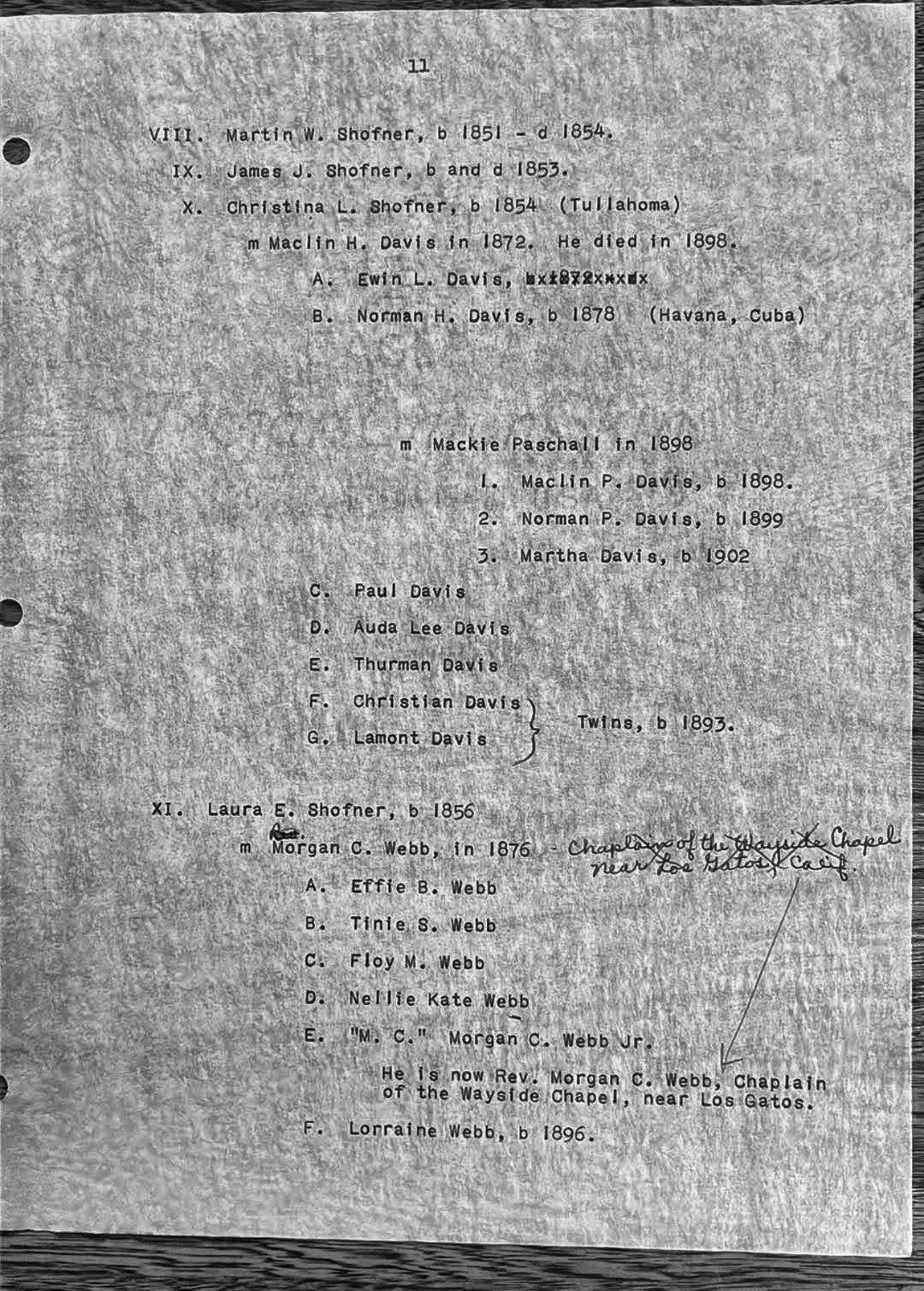
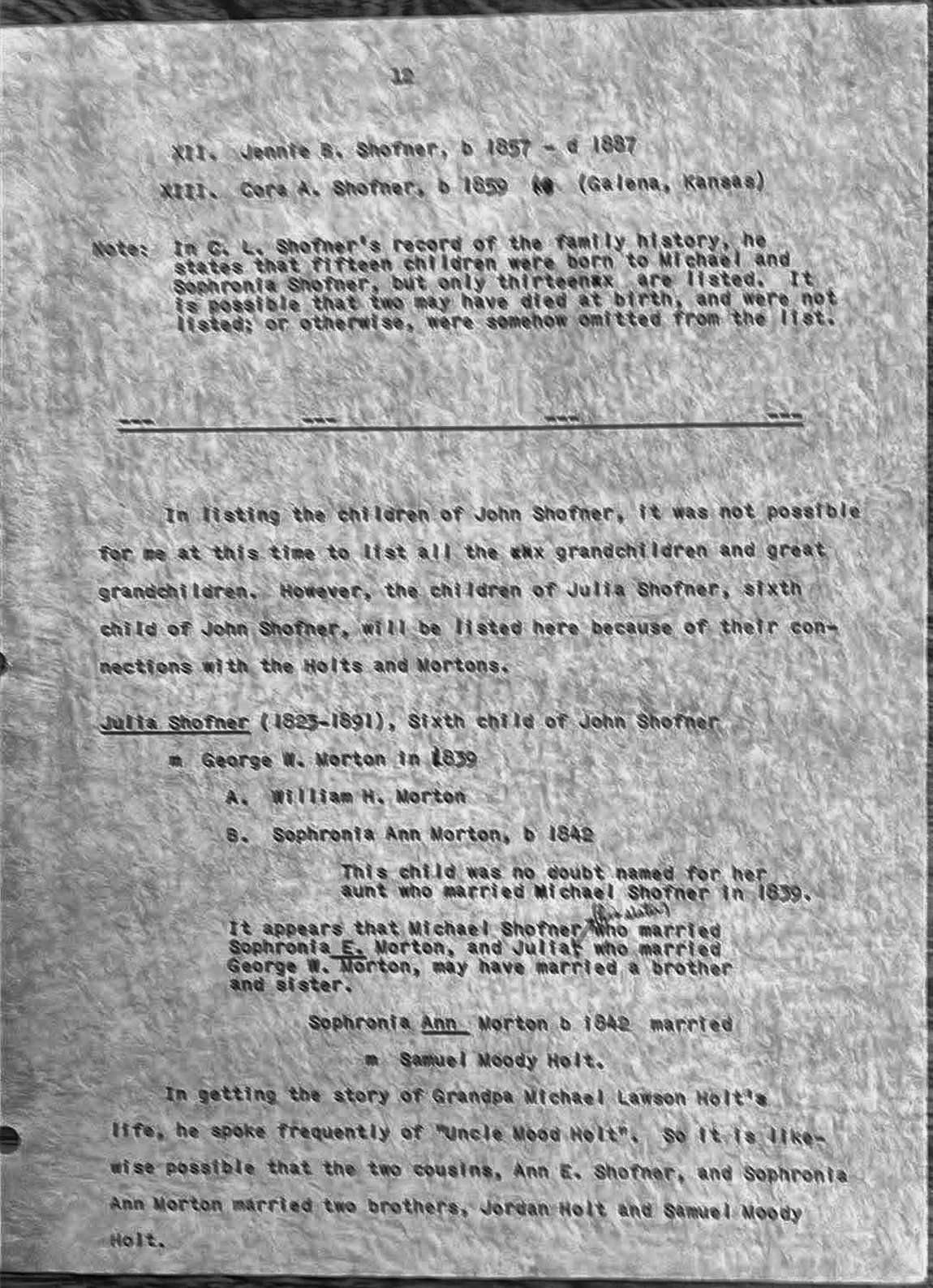
Ruby’s preface and her summary of the 1905 Shofner Family History. It traces Grandpa Holt’s mother’s family from Michael Shofner, who came from Germany in the 1700s and settled in North Carolina, to Bedford County, Tennessee, and down to Ann E. Shofner, who married Jordan Holt. One of the cousins in these lists was Prentice Cooper, Governor of Tennessee.
- The Shofners, first spelled Schaeffner, came from near Frankfurt, Germany. Michael Shofner landed at Philadelphia about 1760 and settled in Orange County, North Carolina.
- Three of his sons fought in the Revolutionary War, mostly under General Greene.
- His son Martin took the family over the mountains to Bedford County, Tennessee, in 1808.
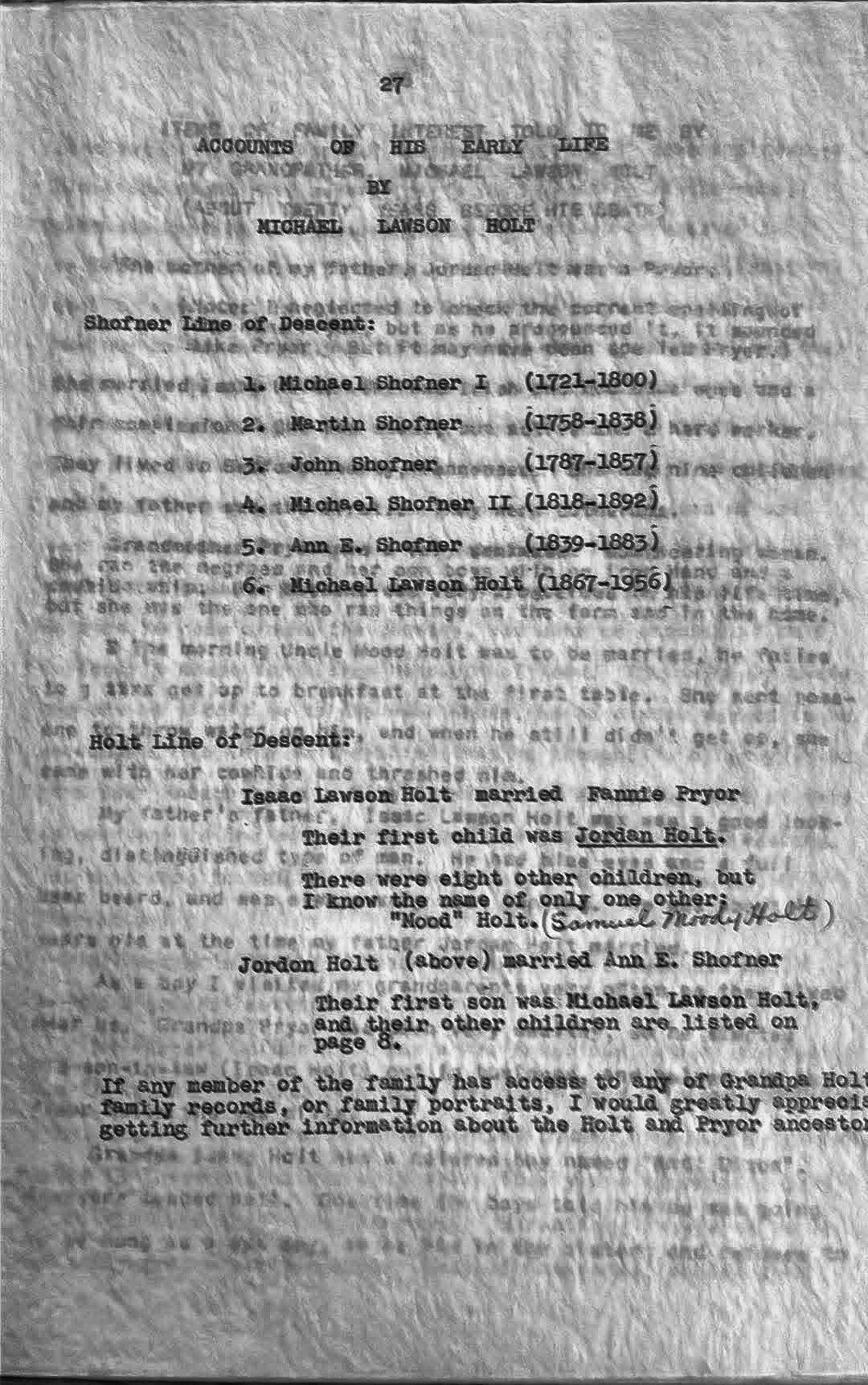
- Our line: Michael (1721–1800) → Martin (1758–1838) → John (1787–1857) → Michael (1818–1892) → Ann E. Shofner (1839–1883), Grandpa Holt’s mother.
- Famous cousins in the lists include Prentice Cooper, Governor of Tennessee, and Norman H. Davis, Under Secretary of State and a delegate to the 1932 Geneva Disarmament Conference.
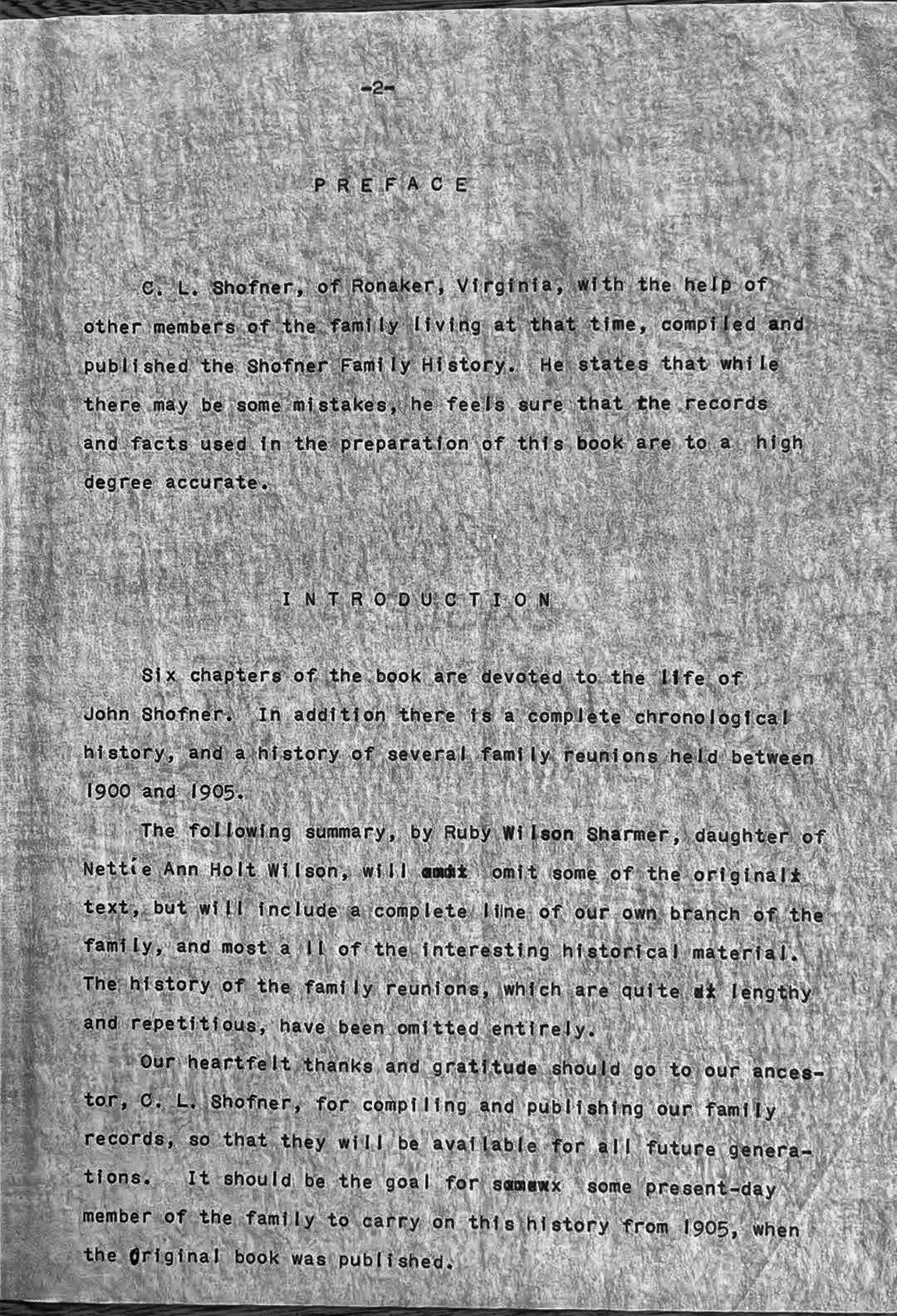
It should be the goal for some present-day member of the family to carry on this history from 1905, when the original book was published.
Ruby, in her introduction
The pages (tap any page to see it full size):
Chapter I, continued · pages 14–26
John, Michael and Col. Loton Shofner
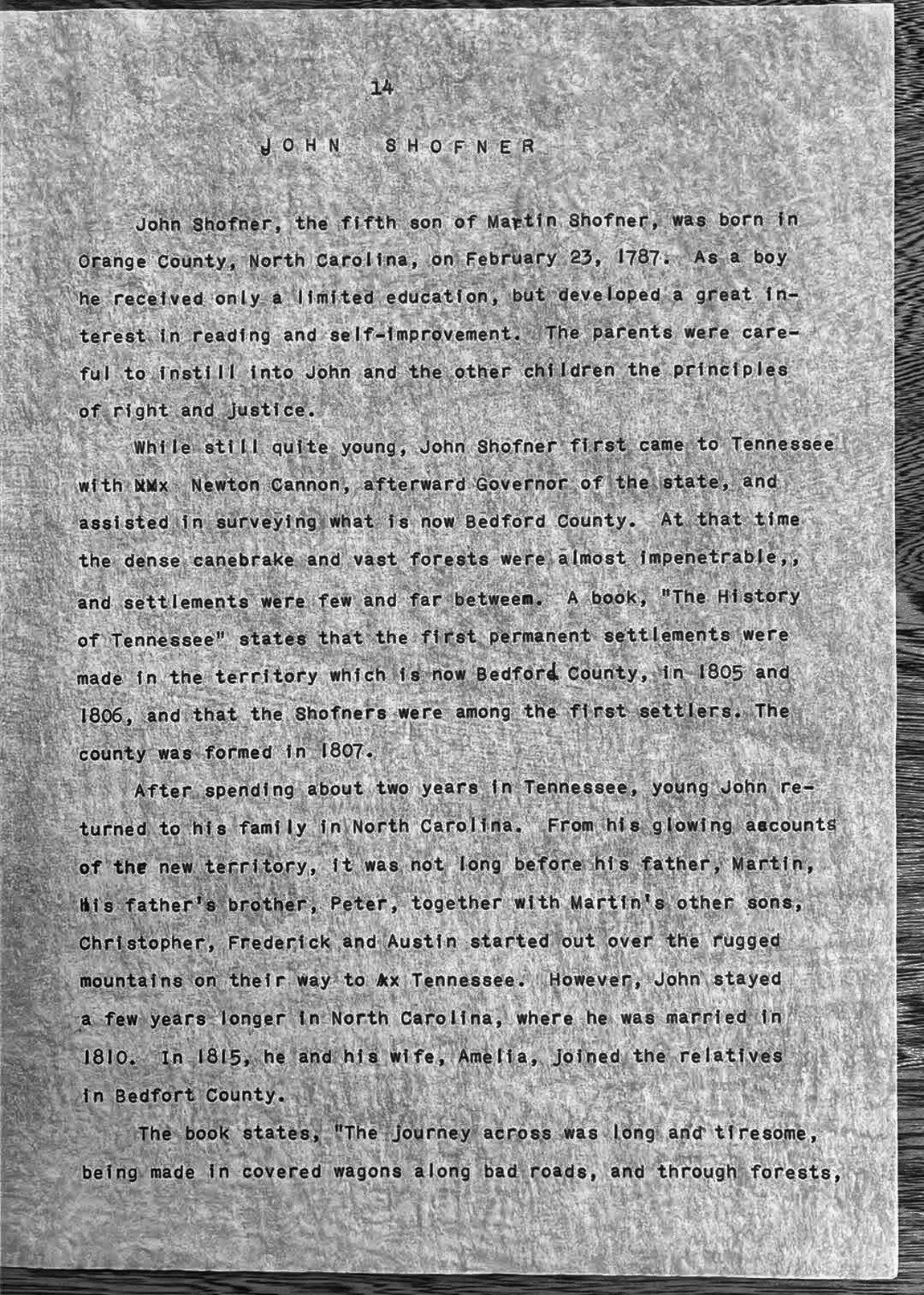
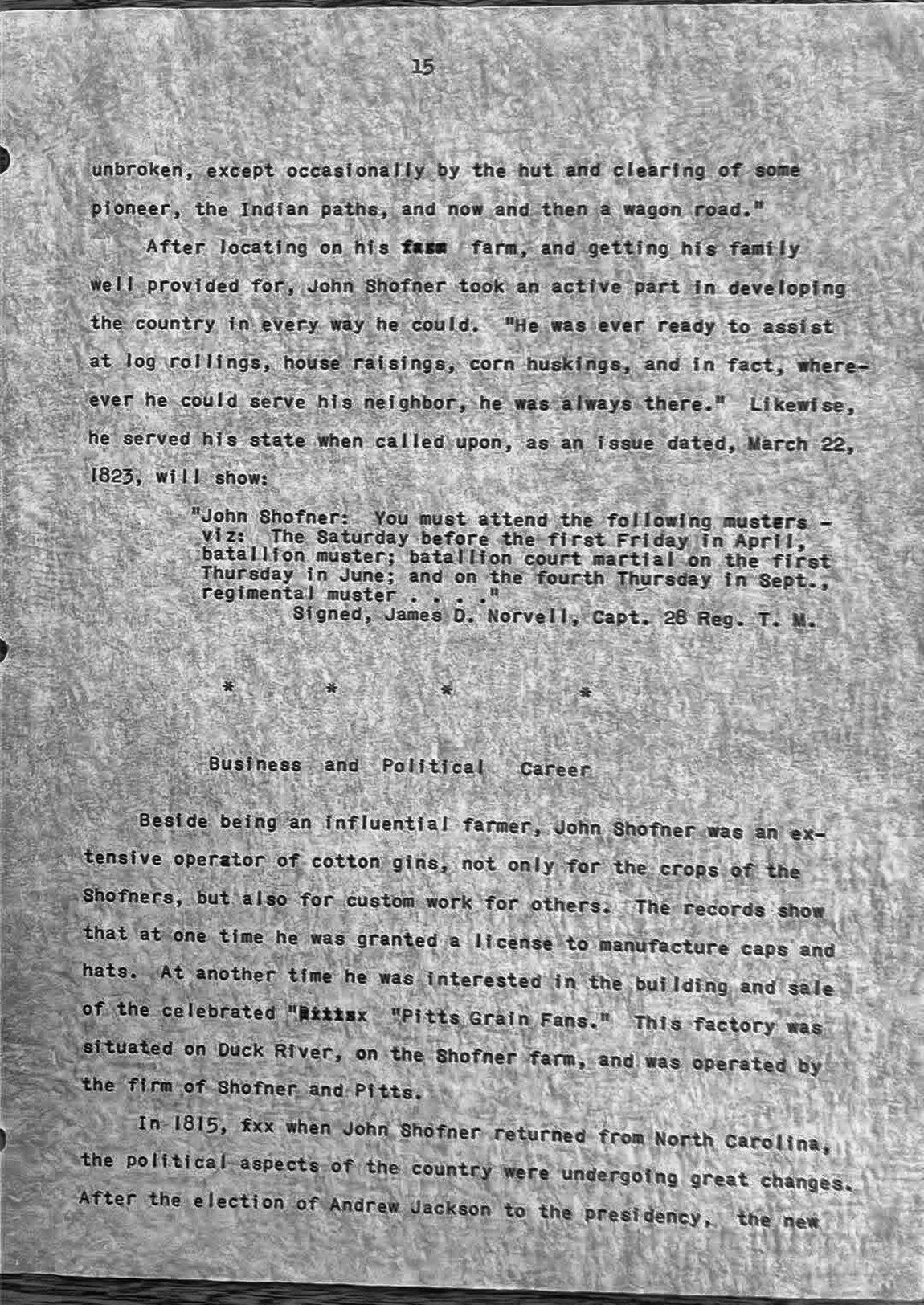
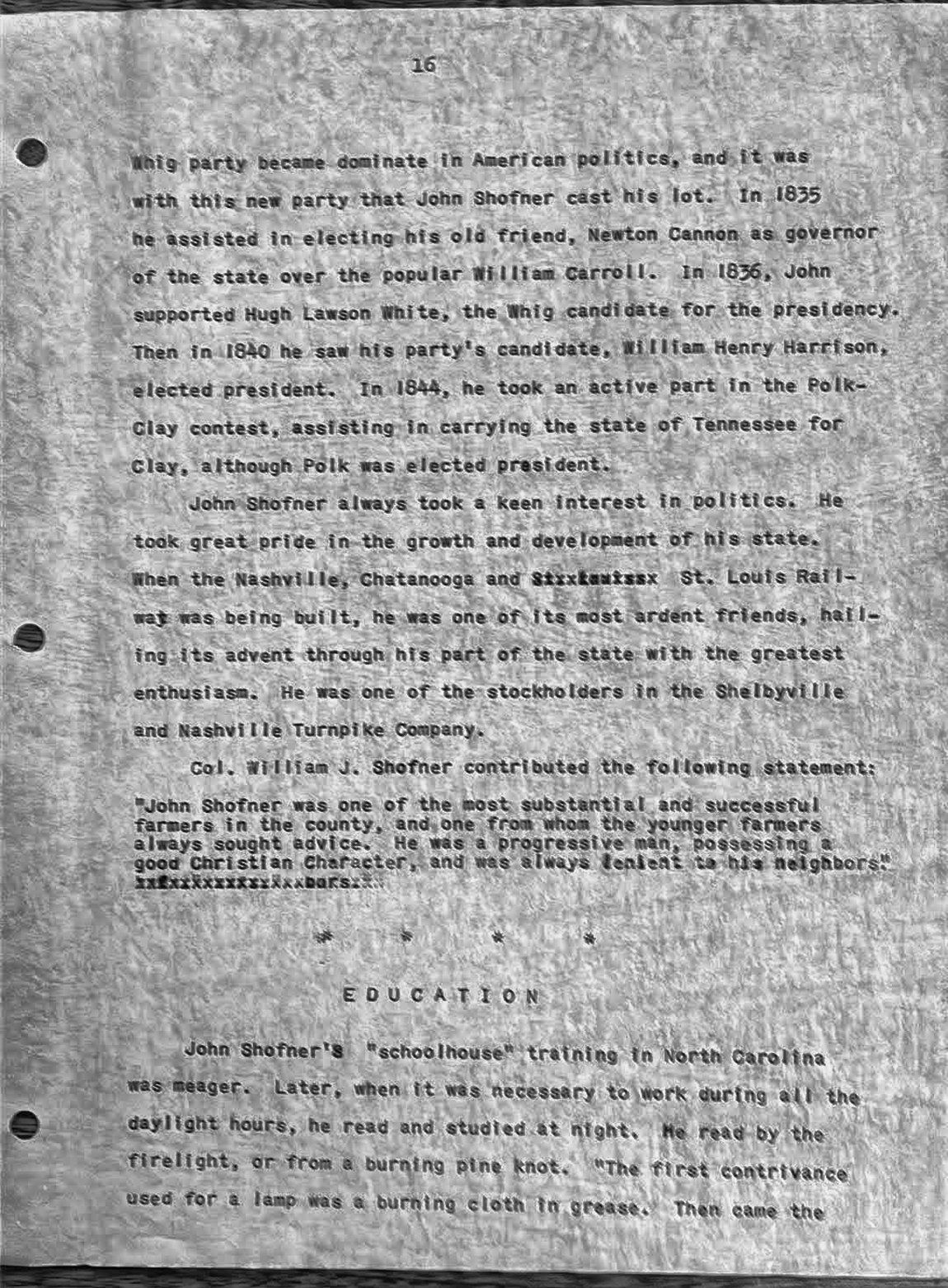
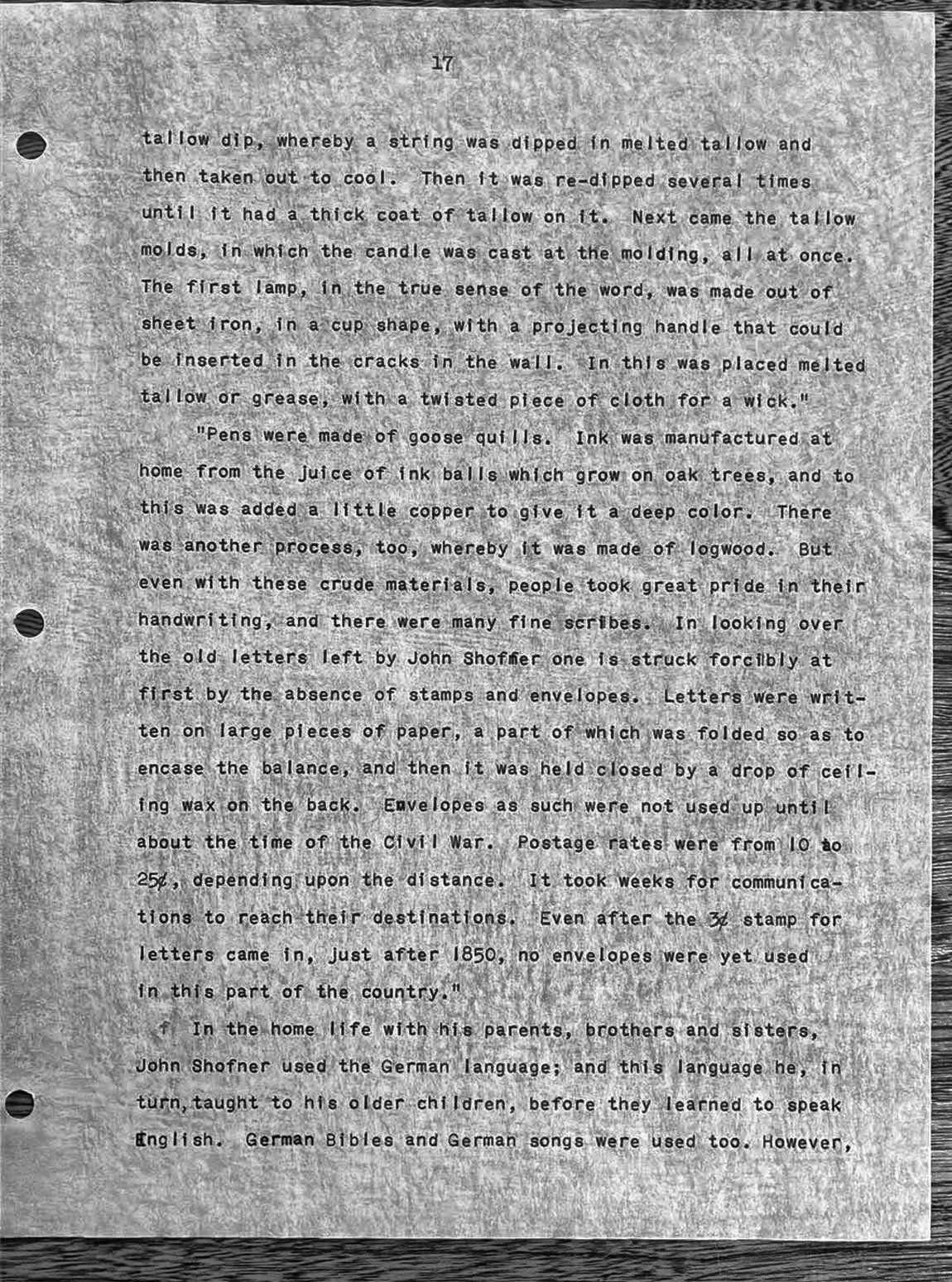
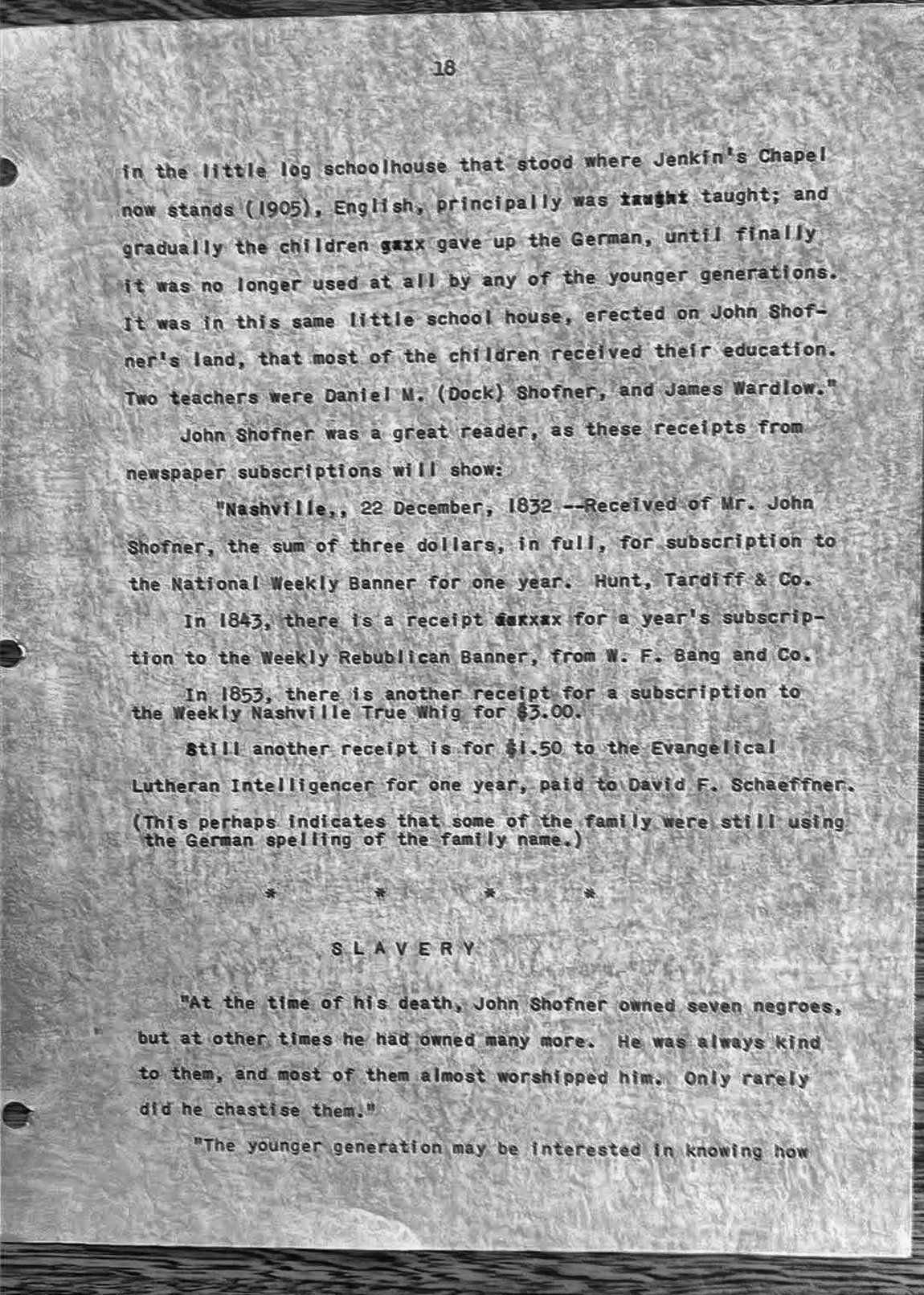
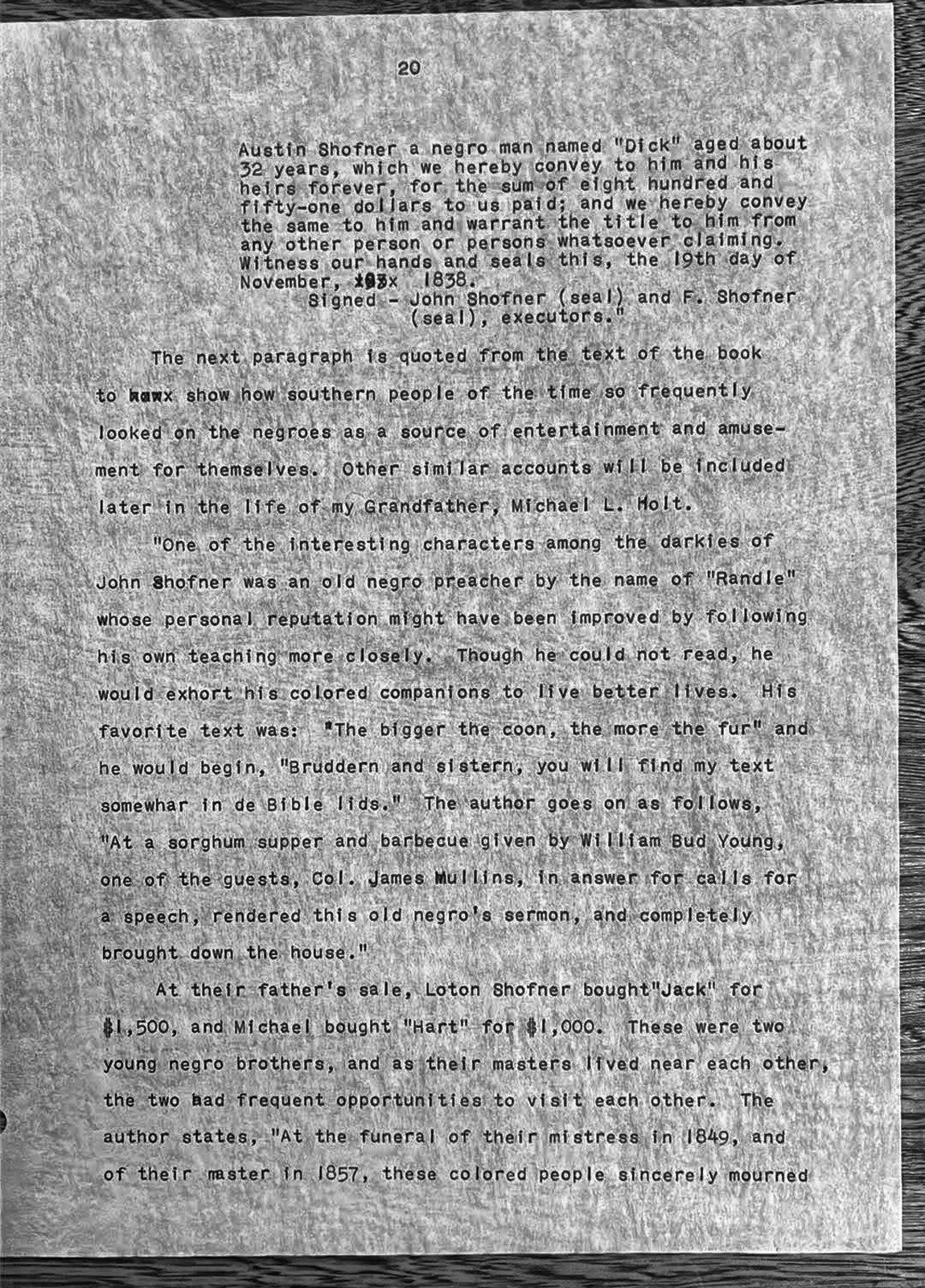
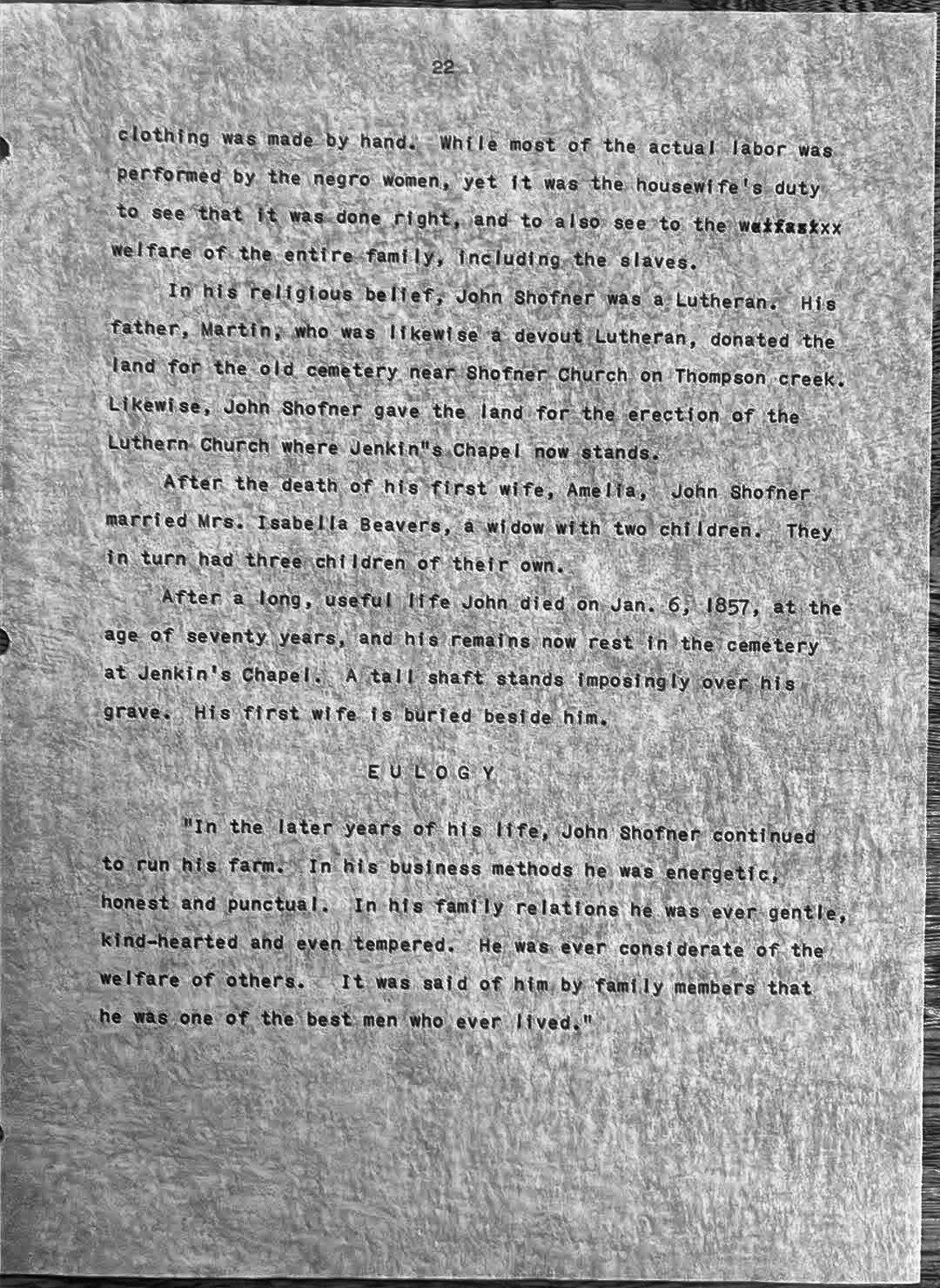
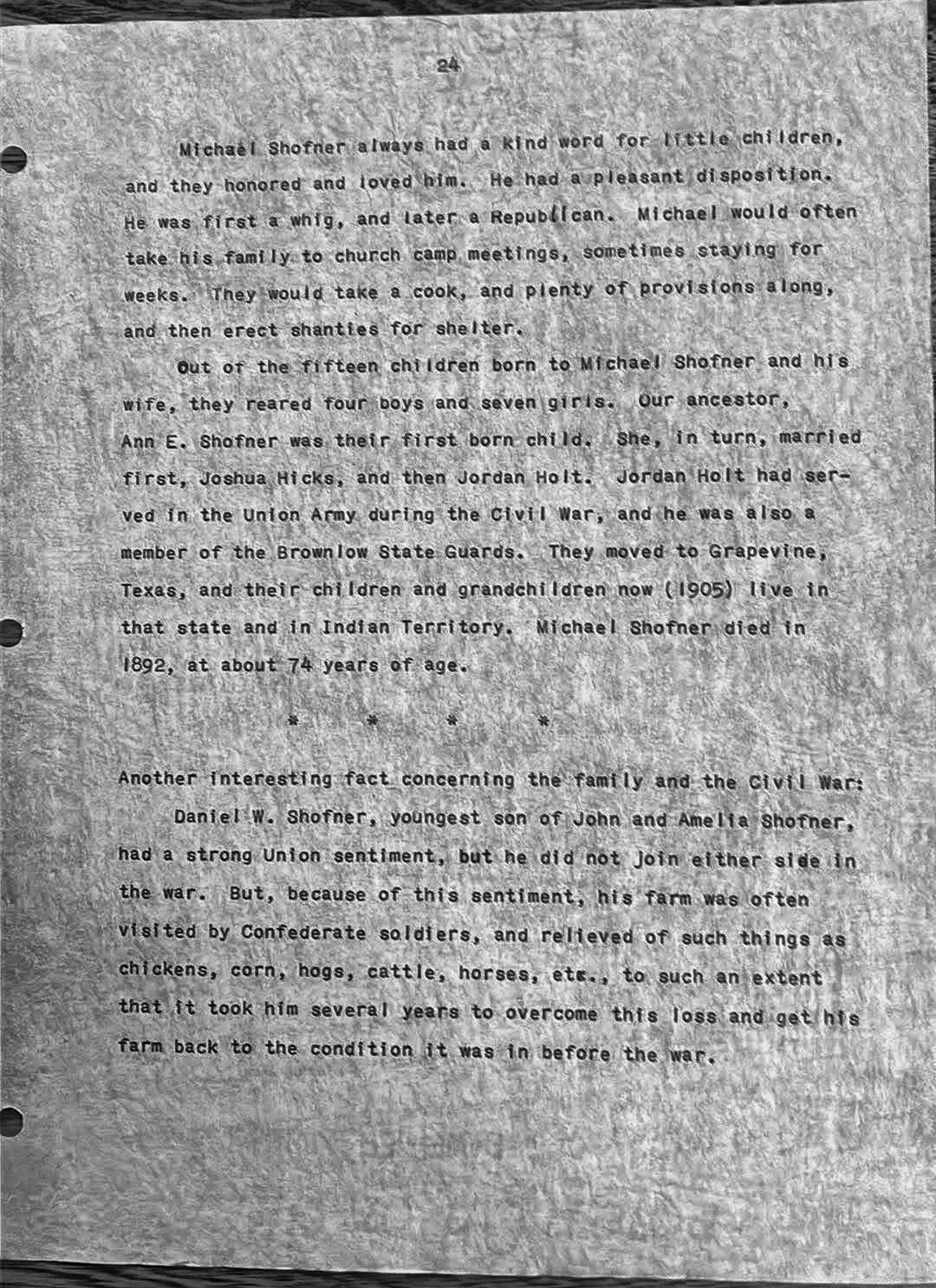
The lives of John Shofner (1787–1857), who moved to Bedford County in 1815, and his son Michael Shofner (1818–1892), Ann’s father: pioneer farming, schooling by firelight, politics, home life, and the family’s slaveholding, which Ruby recorded as the 1905 book described it.
- John Shofner helped survey Bedford County with Newton Cannon, later Governor of Tennessee; the Shofners were among its first settlers.
- He farmed on Duck River near Shelbyville, ran cotton gins and a grain-fan factory, and was a Whig who campaigned for Henry Clay.
- He married his cousin Amelia in 1810; between two wives he had fifteen children, and he gave the land for the Lutheran church at Jenkin’s Chapel.
- The family owned slaves. Ruby copied the 1905 book’s account, including an 1838 bill of sale, and added her own 1961 note questioning its silence about the moral side.
- His son Michael, Ann’s father, kept a store and was a Whig, then a Republican; the brothers seem to have sided with the North. Ann’s husband Jordan Holt served in the Union Army.
- Ann’s uncle, Col. Loton Shofner, wrote the first family history and spent his life fighting liquor.
The first contrivance used for a lamp was a burning cloth in grease.
On John Shofner’s schooling
The pages (tap any page to see it full size):
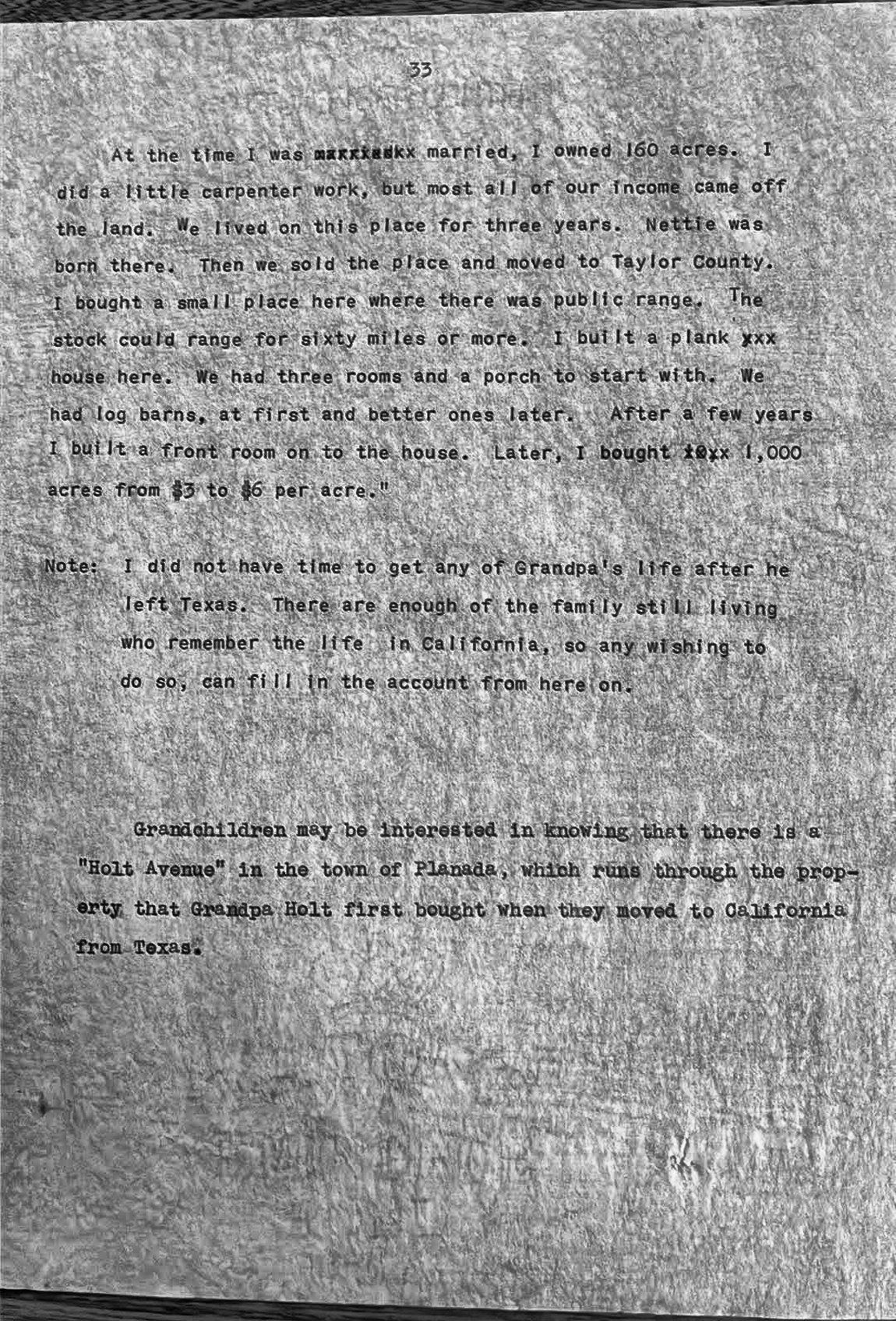
Chapter II · pages 27–33
Michael Lawson Holt, in his own words
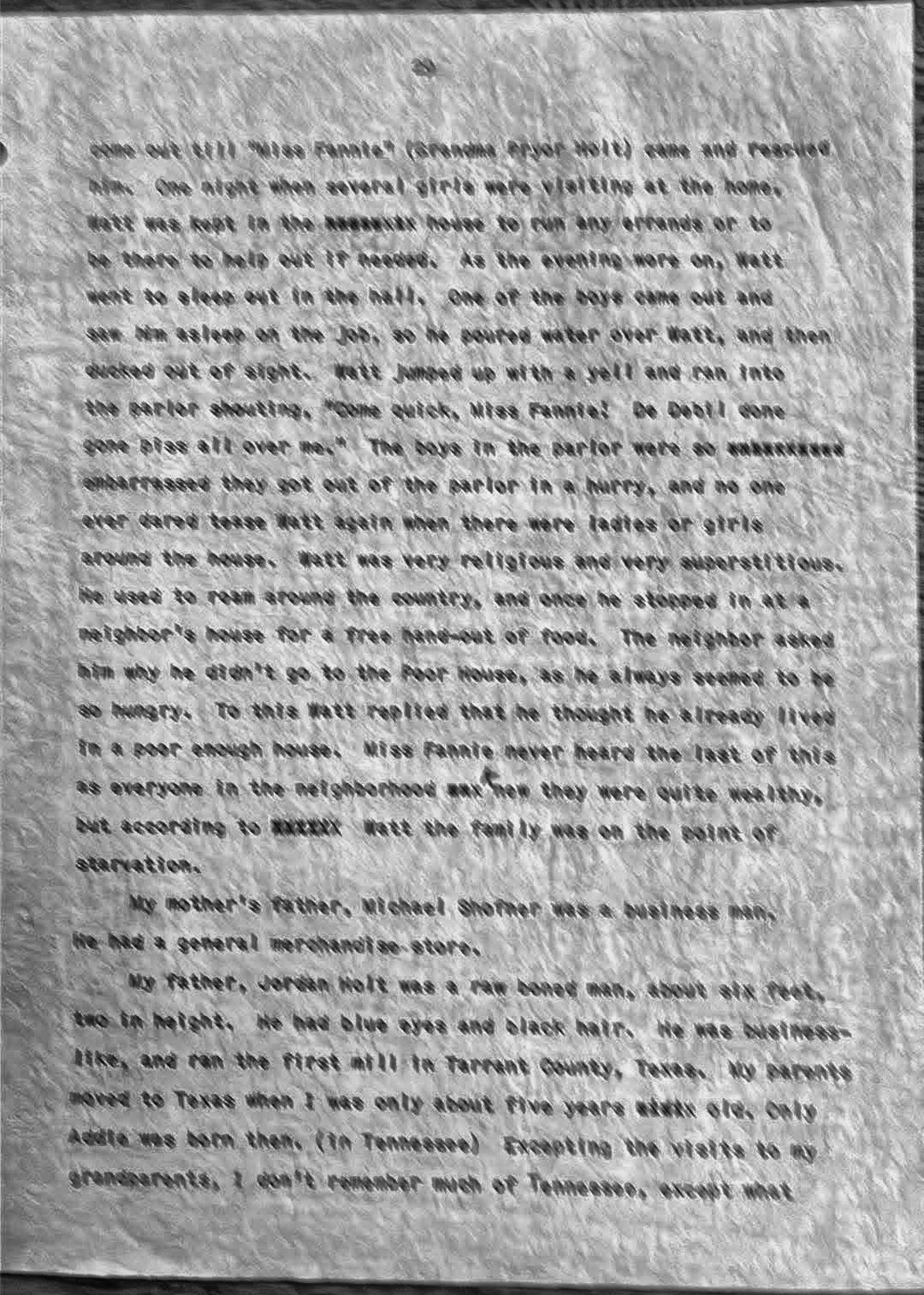
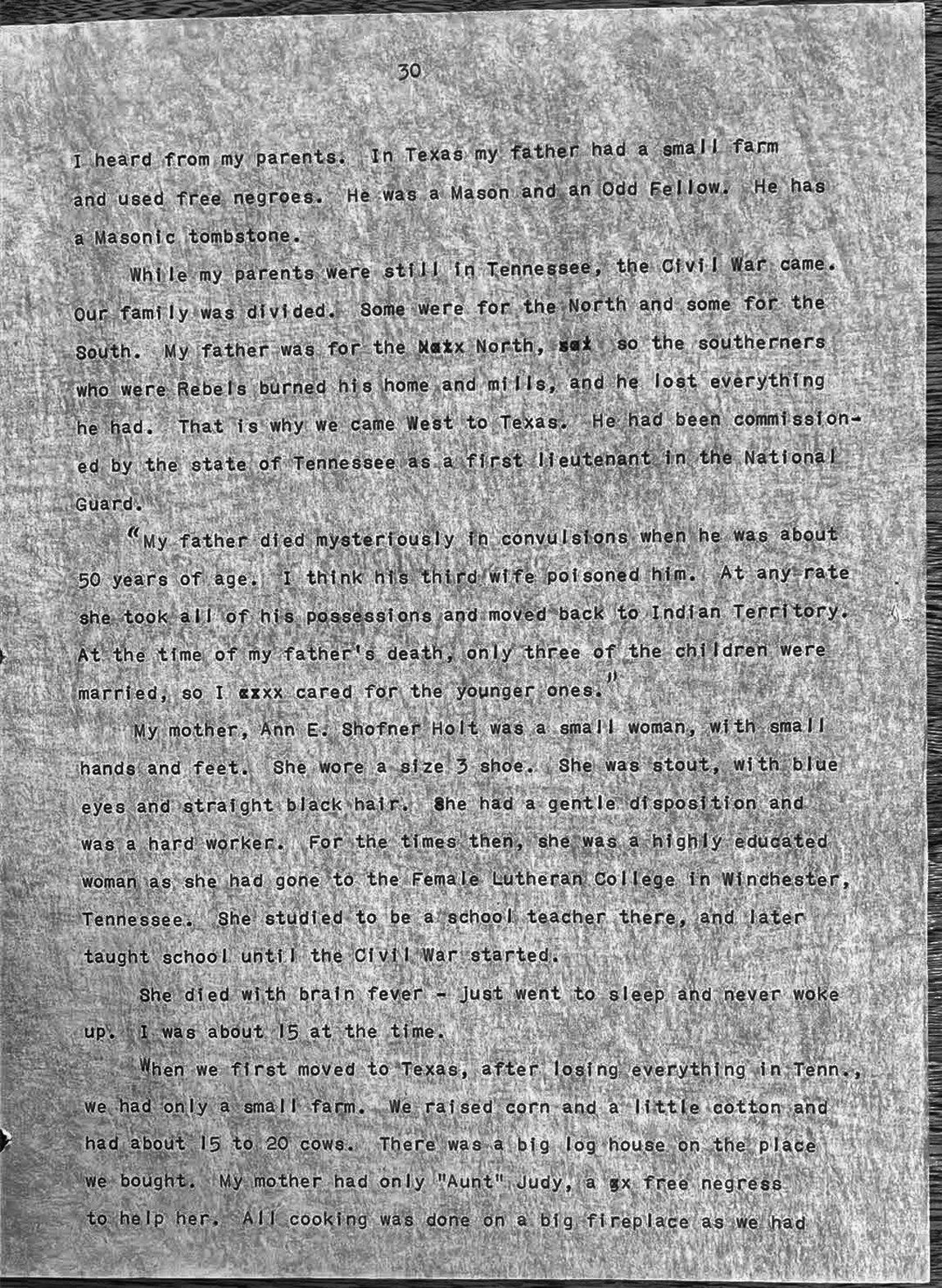
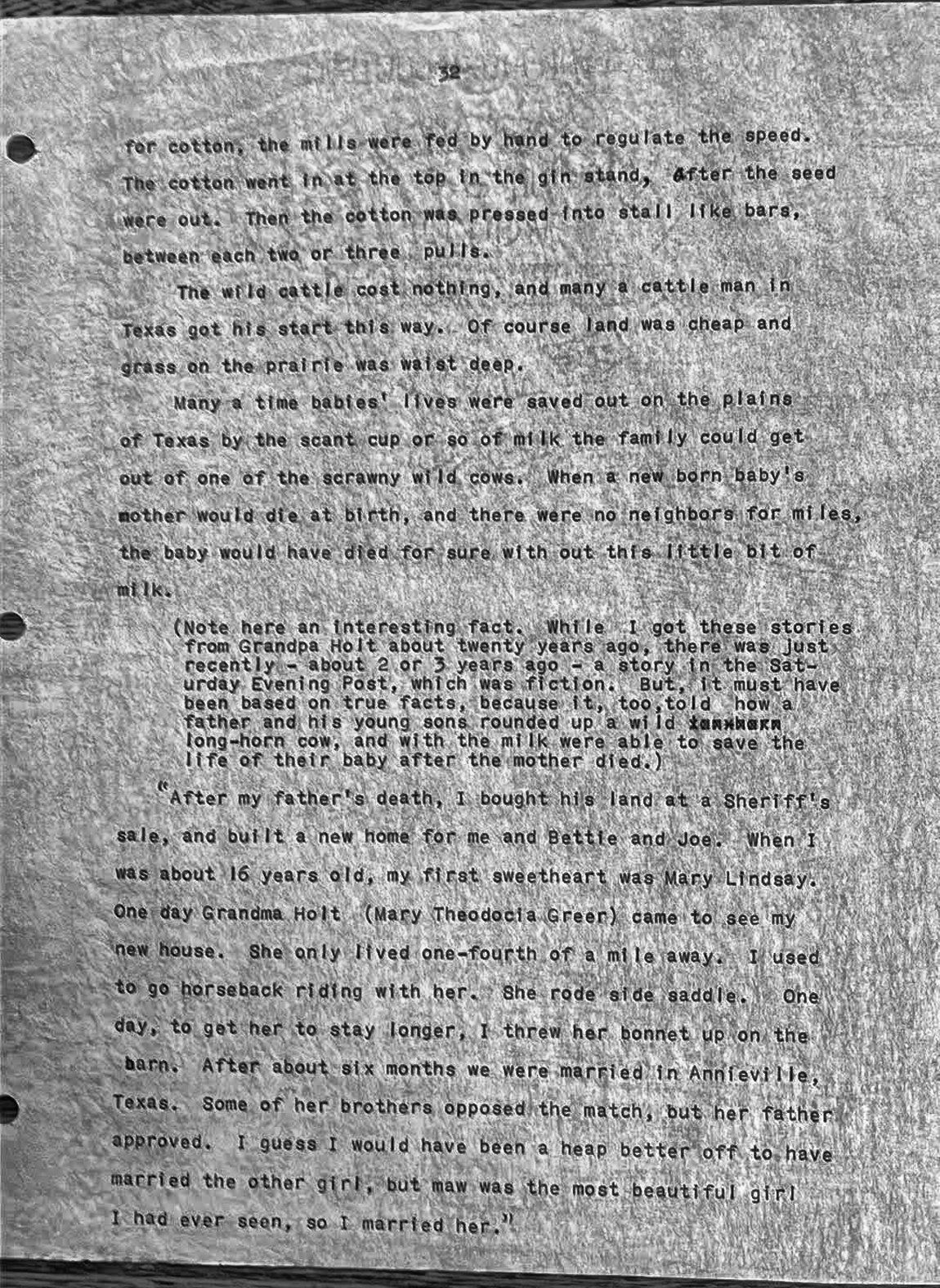
Grandpa Holt’s own memories, as he told them to Ruby: burned out of Tennessee in the Civil War, his father’s mill in Tarrant County, buying the family land at a sheriff’s sale as a teenager, courting Mary Greer, and ranching 1,000 acres in Taylor County.
- His Holt grandparents were Isaac Lawson Holt and Fannie Pryor, a “domineering” Irishwoman who ran the farm and her sons with a cowhide whip.
- His mother, Ann Shofner, studied at the Female Lutheran College in Winchester, Tennessee, and taught school until the Civil War.
- His father was for the North, so Rebels burned the family’s home and mills. The Holts started over in Texas when Michael was about five.
- Jordan ran the first mill in Tarrant County. Mills there were sometimes turned by teams of wild longhorns, and Michael saw the first train come into Dallas.
- Jordan died “mysteriously in convulsions”; Michael suspected his third wife. Michael bought the family land at a sheriff’s sale and raised the younger children.
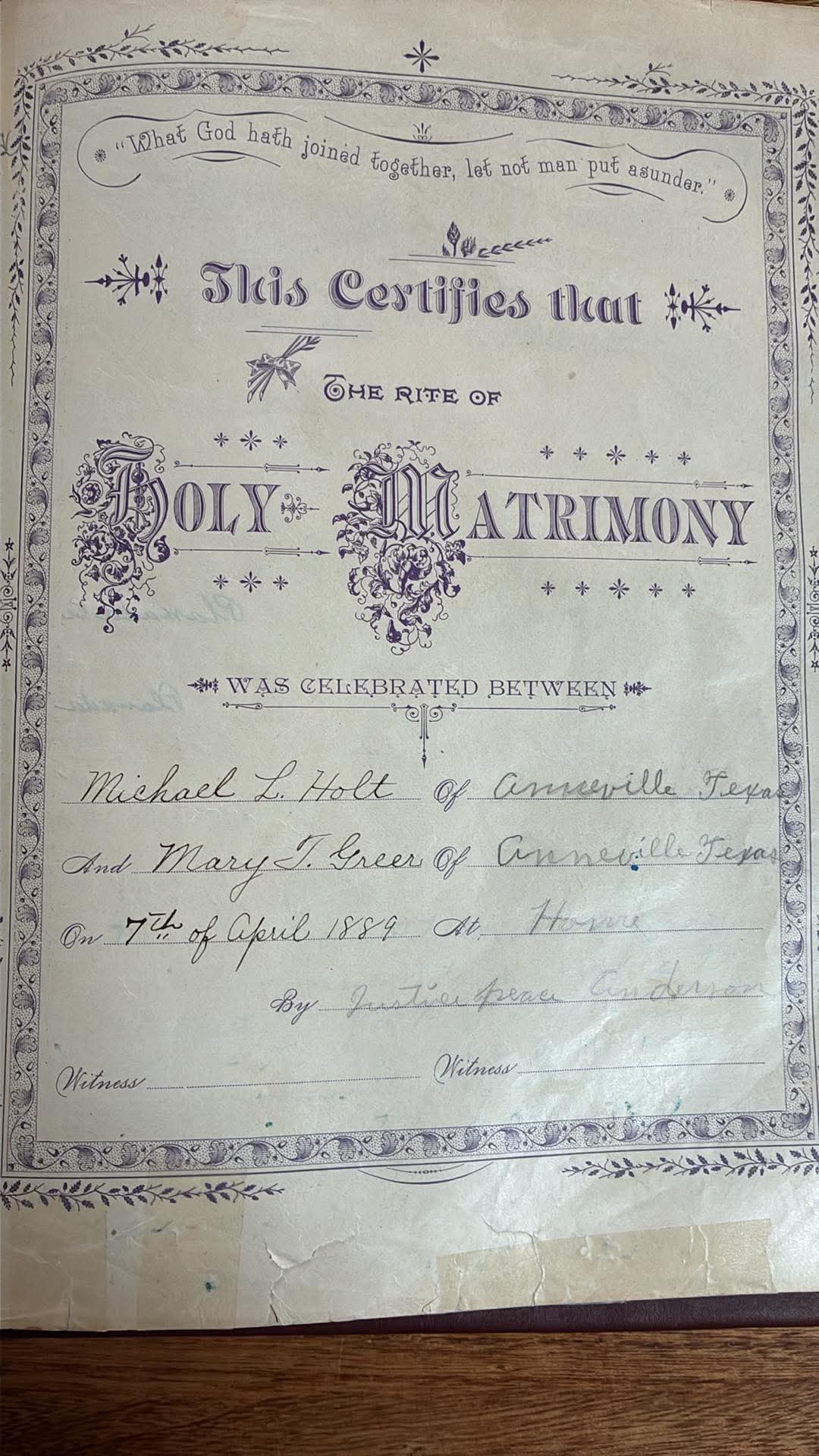
- He threw Mary Greer’s bonnet up on the barn to make her stay longer. They married about six months later: “maw was the most beautiful girl I had ever seen.”
My father was for the North, so the southerners who were Rebels burned his home and mills, and he lost everything he had. That is why we came West to Texas.
Michael Lawson Holt
The pages (tap any page to see it full size):
Chapter III · pages 34–39
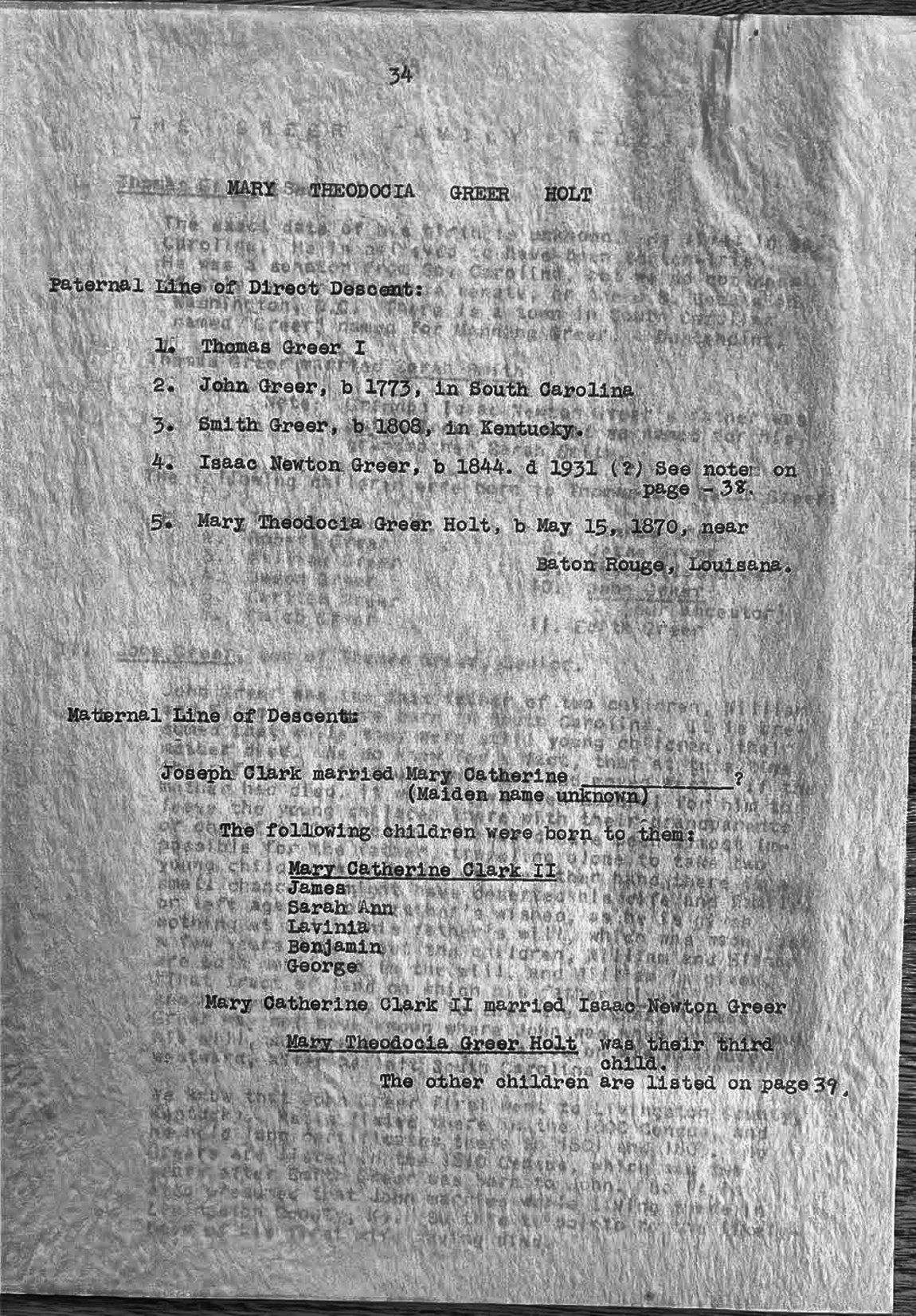
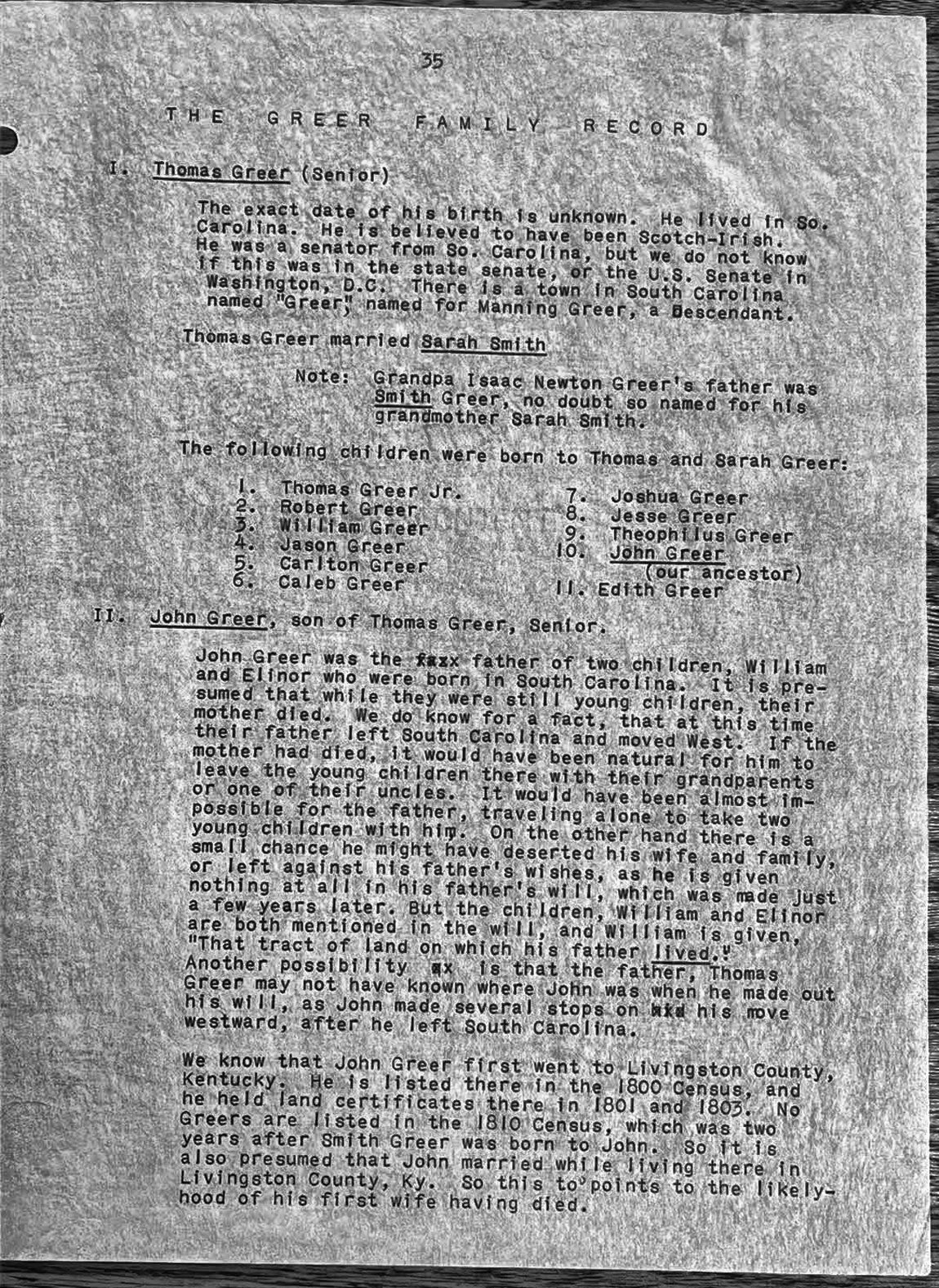
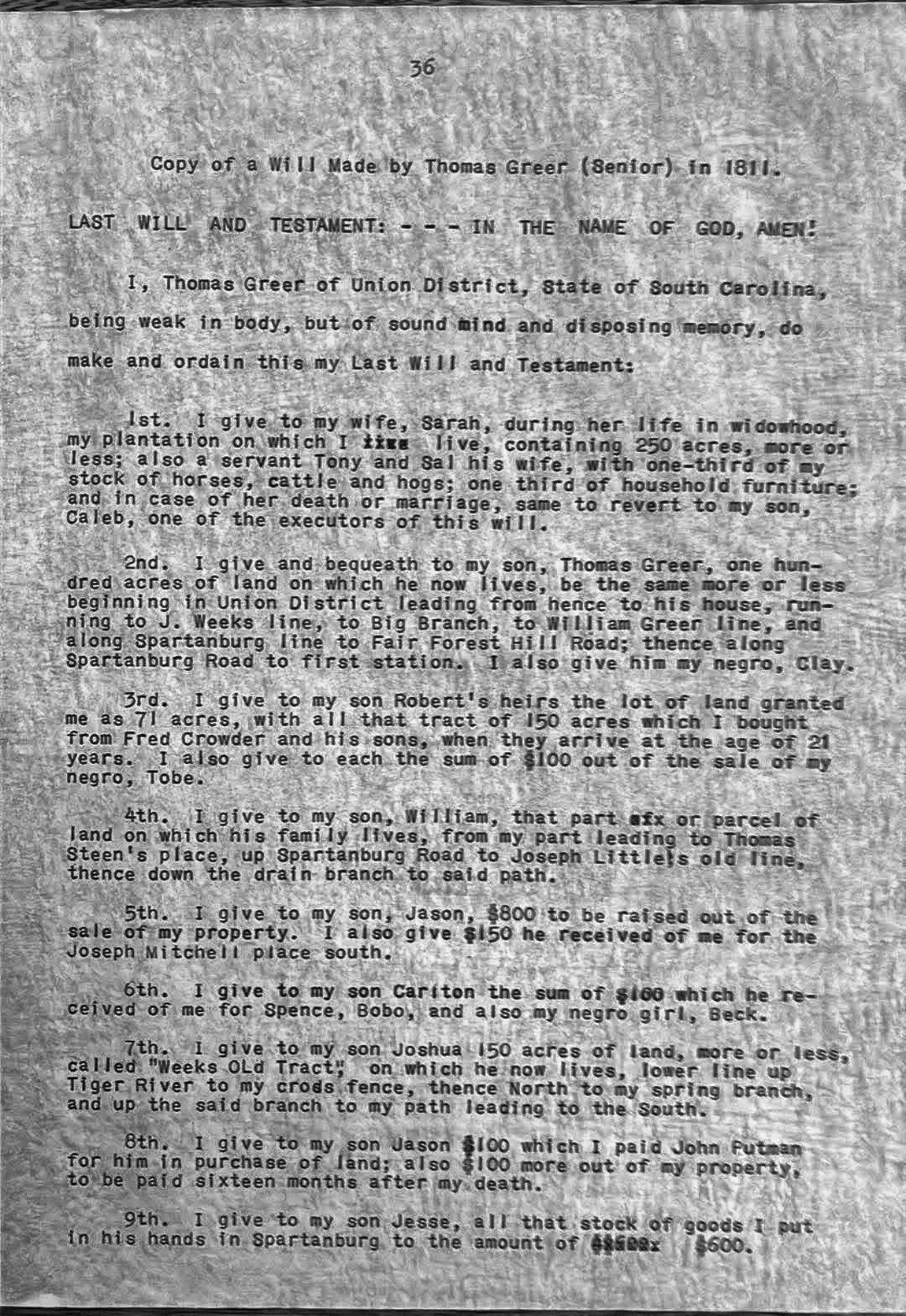
The Greer family
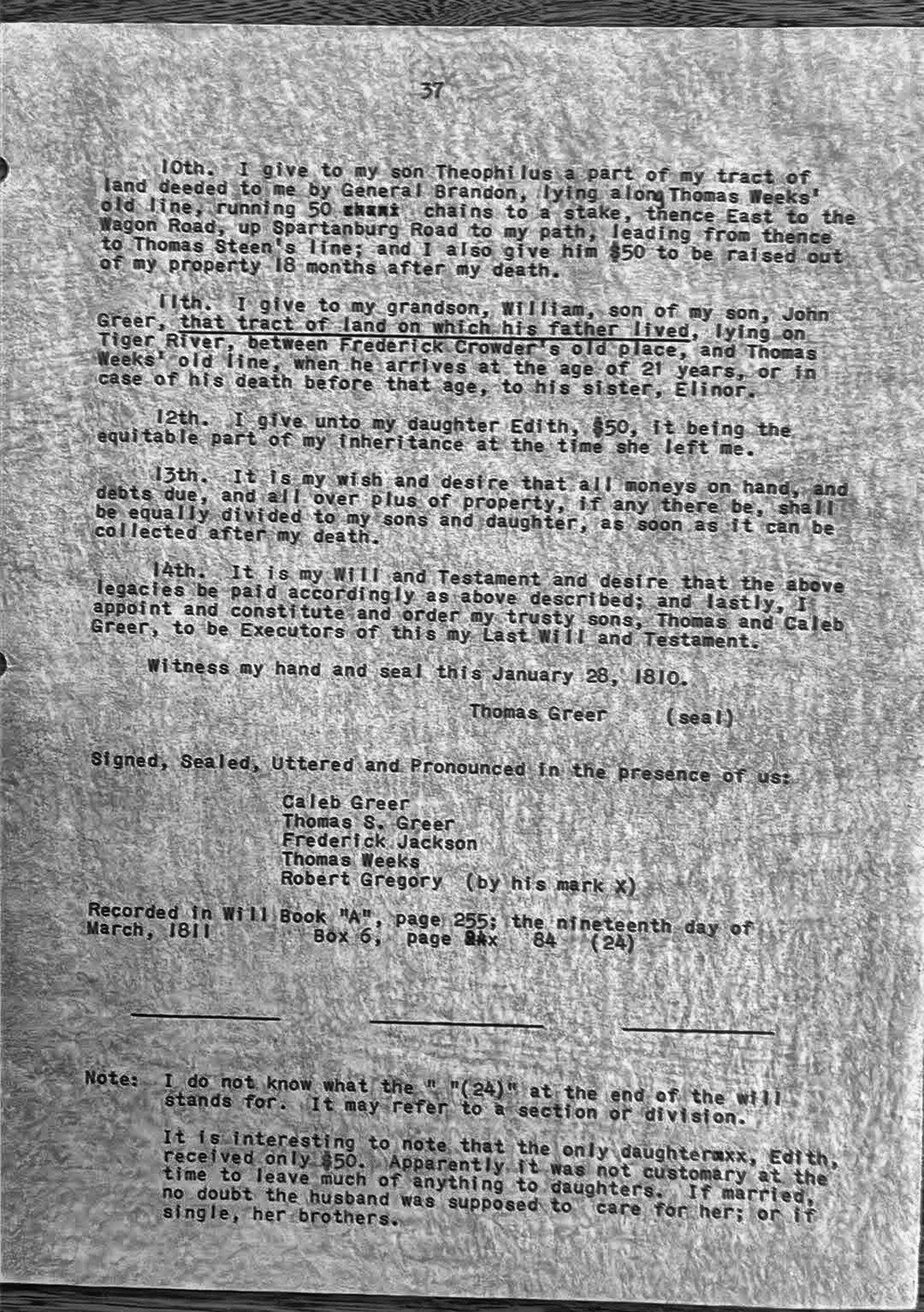
Grandma Holt’s father’s family: Thomas Greer (Senior) of South Carolina, his 1811 will, which Ruby copied in full, and the line down through Smith Greer to Isaac Newton Greer.
- Thomas Greer (Senior) of South Carolina, said to be Scotch-Irish and a senator, had eleven children; Ruby copied his 1811 will in full.
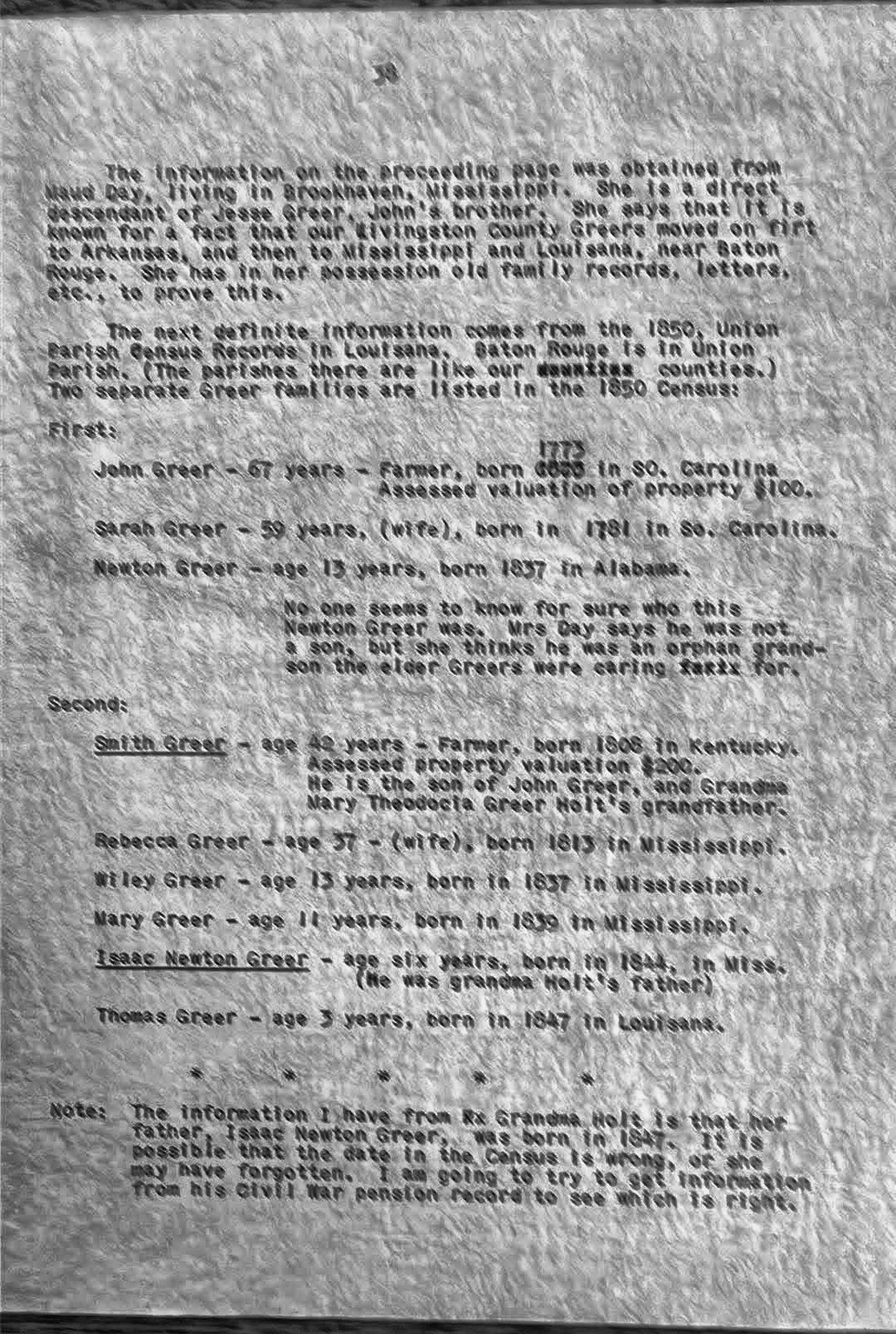
- His son John Greer moved west; the family went on through Kentucky, Arkansas and Mississippi to Louisiana.
- The 1850 census of Union Parish, Louisiana, lists Smith Greer, 42, and his son Isaac Newton, 6. Grandma Holt said her father was born in 1847.
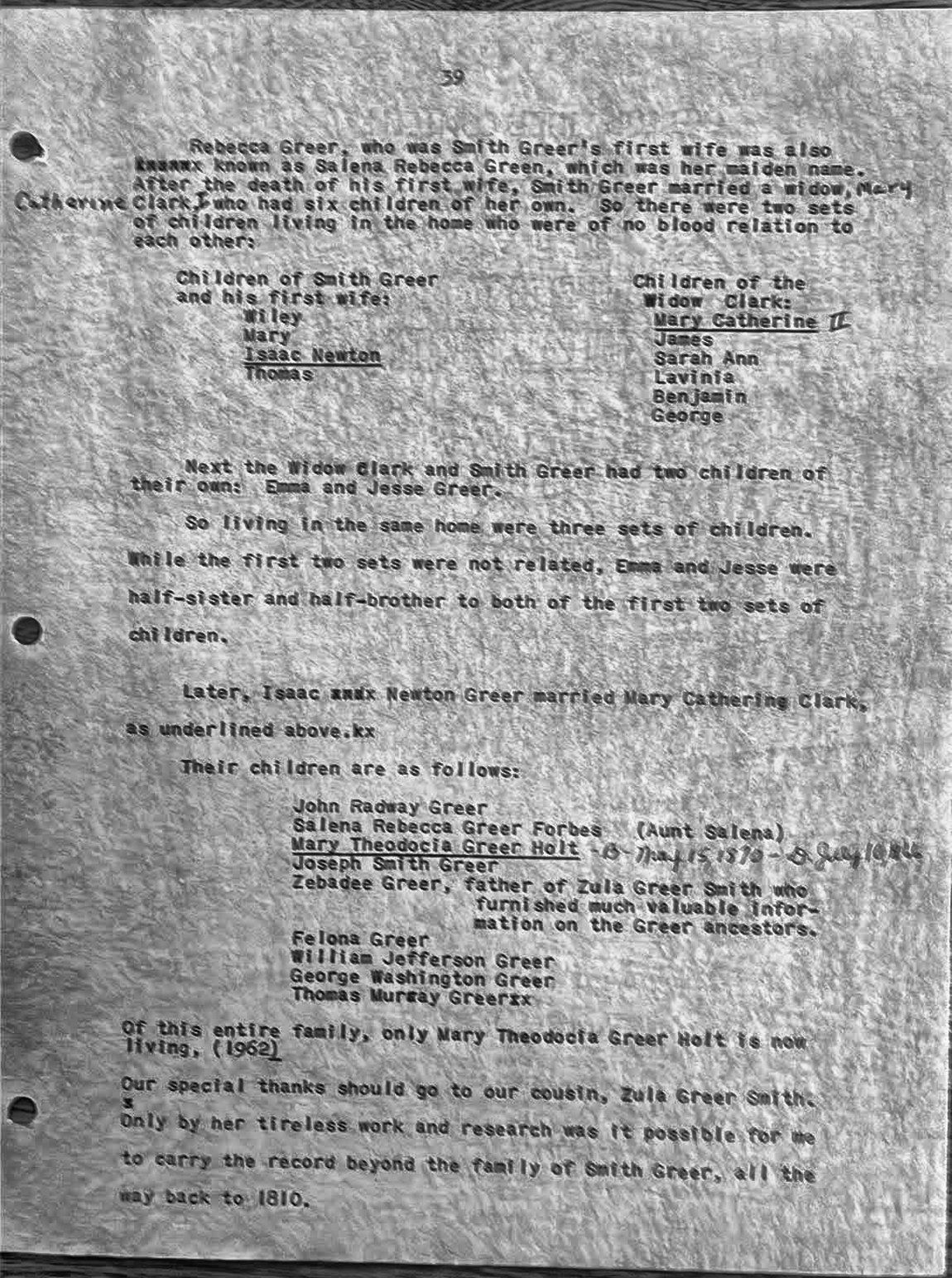
- After his first wife died, Smith Greer married the widow Clark. Isaac later married her daughter, Mary Catherine Clark, so Grandma Holt’s parents were stepbrother and stepsister, not blood relations.
Grandpa Isaac Newton Greer’s father was Smith Greer, no doubt so named for his grandmother Sarah Smith.
Ruby’s note
The pages (tap any page to see it full size):
Chapter IV · pages 40–45
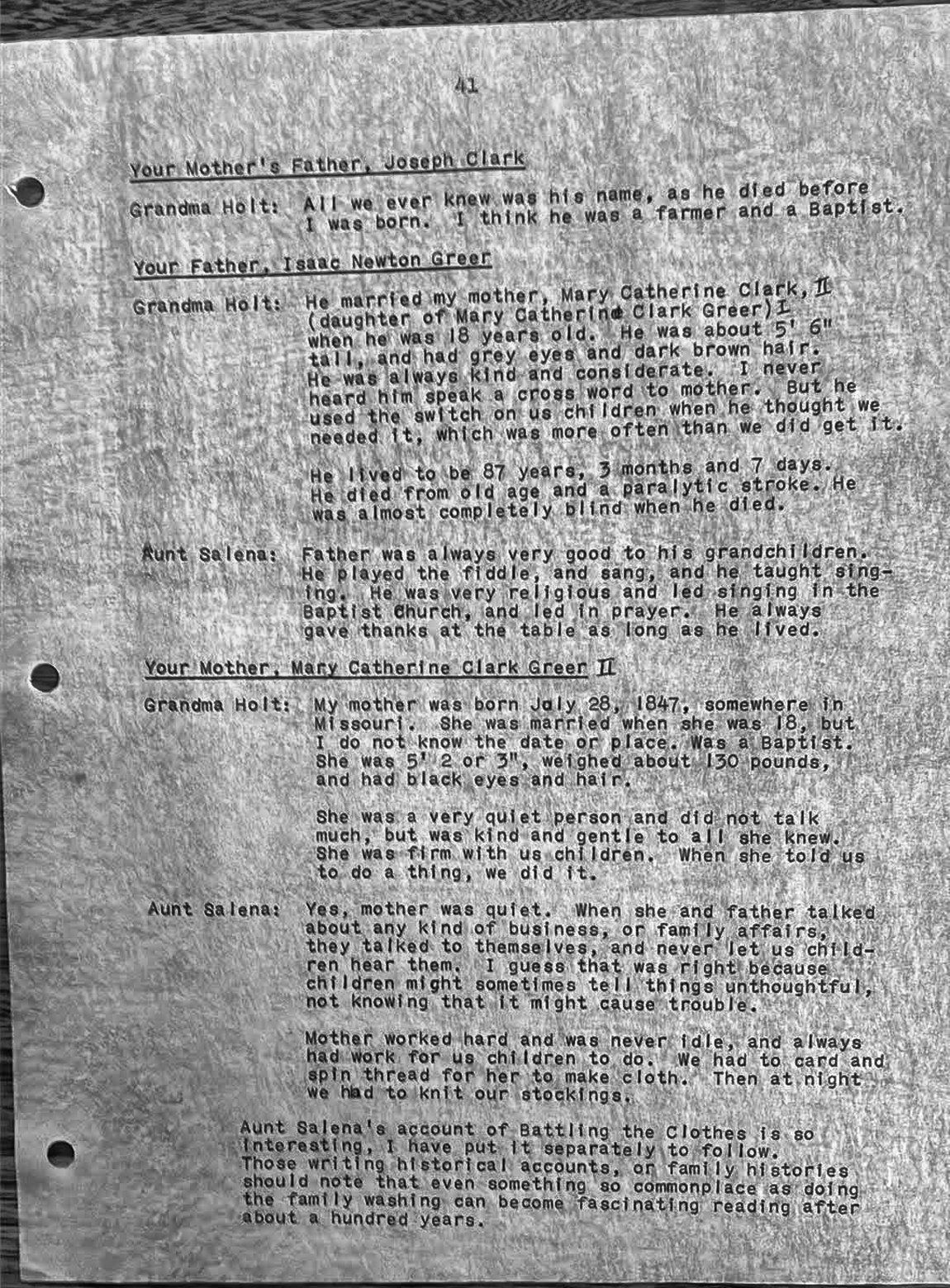
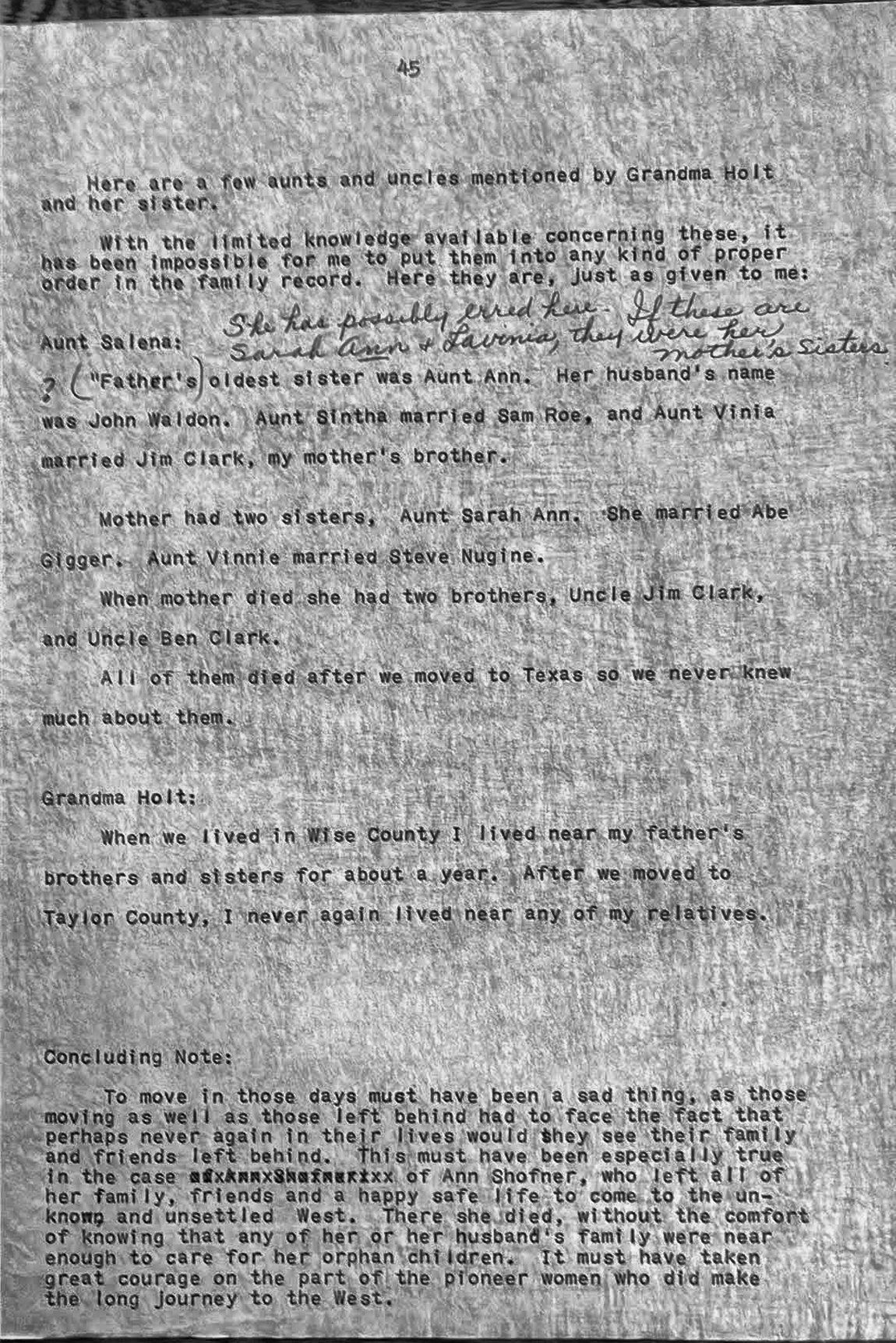
Grandma Holt and Aunt Salena remember
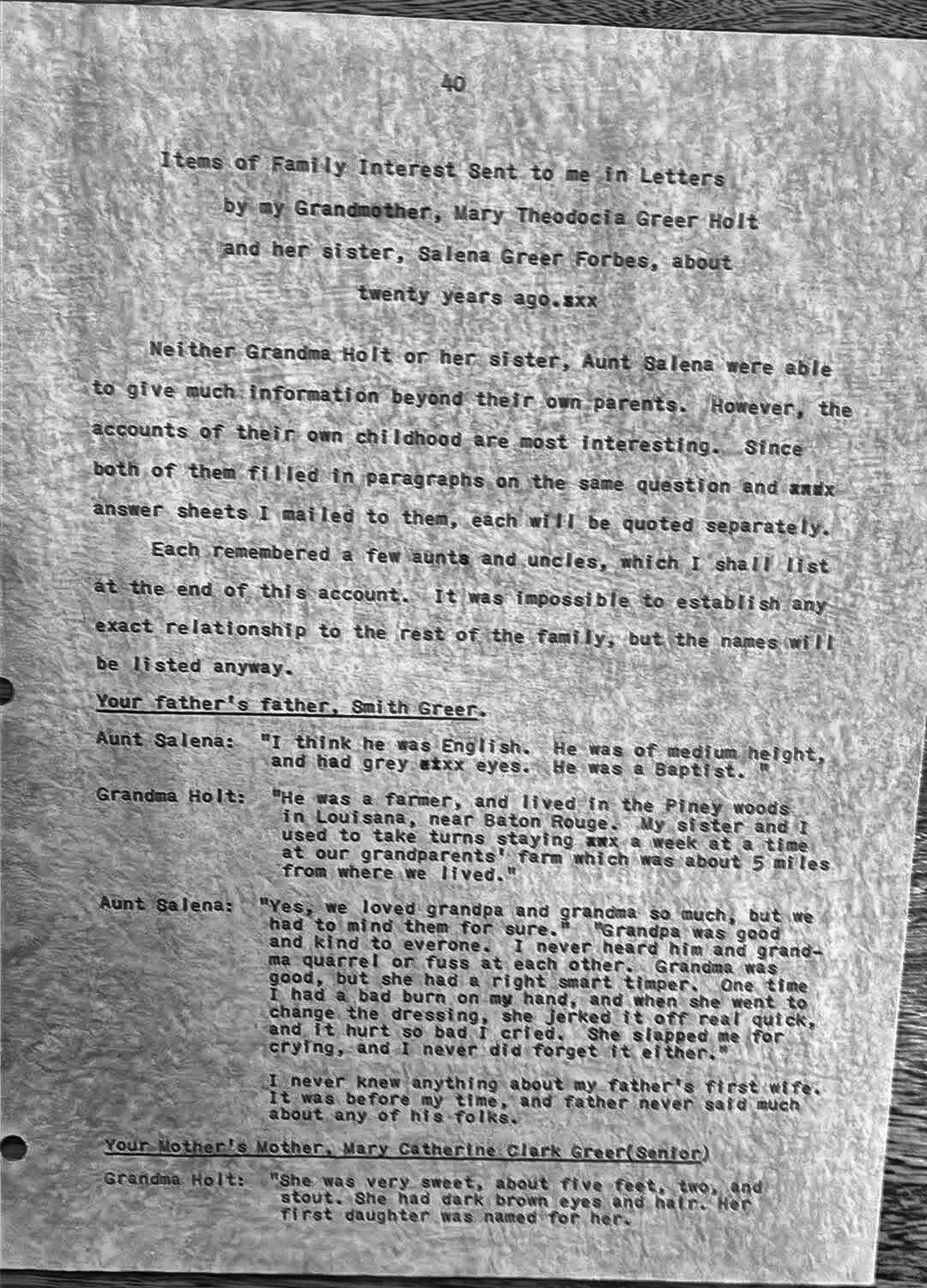
Letters Grandma Holt and her sister Salena Greer Forbes wrote to Ruby about their parents and grandparents, the piney woods near Baton Rouge, school days, games, and wash day.
- The sisters remember their grandfather Smith Greer’s farm in the piney woods near Baton Rouge, where they took turns staying a week at a time.
- Their father, Isaac Newton Greer, was about 5′6″ with grey eyes, played the fiddle, led the singing at the Baptist church, and lived to 87.
- Their mother was quiet and firm; at night the children carded, spun and knitted their own stockings.
- Grandma Holt was born May 15, 1870. The family moved to Titus County, Texas, when she was about six, then to Johnson County and Wise County, where she met Grandpa Holt.
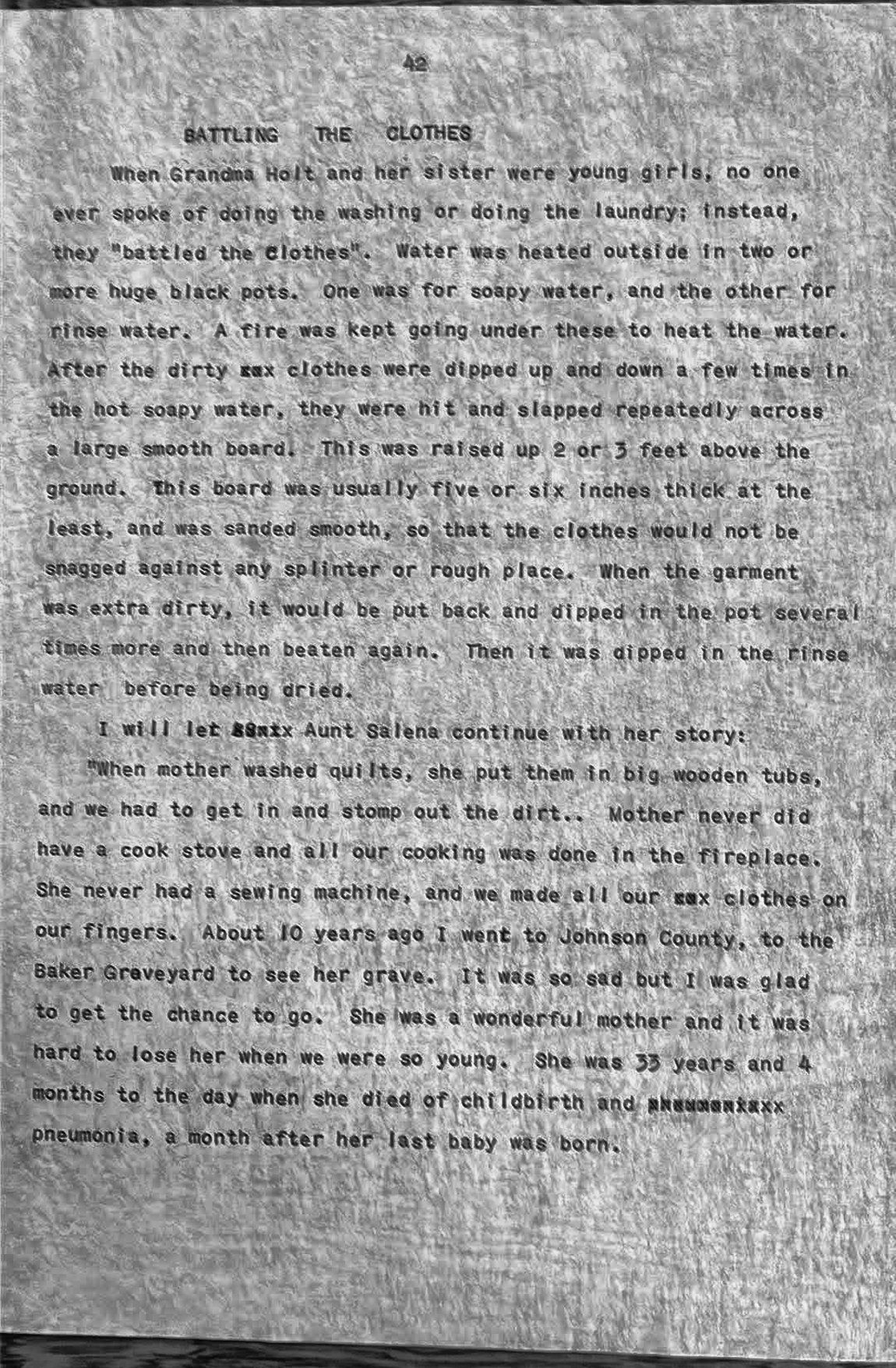
- Wash day meant “battling the clothes”: beating them on a board between pots of hot water, and stomping quilts clean in wooden tubs.
When Grandma Holt and her sister were young girls, no one ever spoke of doing the washing or doing the laundry; instead, they “battled the clothes.”
Ruby, “Battling the Clothes”
The pages (tap any page to see it full size):
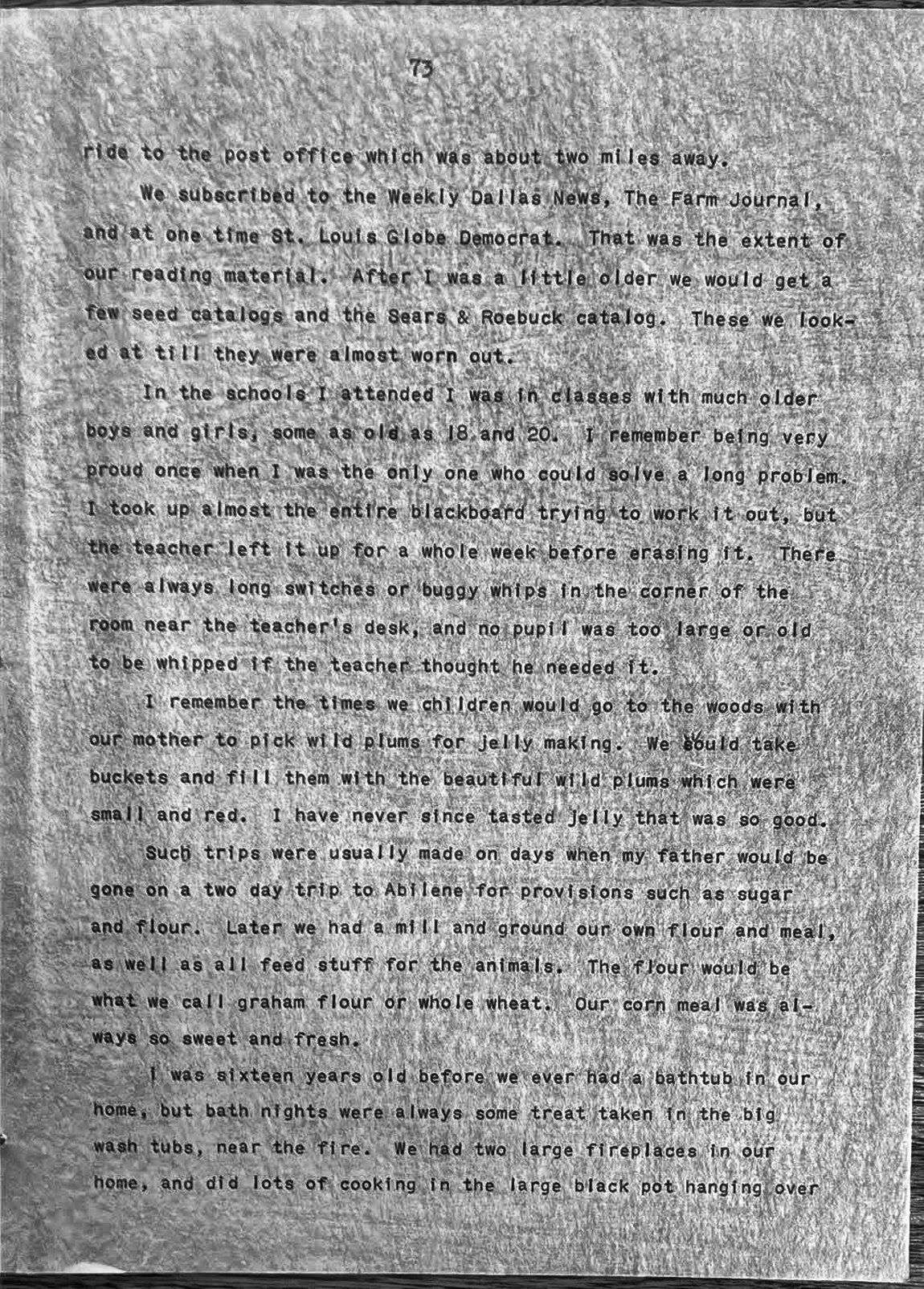
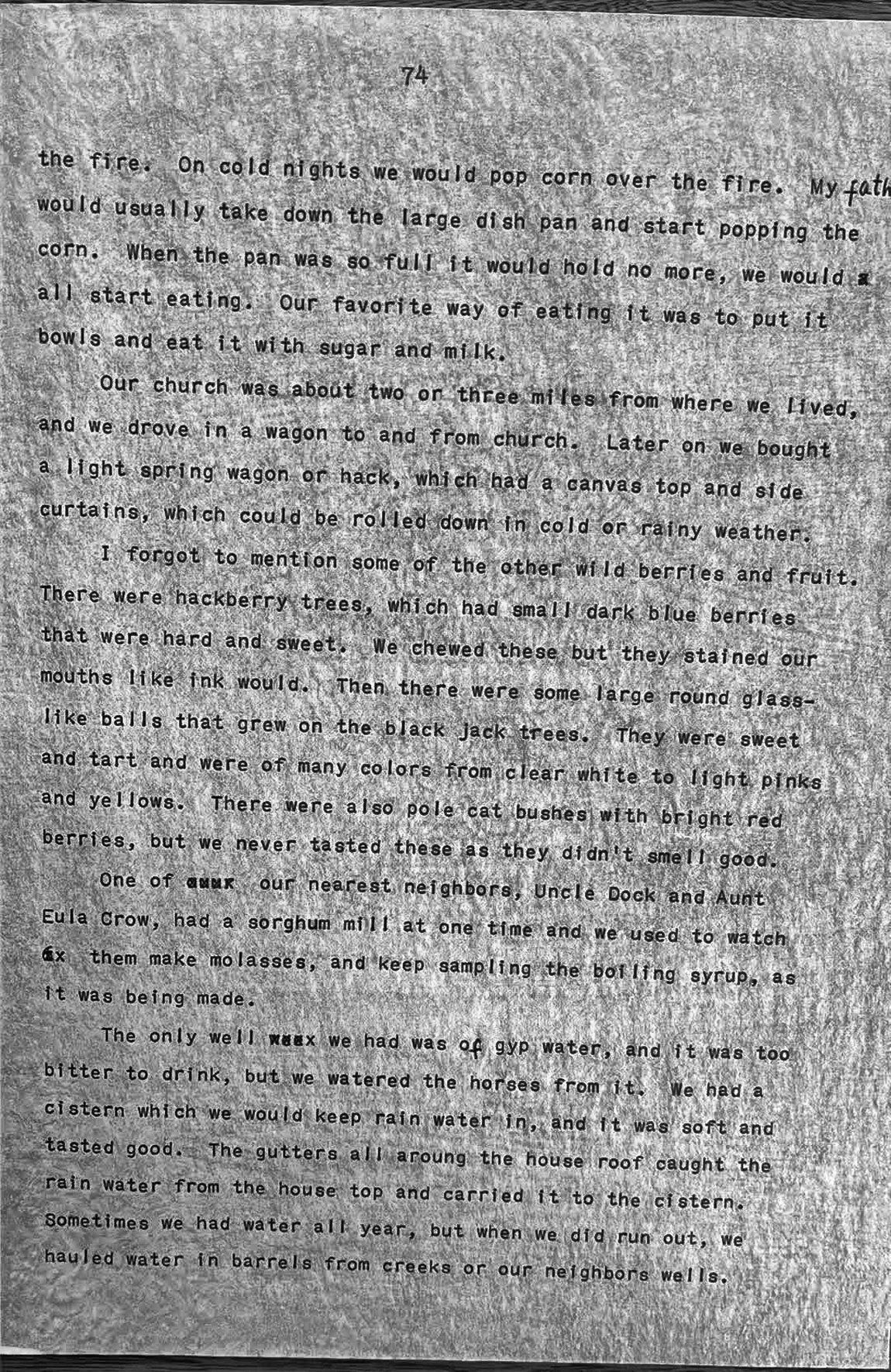
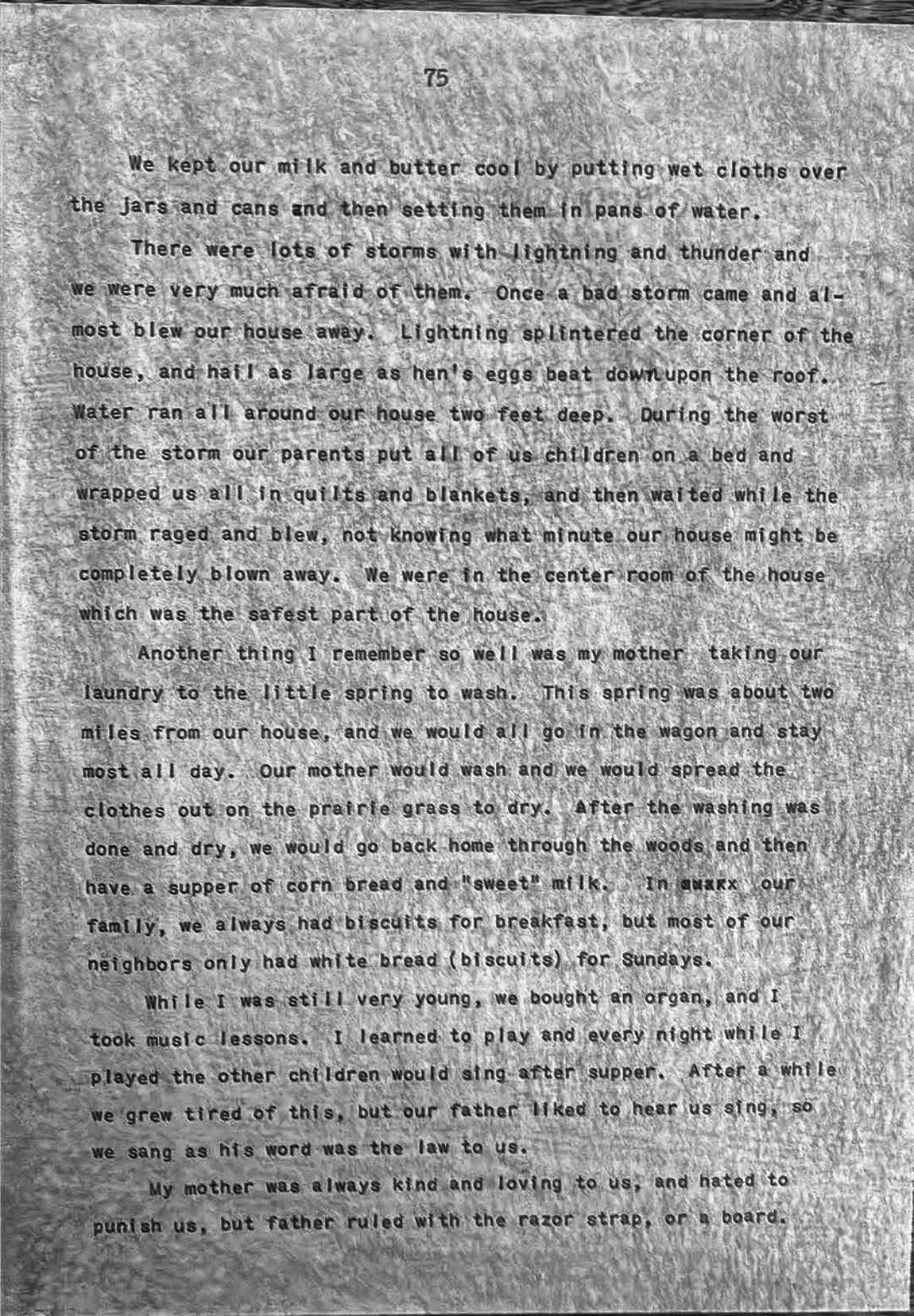
Chapter VI · pages 70–77
Nettie Ann Holt Wilson, 1951
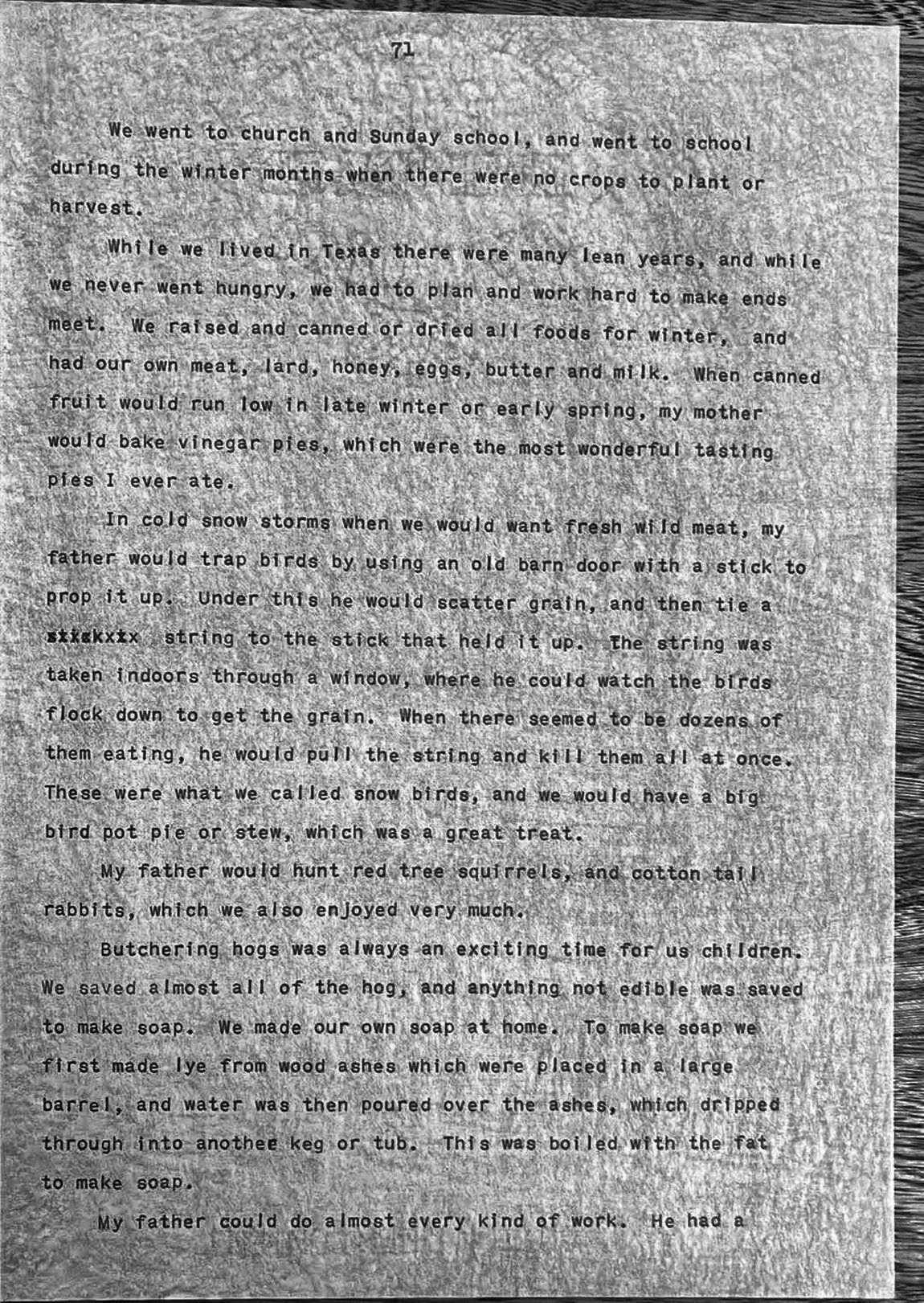
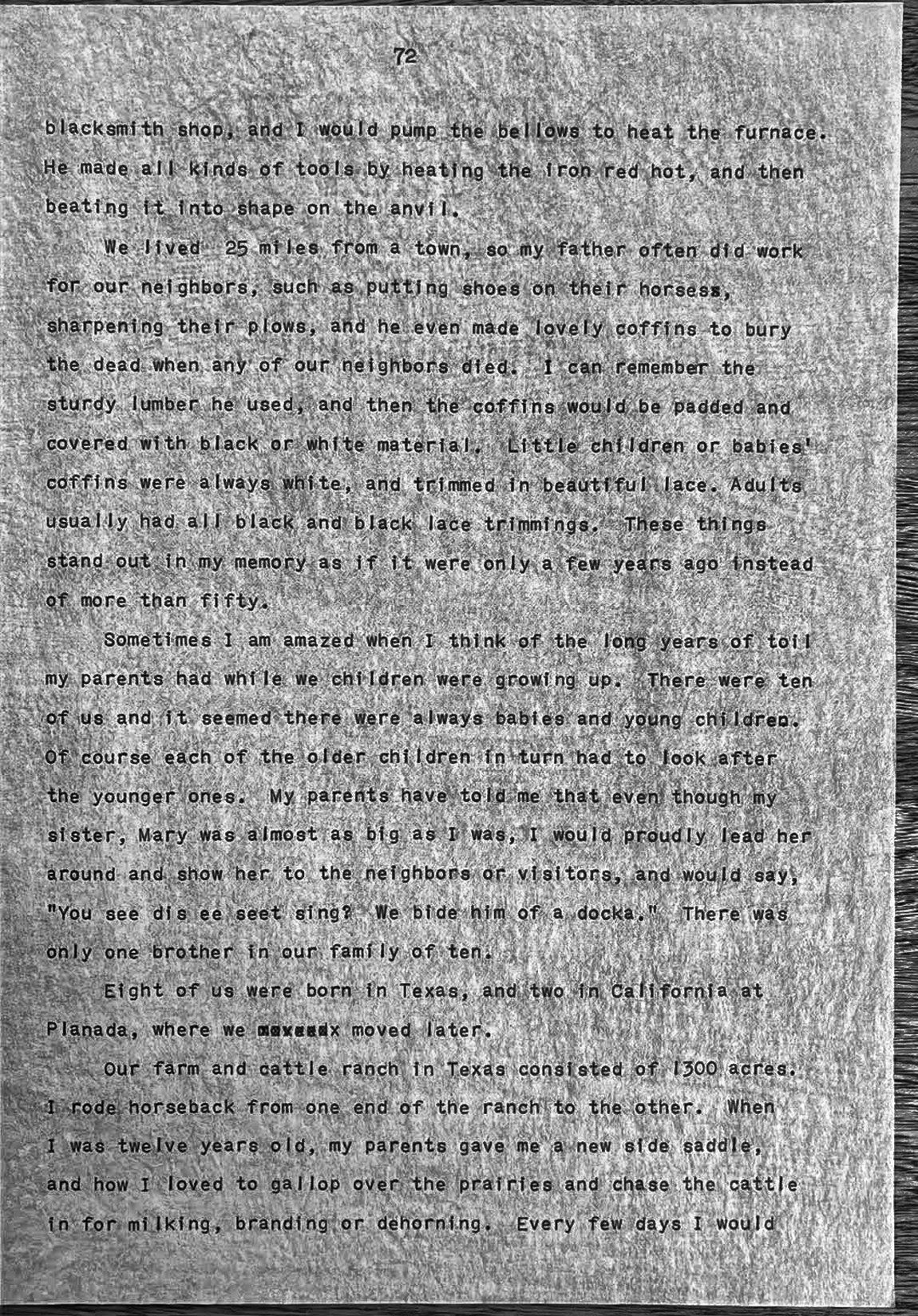
Ruby’s mother’s own story of growing up on the Holt ranch in Taylor County, Texas: lean years, vinegar pies, trapping birds in the snow, her father’s blacksmith shop, mischief and punishment, and the move to California by train when she was 15.
- Nettie was born near Paradise, Wise County, in 1890 and grew up on the family’s 1,300-acre ranch near Guion, 25 miles from town.
- She milked cows at seven, drove teams and farm machinery, and at eleven was nearly trampled when a team ran away with a threshing machine.
- Her father was a blacksmith who shod the neighbors’ horses and made coffins when anyone died.
- Treats were wild plum jelly, vinegar pies and popcorn eaten with sugar and milk; she was sixteen before the house had a bathtub.
- When she was 15 the family sold the ranch for $12.50 an acre and moved by train to Planada, California, buying land there at $25 an acre.
When canned fruit would run low in late winter or early spring, my mother would bake vinegar pies, which were the most wonderful tasting pies I ever ate.
Nettie Ann Holt Wilson, March 1951
The pages (tap any page to see it full size):
Chapter V · pages 46–69
The descendants of Michael and Mary Holt
Section V, Ruby’s list of all of Michael and Mary Holt’s descendants, was not among the pages Laurel photographed, and neither were pages 1 and 13. If you have them, please let Joe know.
With the book
The Holt family Bible
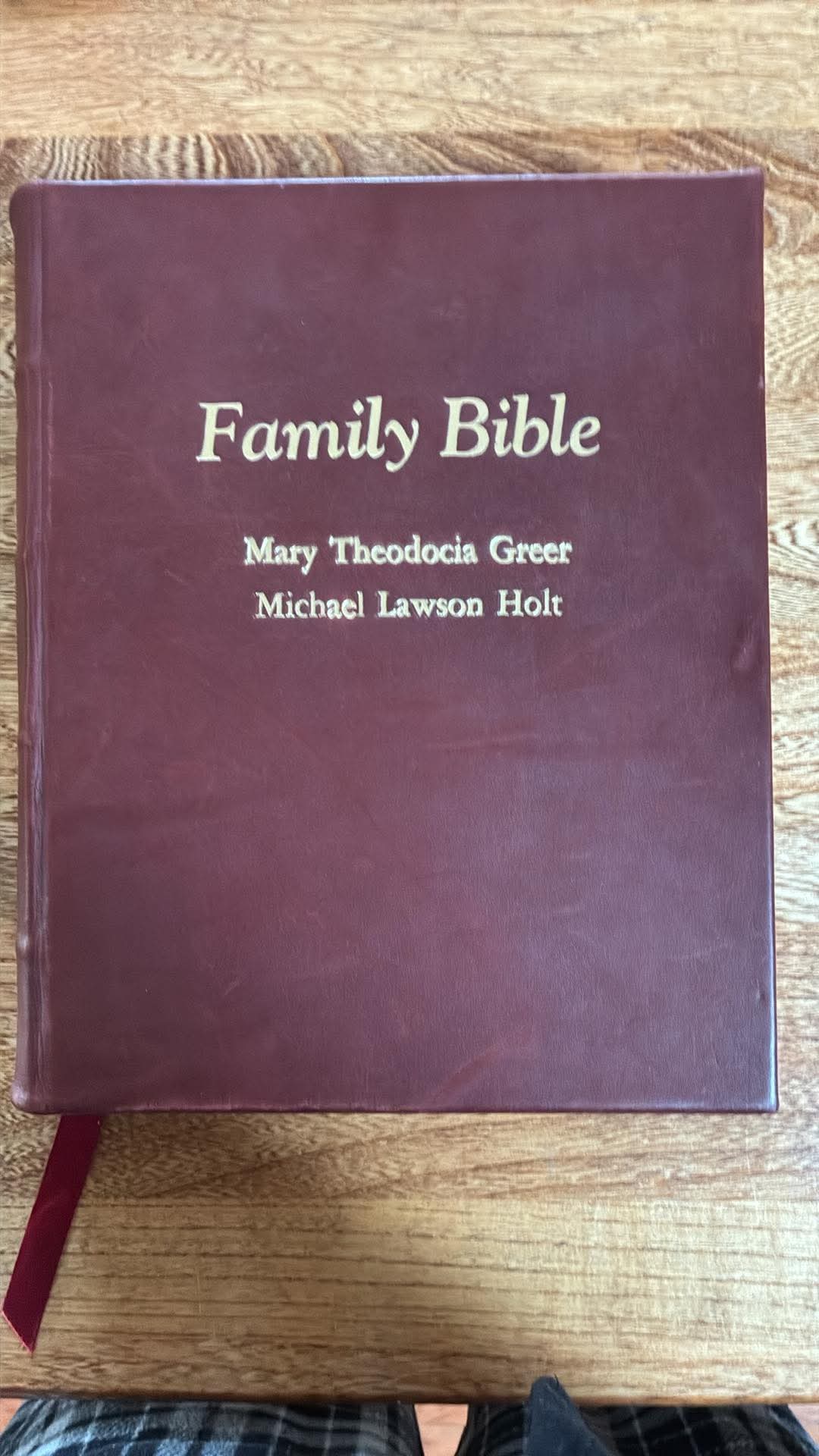
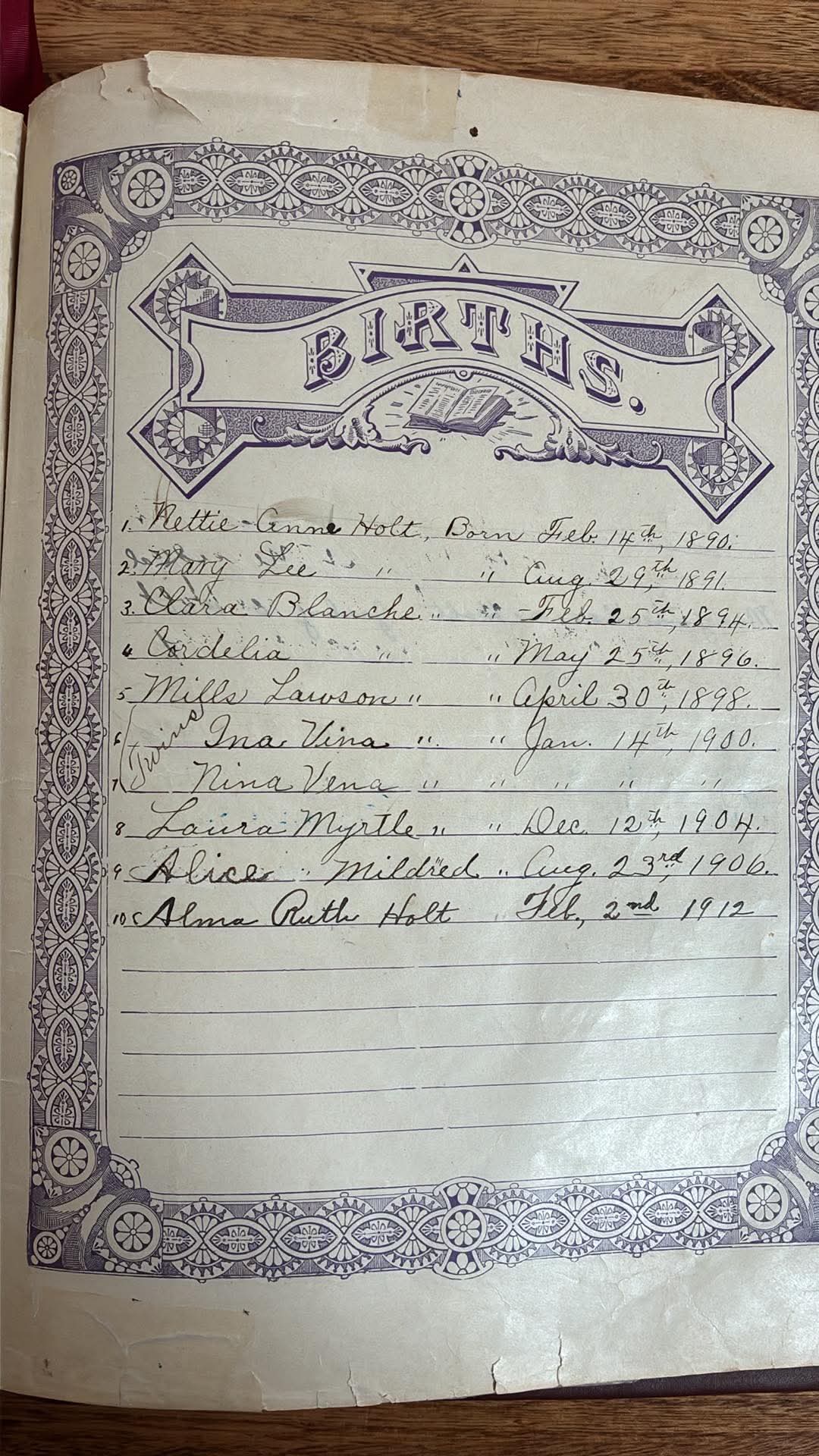
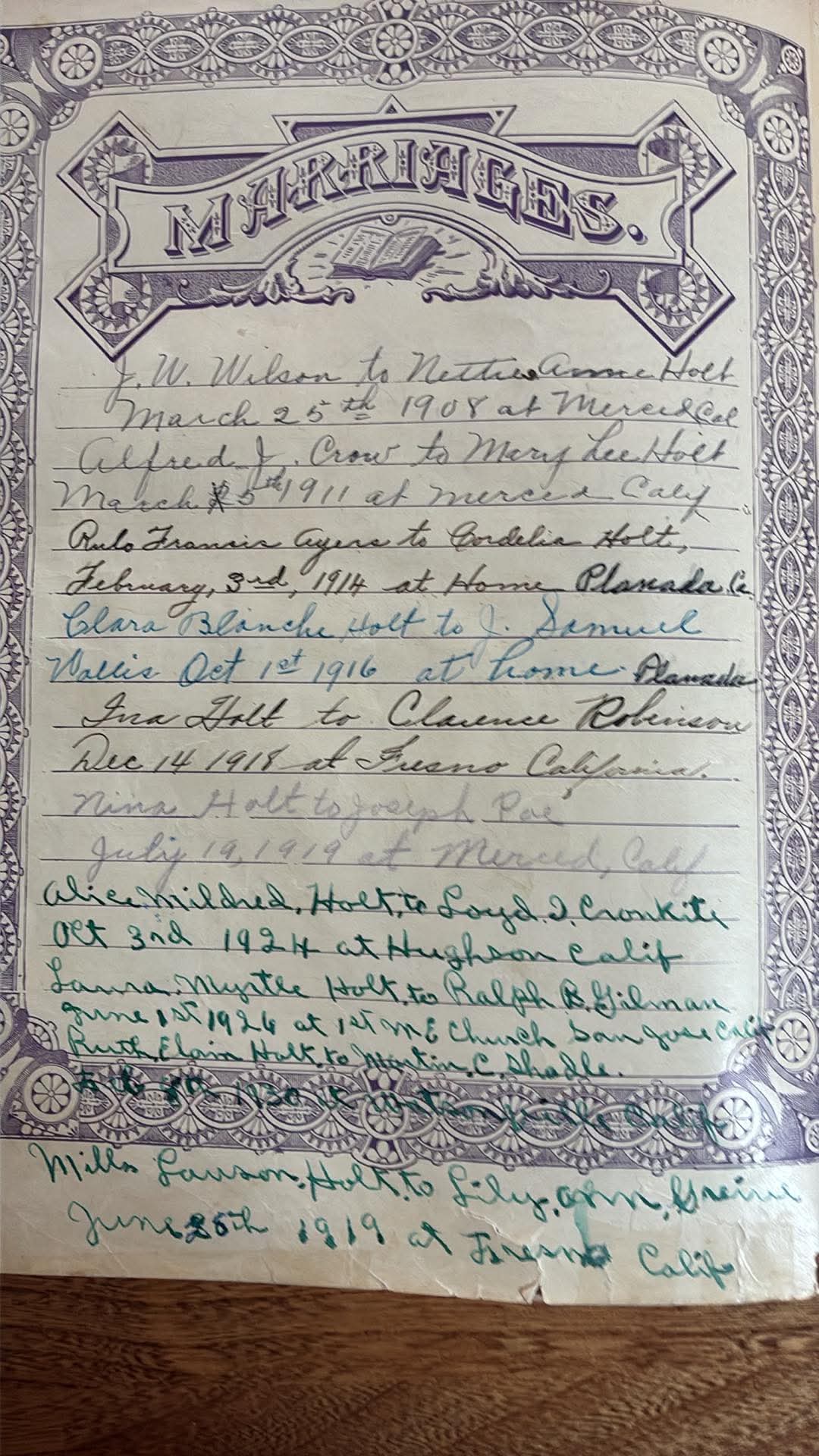
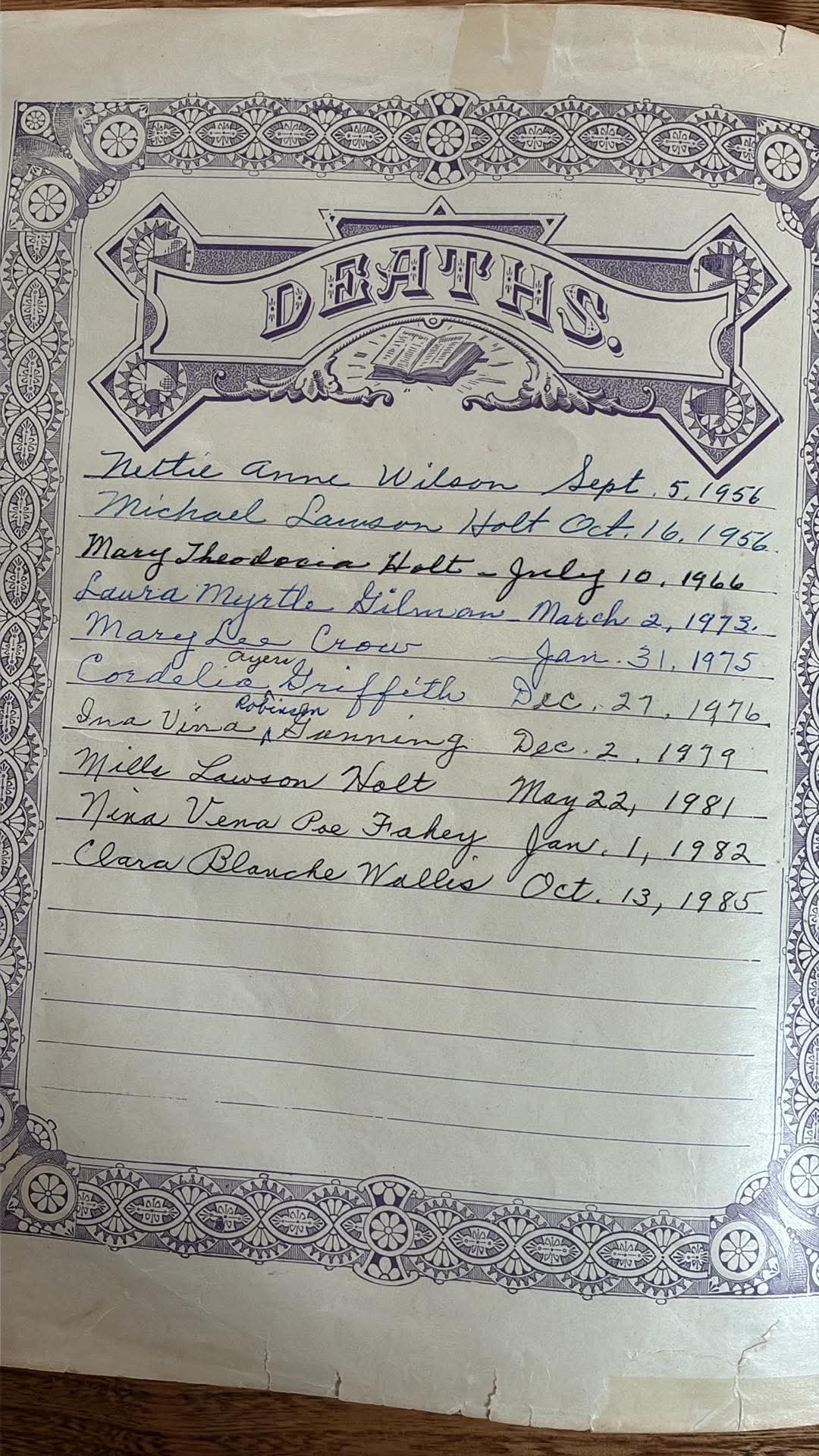
Michael and Mary Holt’s family Bible, rebound for Laurel in Corvallis with Grandma Holt’s name first: their 1889 marriage certificate and the births, marriages and deaths of all ten children.
Also from Laurel
Grandma Holt’s obituary, and two later papers
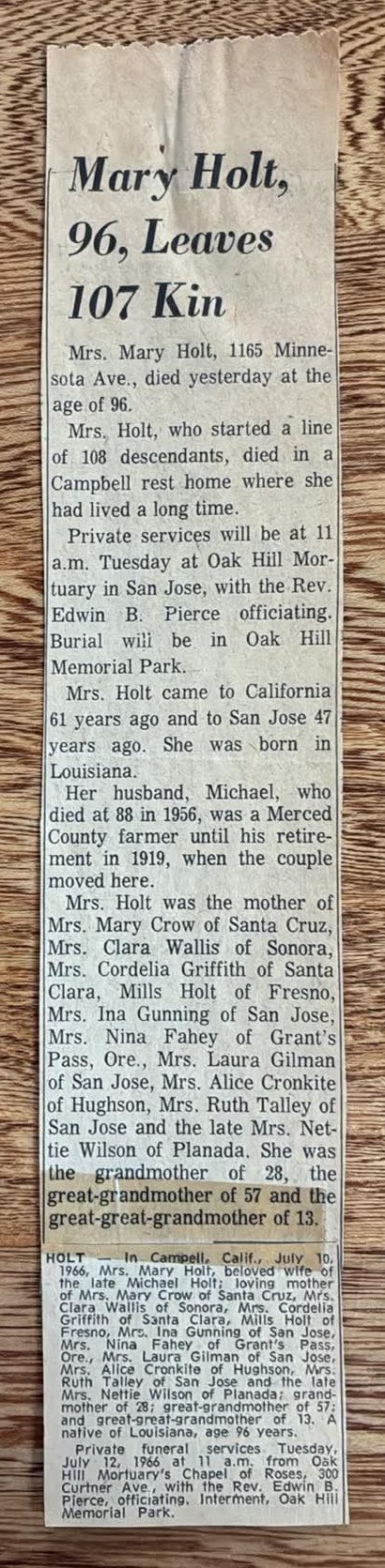
She died in Campbell in 1966 at 96, survived by nine of her ten children, 28 grandchildren, 57 great-grandchildren and 13 great-great-grandchildren.
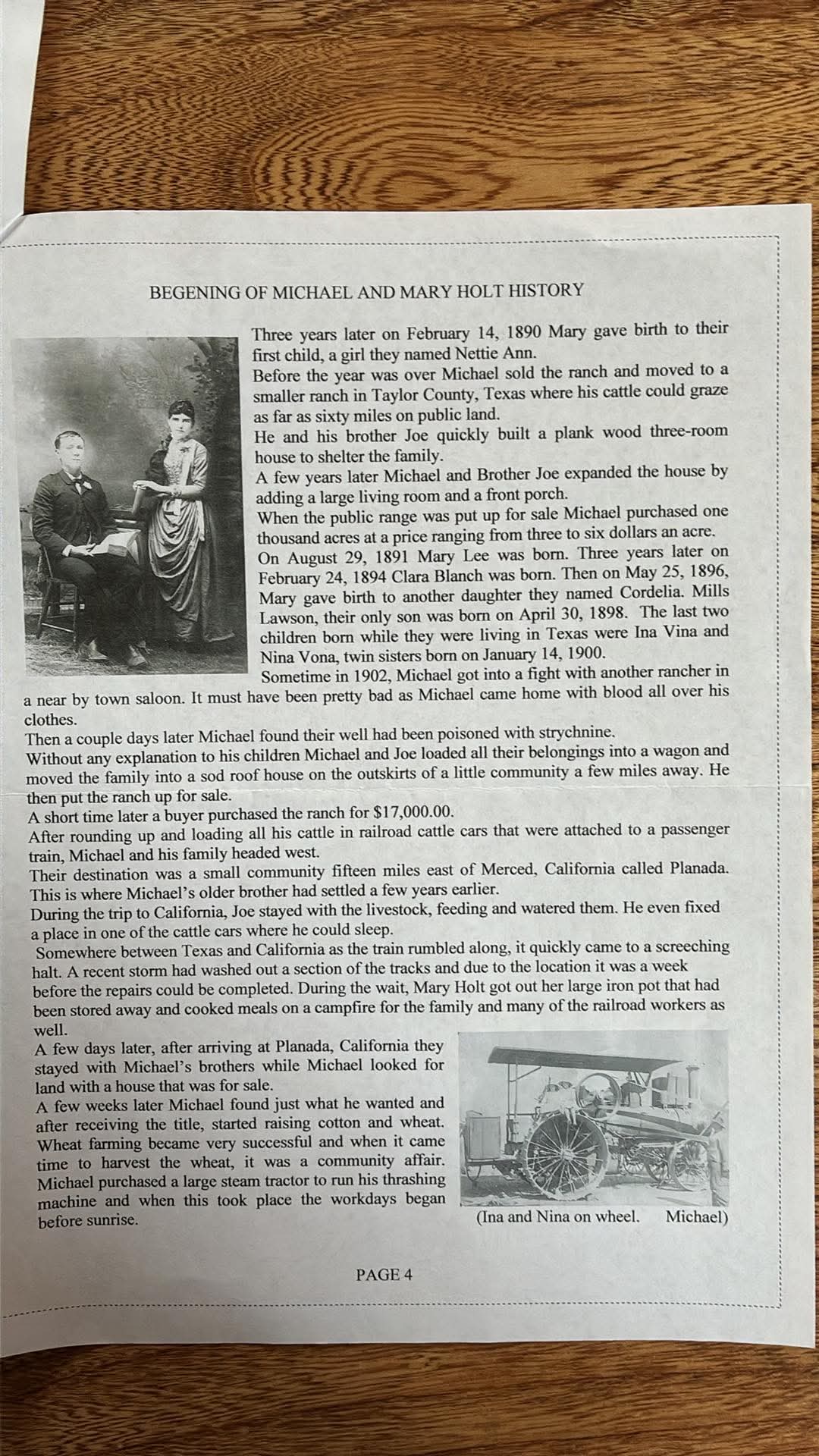
A later typed account by an unknown grandchild: the poisoned well, the $17,000 ranch sale and the train trip west.
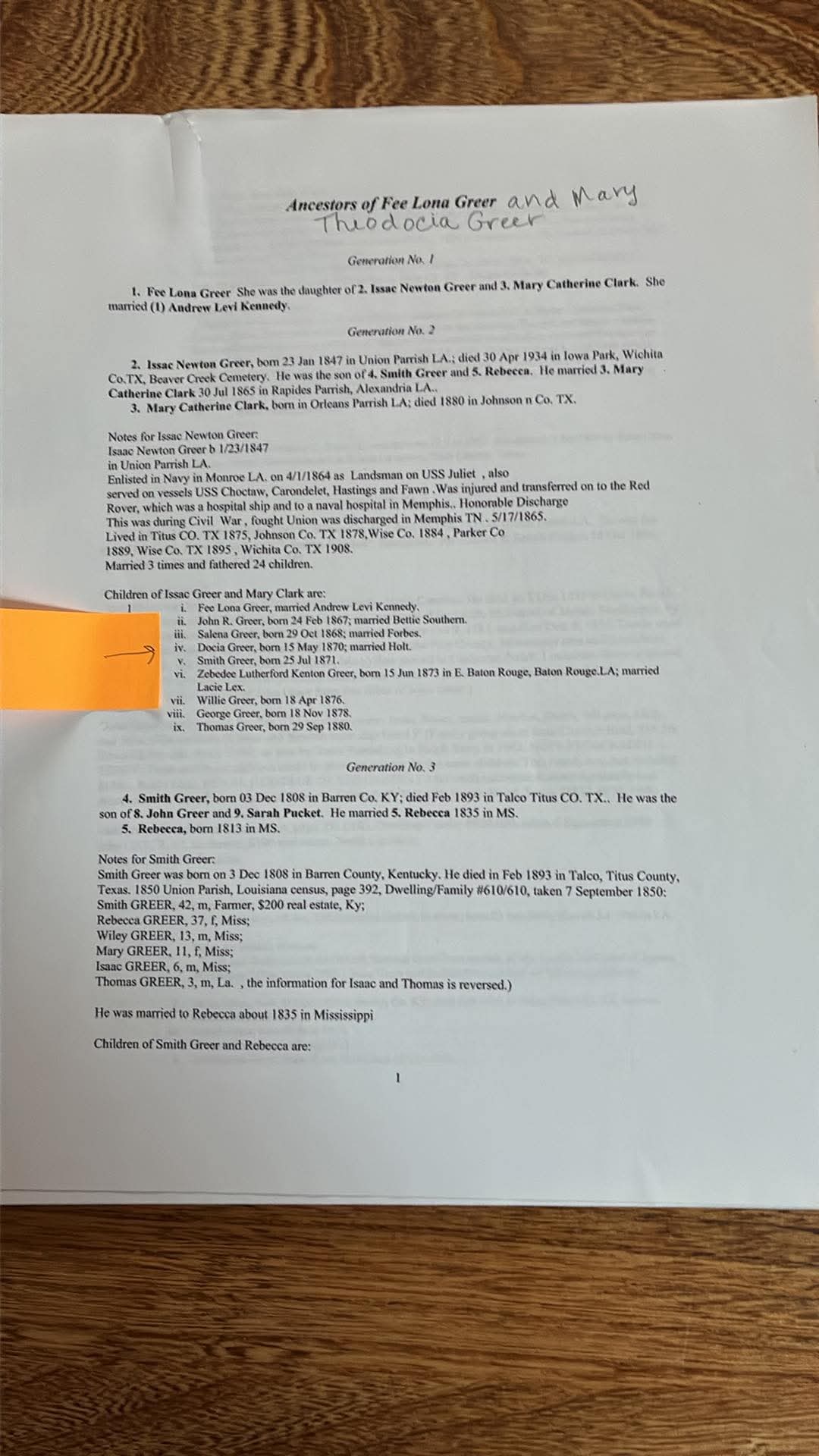
A 28-page lineage report on Grandma Holt’s Greers, with Isaac Newton Greer’s Union Navy service; its earliest generations are unverified.

