Joseph I · 1829–1898 · Elmshorn, Holstein → Sidney, Nebraska
The first of the four Joseph Sharmers was born Jochim Scharmer, a sailor’s son from a small Holstein river town. He went to sea at eighteen, dug for gold in California, raised cattle in three states, founded a bank on the Union Pacific line, and married an Irish girl from Massachusetts thirty-six years his junior. This page brings together everything the family and the records have so far told us about him.
At a glance
| Born | 25 May 1829, Elmshorn, Duchy of Holstein |
| Baptized | 31 May 1829, as Jochim Scharmer |
| Parents | Johann Scharmer and Anna Peters |
| Left Holstein | 1847, aged 18 |
| In America as | Joseph Sharmer, “Uncle Joe” |
| Married | 10 November 1884, Sidney, to Catherine “Kate” Conner |
| Children | Laura, Kathryn, Josephine “Dodie”, Joseph |
| Died | 14 June 1898, Sidney, Nebraska, aged 69 |
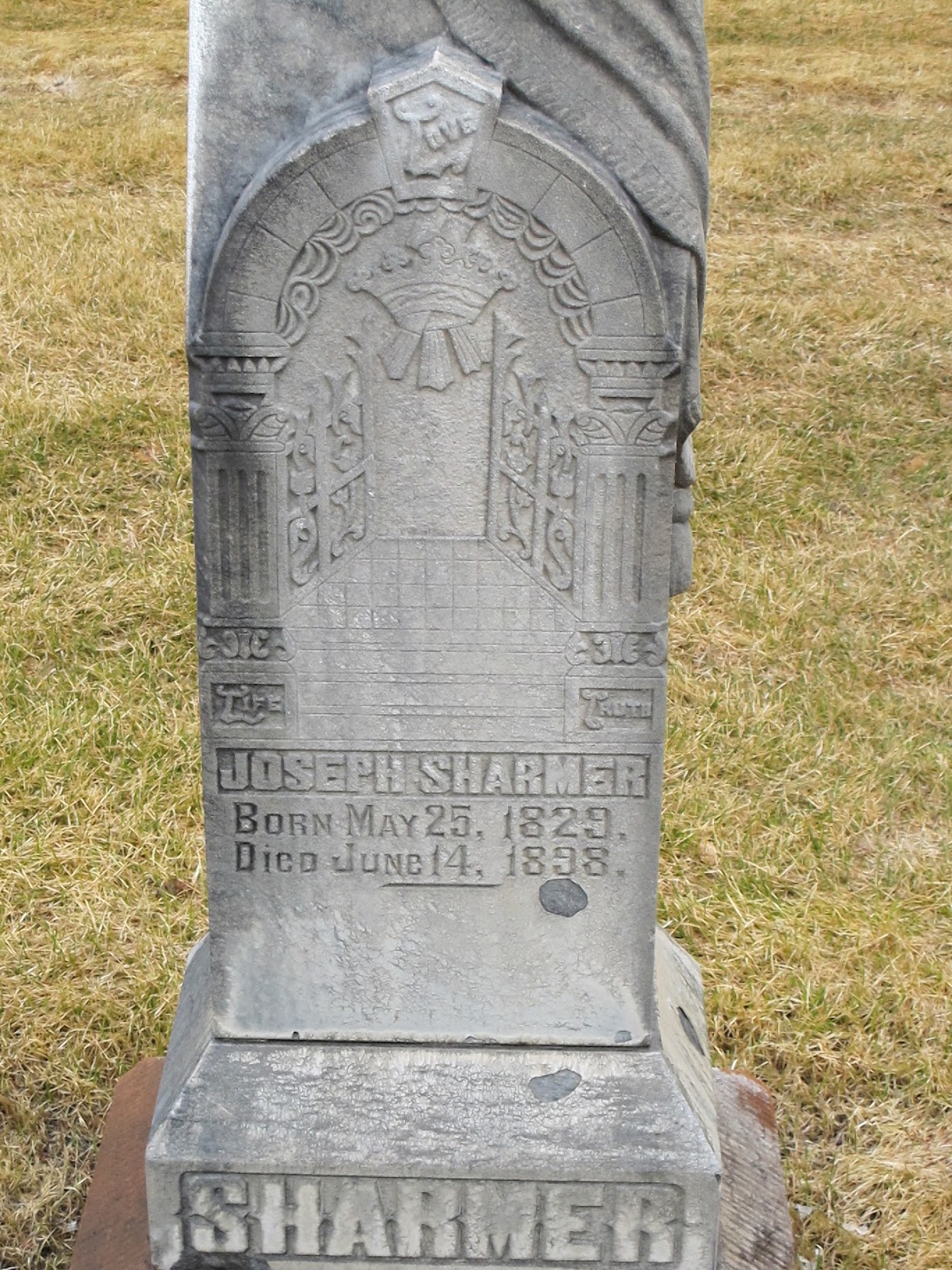
| Buried | Greenwood Cemetery, Sidney, Block A, Lot 10 |
How he was found
For more than a century the family knew only that Joseph Sharmer “came over from Germany.” His obituaries narrowed it to Holstein. The rest came from two records that fit together exactly.
Sidney, Nebraska · 10 November 1884
Marriage record, Cheyenne County. Groom: Joseph Sharmer, 52, born Holstein, Germany. Father: John Sharmer. Mother: Annie Pearson. Bride: Kate Conner, 19, born Quincy, Massachusetts; father Peter Conner, mother Kate Caldwell.
Elmshorn, Holstein · 31 May 1829
Baptism register, Elmshorn, 1829, no. 63. Scharmer, Jochim. Born 25.5.1829, baptized 31.5.1829. Father: Johann Scharmer, am Bauerwege. Mother: Anna, geb. Peters. Godparents: Johann Grewe, bei der Kirche; Timm Boldt, auf Spitzerdorf; Margaretha Lau, in Langeloh.
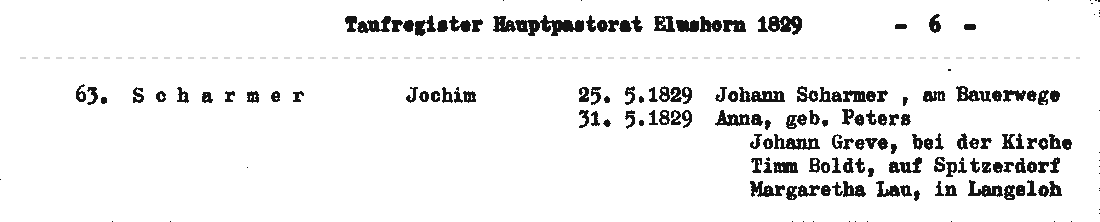
Everything that can be checked agrees. The birth date, 25 May 1829, is the date on his headstone in Sidney and in his obituary. The place is Holstein. His father was Johann, “John” in English. And “Annie Pearson” is how a clerk in Nebraska would hear and write the Low German name Anna Peters. One discrepancy is easily explained: at his wedding Joseph gave his age as 52 when he was 55, not unusual for a bridegroom marrying a girl of nineteen.
Jochim is the North German form of Joachim; in everyday Low German it was Jochen. He was named, in the custom of the region, after both his grandfathers, each called Jochim. In America the name became Joseph, and Sidney knew him as “Uncle Joe.” Every Joseph Sharmer since carries it.
Elmshorn
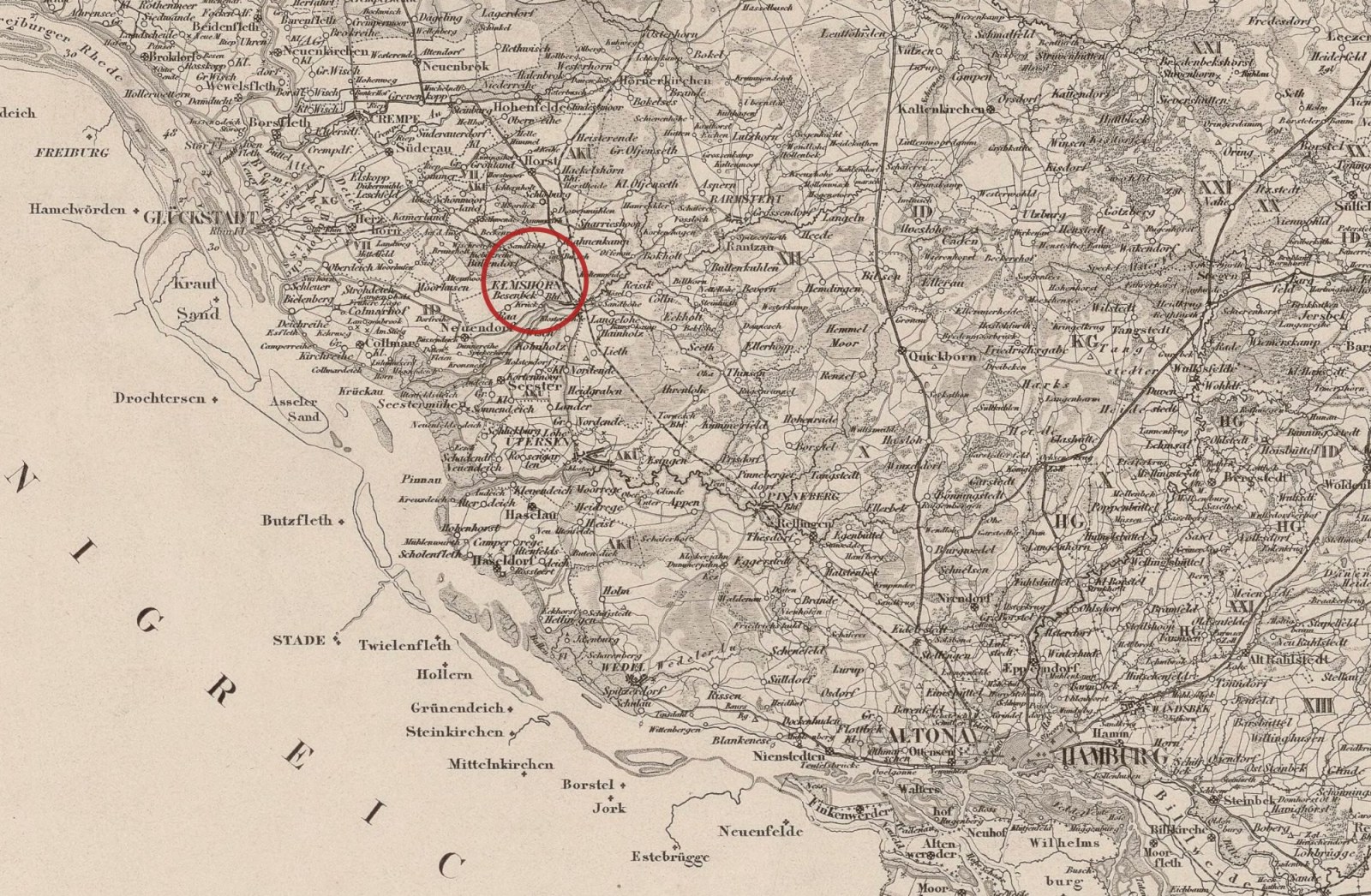
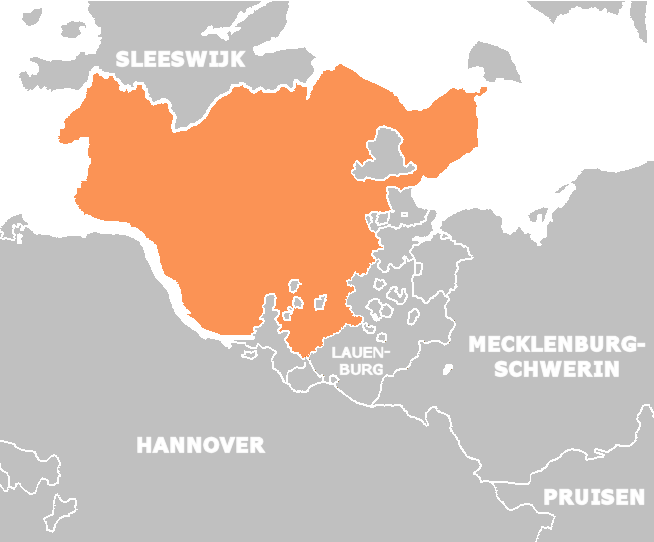
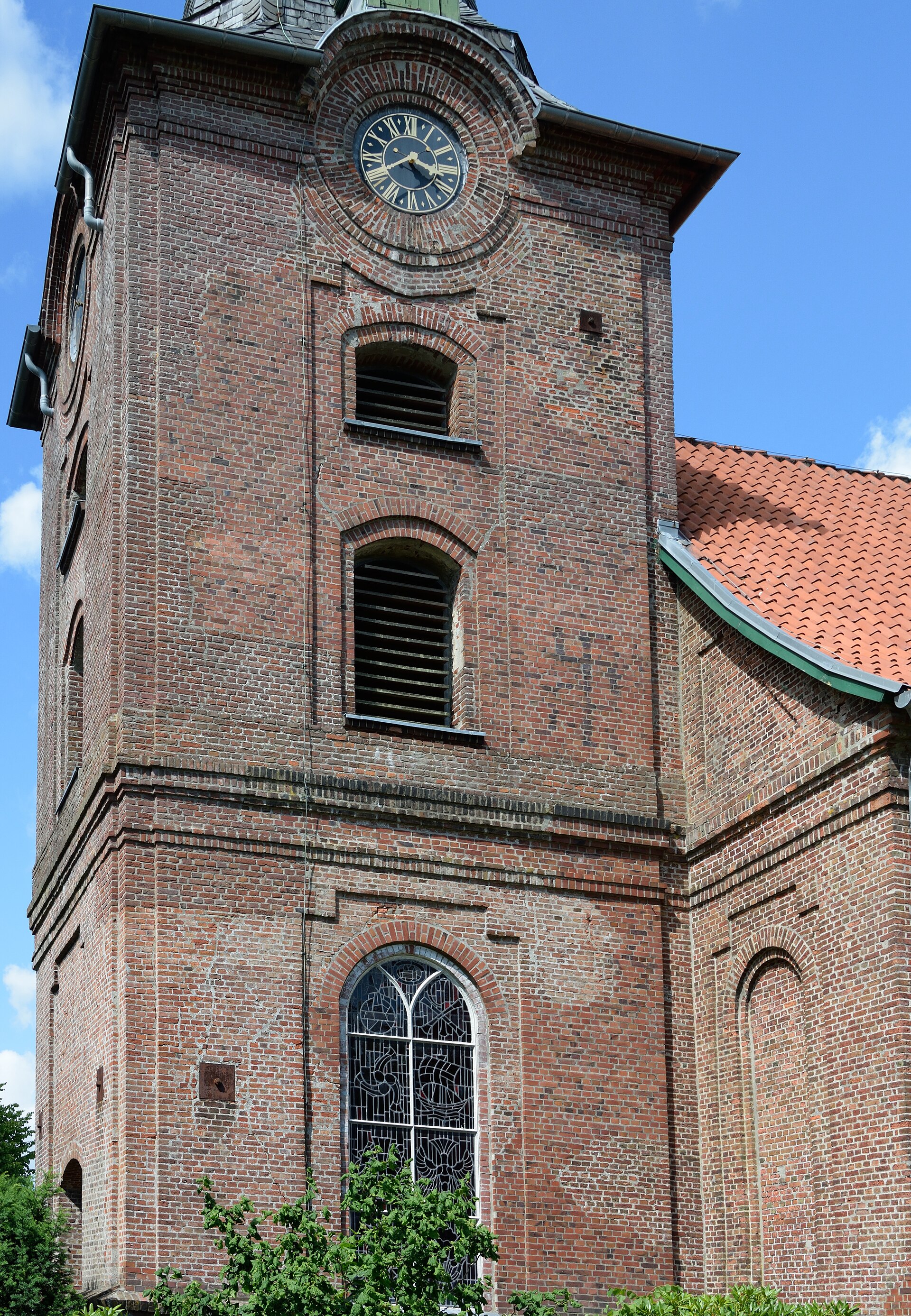
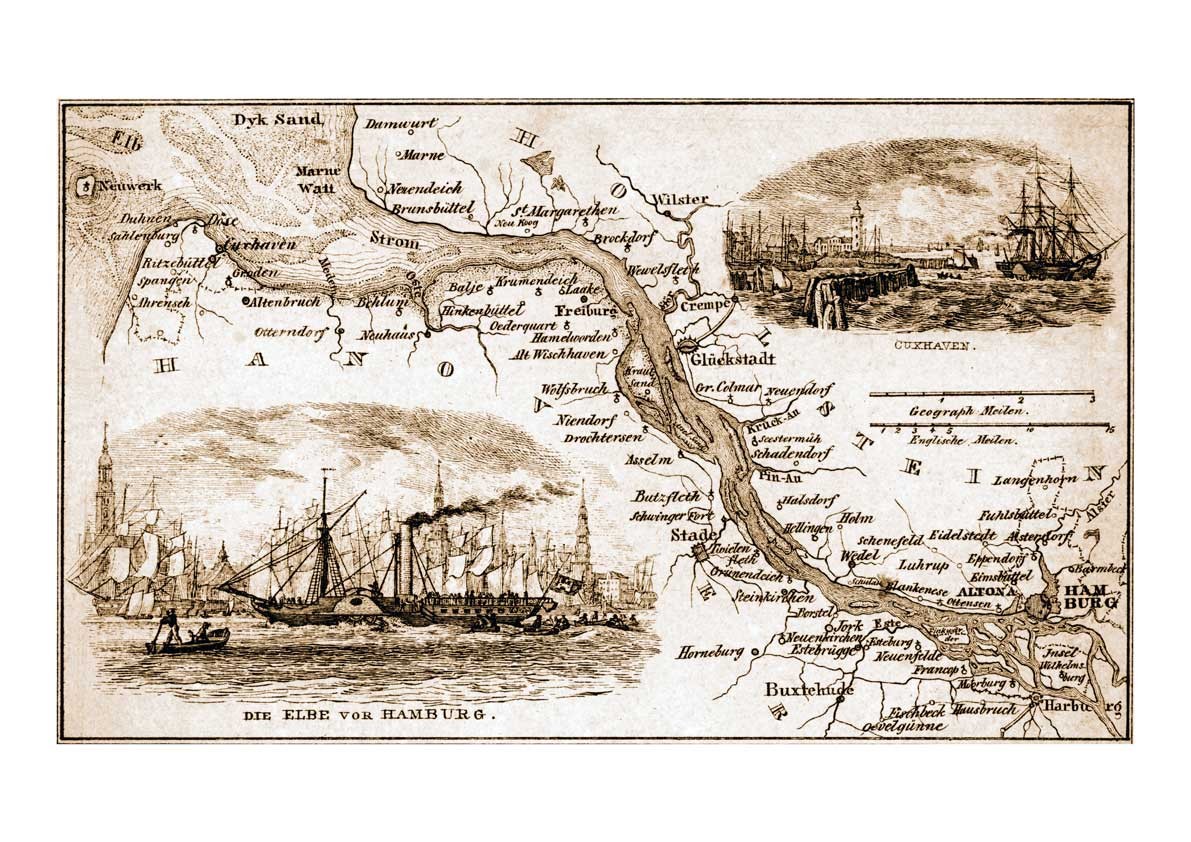
Elmshorn sits on the Krückau, a small tidal river that runs into the Elbe below Glückstadt, about twenty miles northwest of Hamburg. In 1829 it was a small market town in the Duchy of Holstein, a German-speaking duchy ruled by the King of Denmark. Holstein passed to Prussia after the wars of 1864–66, and so became part of Germany only after Jochim had left.
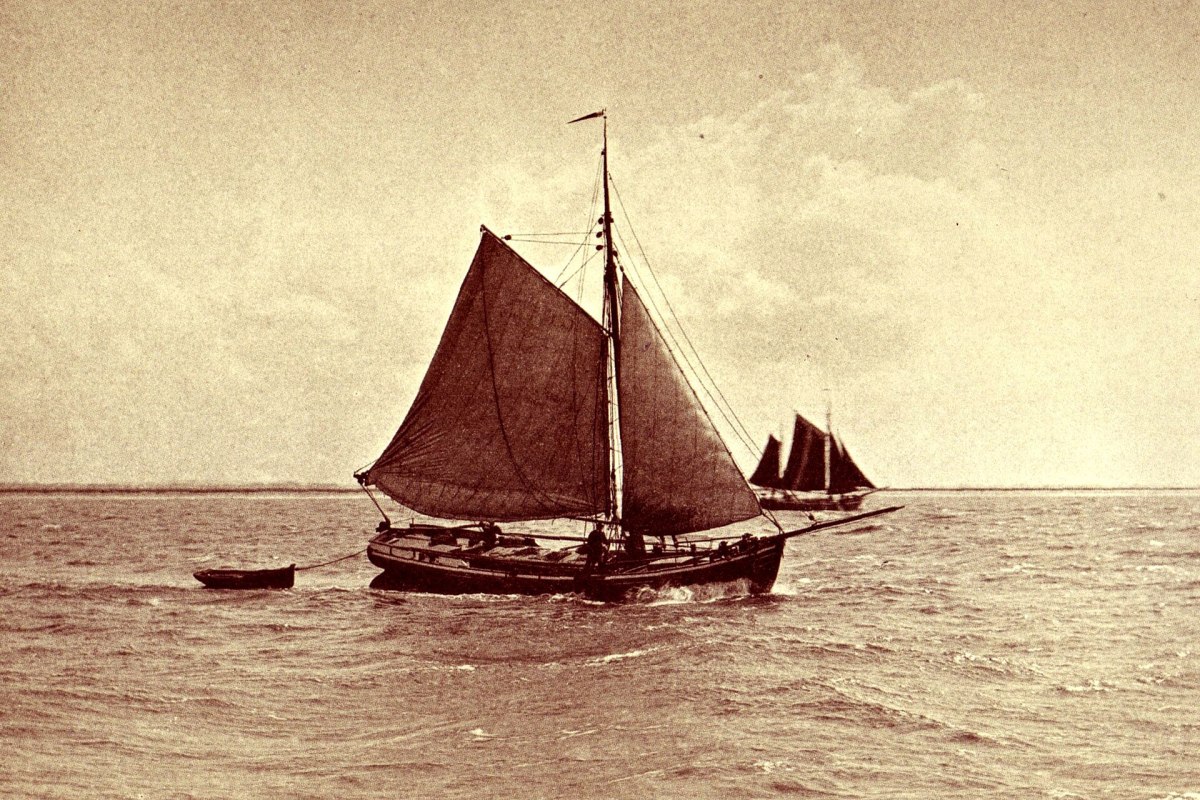
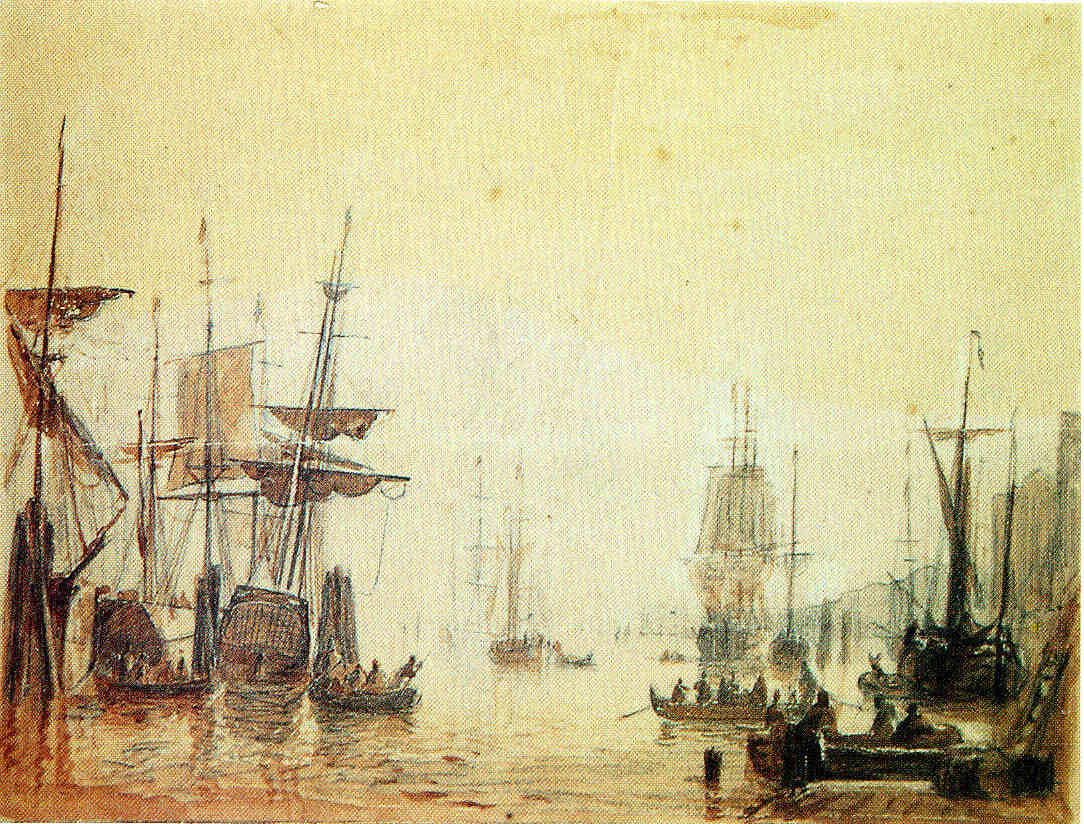
The town lived by the river: boatyards and shipbuilders, barges and small sailing ships carrying cargo down the Elbe to Hamburg and the North Sea, and the families who crewed them. The Scharmers were one of those families. Elmshorn’s church books record Scharmers from the 1600s onward.
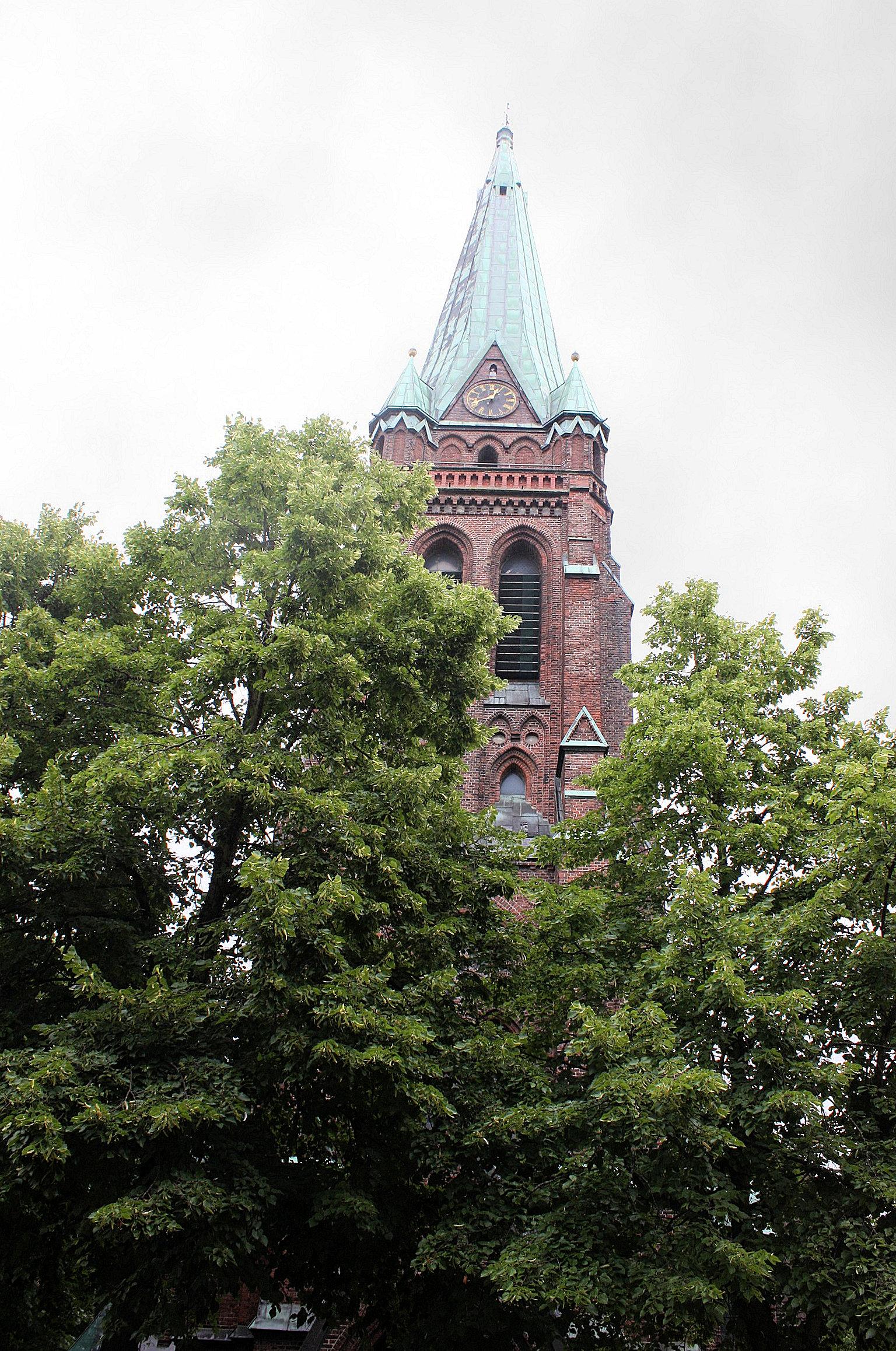
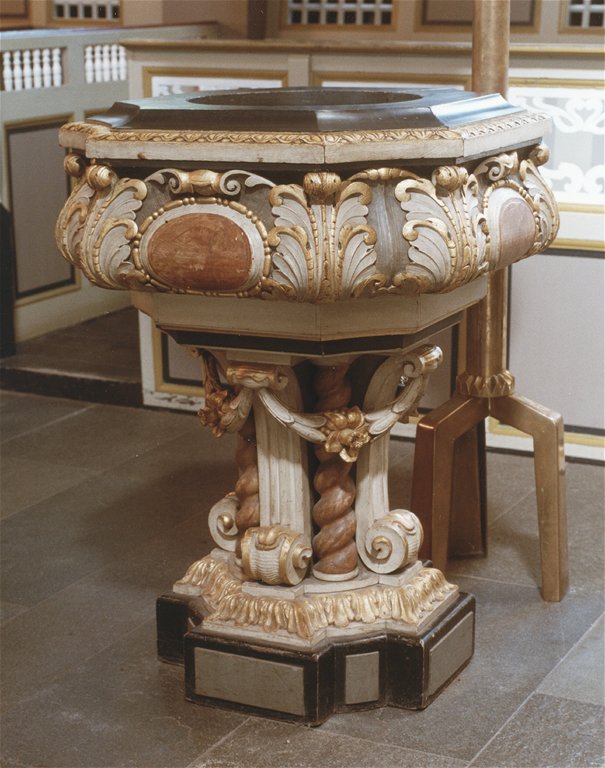
Jochim was baptized by the town’s Lutheran parish. In 1829 his father lived on the Bauerweg; by 1847 the family was living on the Sandberg, an old street near the river.
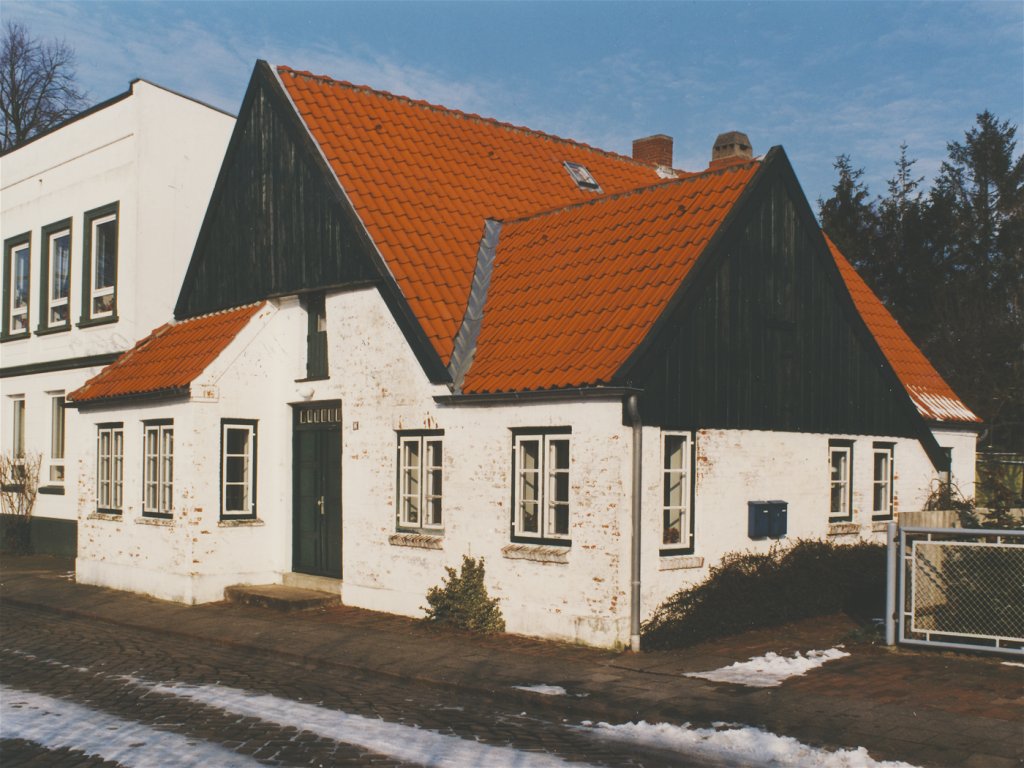
His family in Holstein
Jochim was the eldest child of his father’s second marriage. The Elmshorn church books give the family as follows:
Grandparents
- Jochim Scharmer of Glindesmoor, a hamlet of Hohenfelde about six miles north-east of Elmshorn, and his wife, née Timmermann: his father’s parents. Both had died by 1823. The church books disagree on her first name: Anna in 1823, Elsabe in 1829.
- Jochim Peters of the Wehdenkamp, just outside Elmshorn, and Catharina Margaretha Kock (also written Koch): his mother’s parents. Jochim was still living in Elmshorn in 1829; Catharina Margaretha had died by then.
Parents
- Johann Scharmer of Elmshorn. He first married Magdalena Peters on 30 November 1823; she died on 2 November 1825. Their daughter Catharina (1823–1824) died as a baby and their son Hinrich (1825–1840) at fifteen.
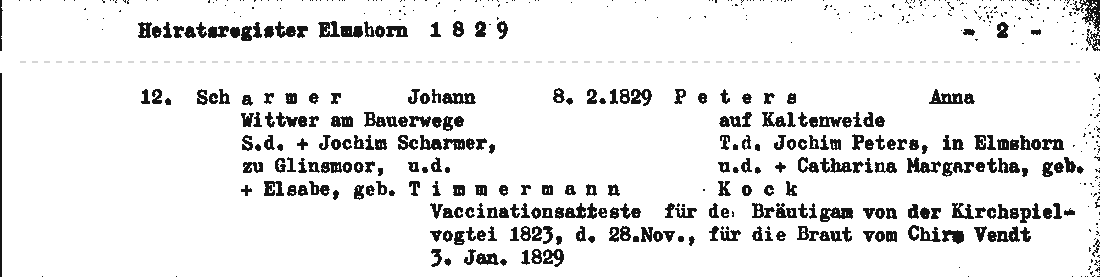
- Johann married Anna Peters on 8 February 1829 in Elmshorn. Anna was born on 8 April 1798 on the Wehdenkamp and baptized three days later; she was 31 when Jochim was born. Because Joseph I was 68 when his son Joe was born, only four generations separate Anna from her great-granddaughter Laurel: Anna (1798), Joseph (1829), Joe (1897) and Laurel, born in three different centuries. Her brother and sisters were Catharina (born 1796), Margaretha (1804), Magdalena (1807) and Matthias Jacob (1809).
Brother and sisters
- Jochim, born 25 May 1829, our Joseph
- Anna Magdalena, born 18 November 1831; married Johann Thede in 1859, and Georg Heinrich Hoffmann in 1871
- Anna, born 9 November 1834; died in Elmshorn on 17 December 1874
- Johann, born 29 July 1837; his later life is not yet known
Neighbours on the Wehdenkamp
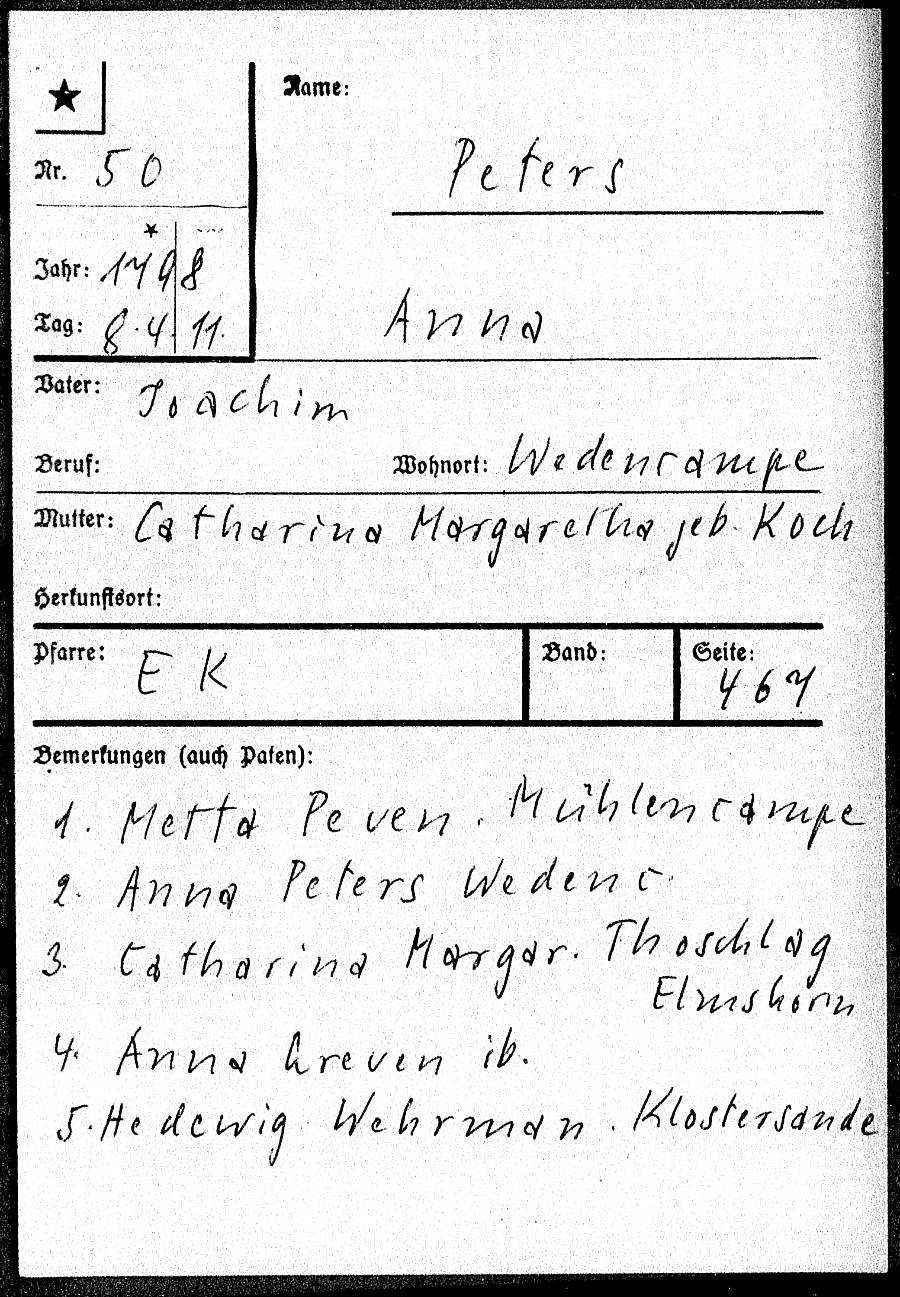
Joseph’s parents grew up as neighbours. Anna Peters was born on the Wehdenkamp, a stretch of farmland on the edge of Elmshorn, where her father Jochim lived. When Johann Scharmer first married, in 1823, he too was living “auf dem Wehdenkamp.”
Anna had five godmothers, all women of the neighbourhood: Metta Peven of the Mühlenkamp, Anna Peters of the Wehdenkamp, Catharina Margaretha Thoschlag of Elmshorn, Anna Greven of Elmshorn, and Hedewig Wehrmann of Klostersande.
Johann’s own roots lay a few miles further out. Both his marriage entries say his father was “the late Jochim Scharmer”: of Hohenfelde in 1823, of Glindesmoor in 1829. These are the same place, since Glindesmoor is a hamlet within Hohenfelde. Hohenfelde was a separate parish with its own church, which is why Johann’s own baptism isn’t in the Elmshorn books. Scharmers were still farming in Hohenfelde later in the century.

Further back: the night watchman of Klostersande
Joseph’s grandfather Jochim Peters can very probably be traced one generation further. He seems to be the Jochim Peters born on 29 August 1774 at Klostersande, on the south side of Elmshorn, son of Jacob Peters and Catharina Wehrmann. He is the only Jochim Peters born in the parish in those years who lived to adulthood. The family names fit too. Jochim named his first daughter Catharina, after his mother, and his youngest son Matthias Jacob, after his father. One of the godmothers at Anna’s baptism in 1798 was a Wehrmann from Klostersande.
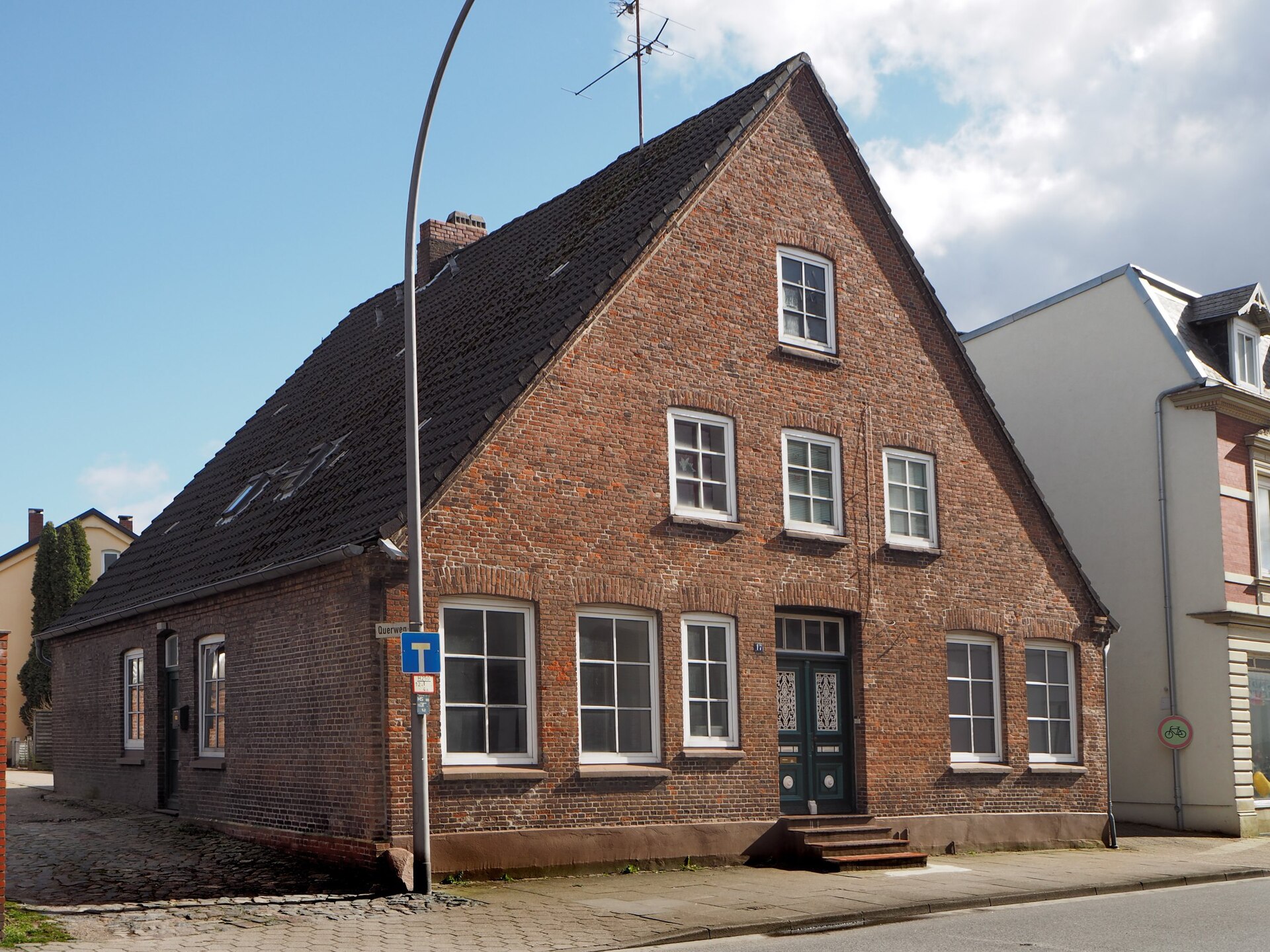
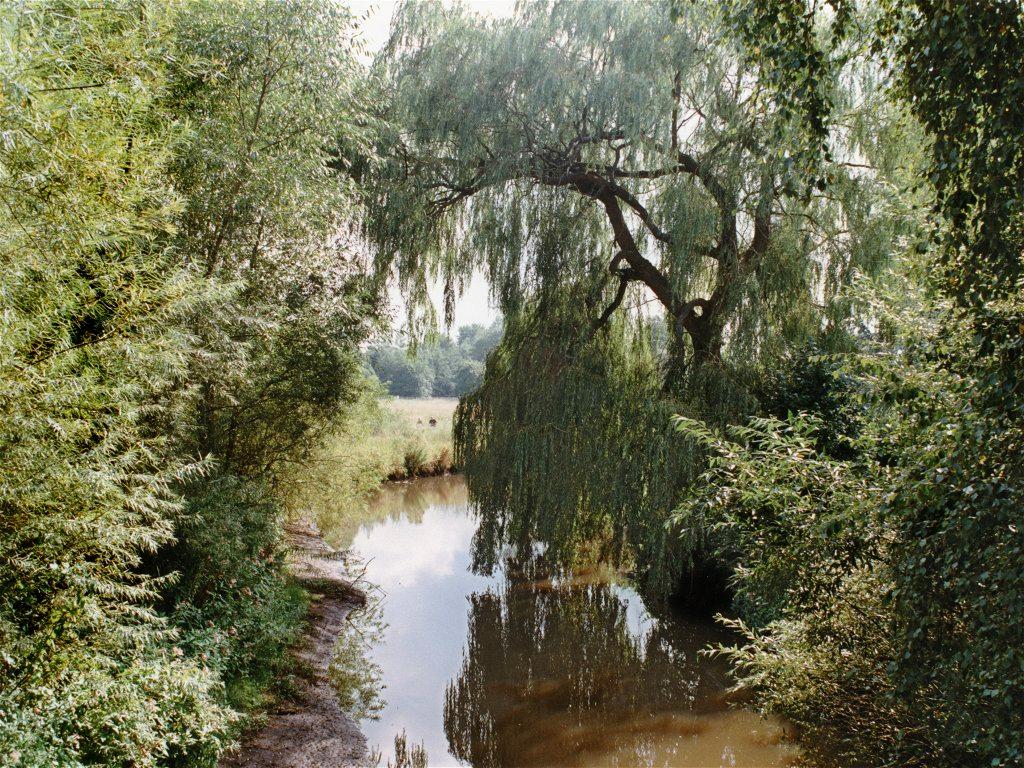
Klostersande is the old riverside quarter on the south side of Elmshorn, along the Krückau, the little river that carried Elmshorn’s ships down to the Elbe. The Peters, Wehrmann and Münster families all lived there in the 1700s. A few of its old houses still stand; one is first mentioned in 1775, when Jacob Peters was watchman there.
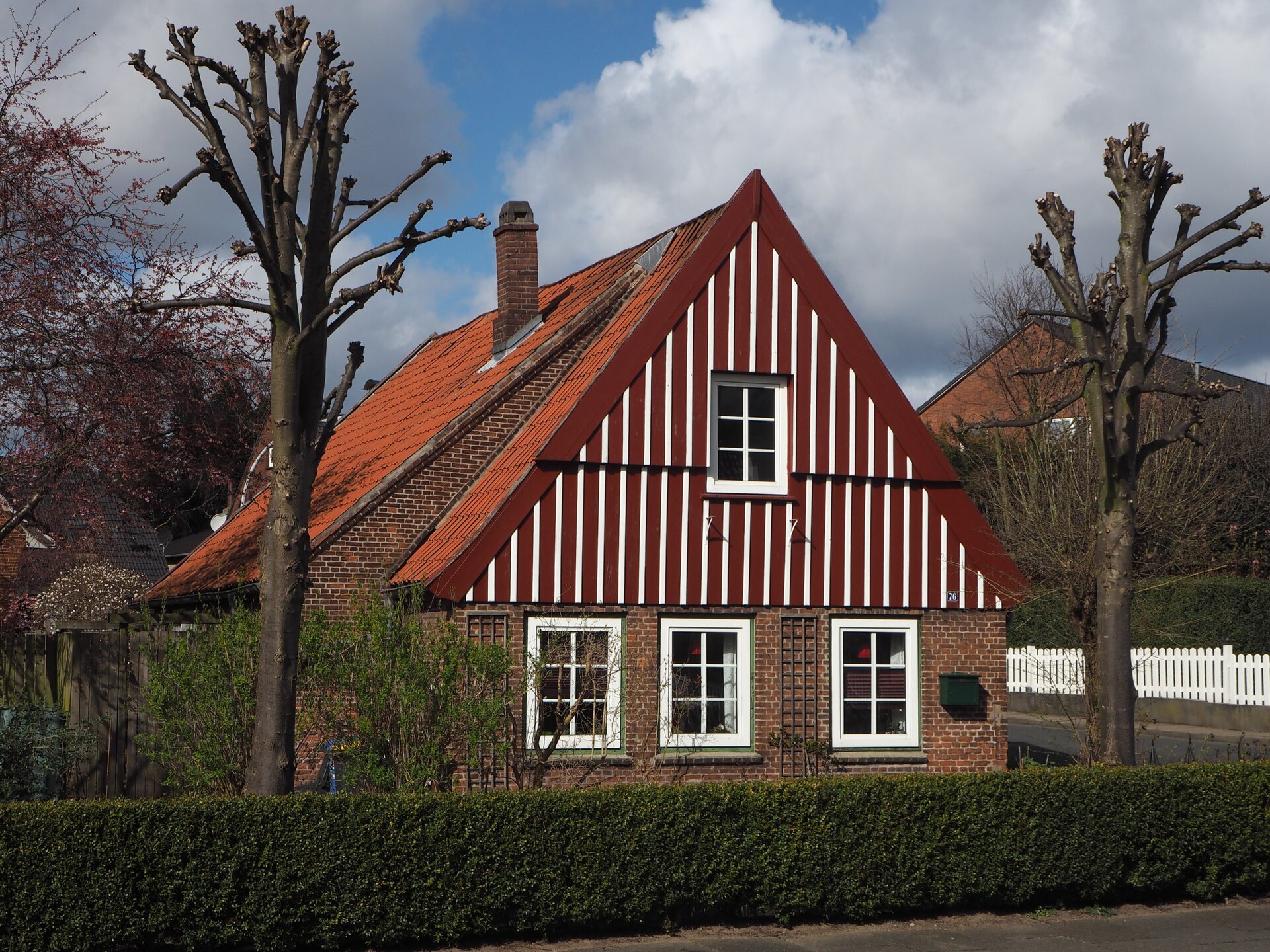
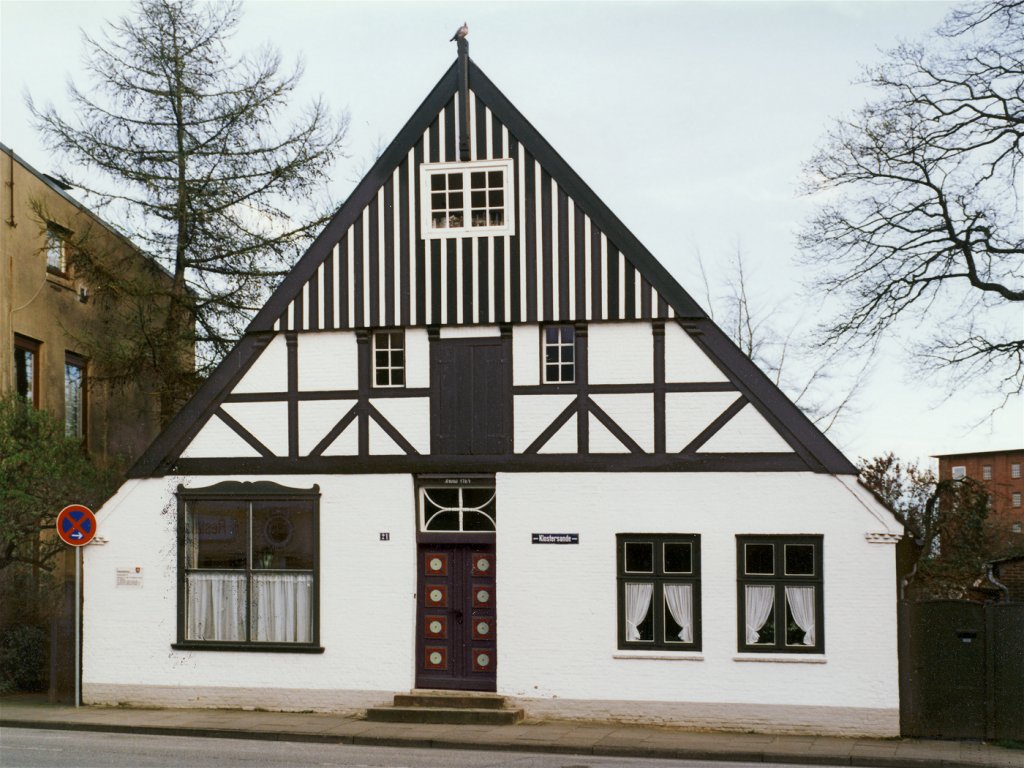
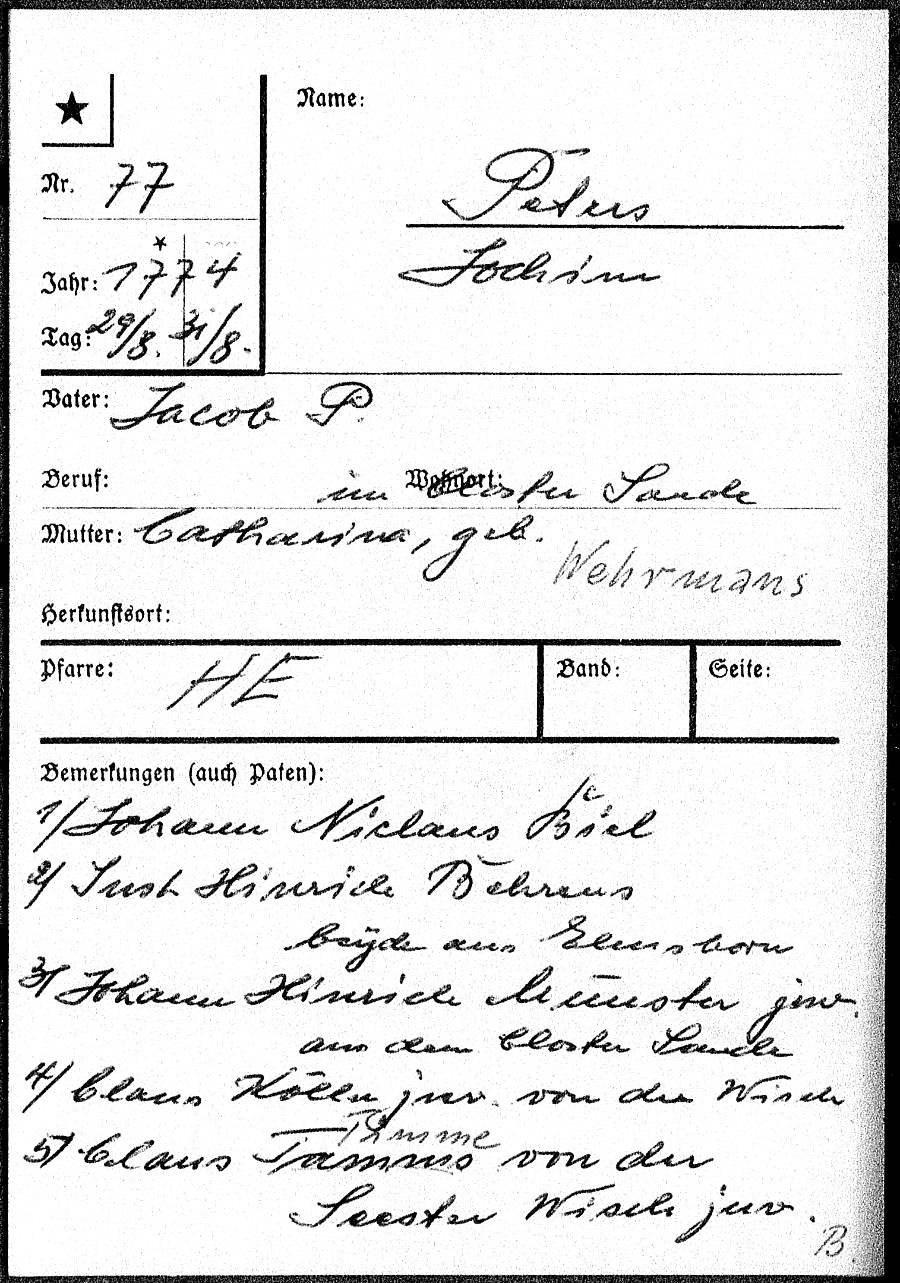
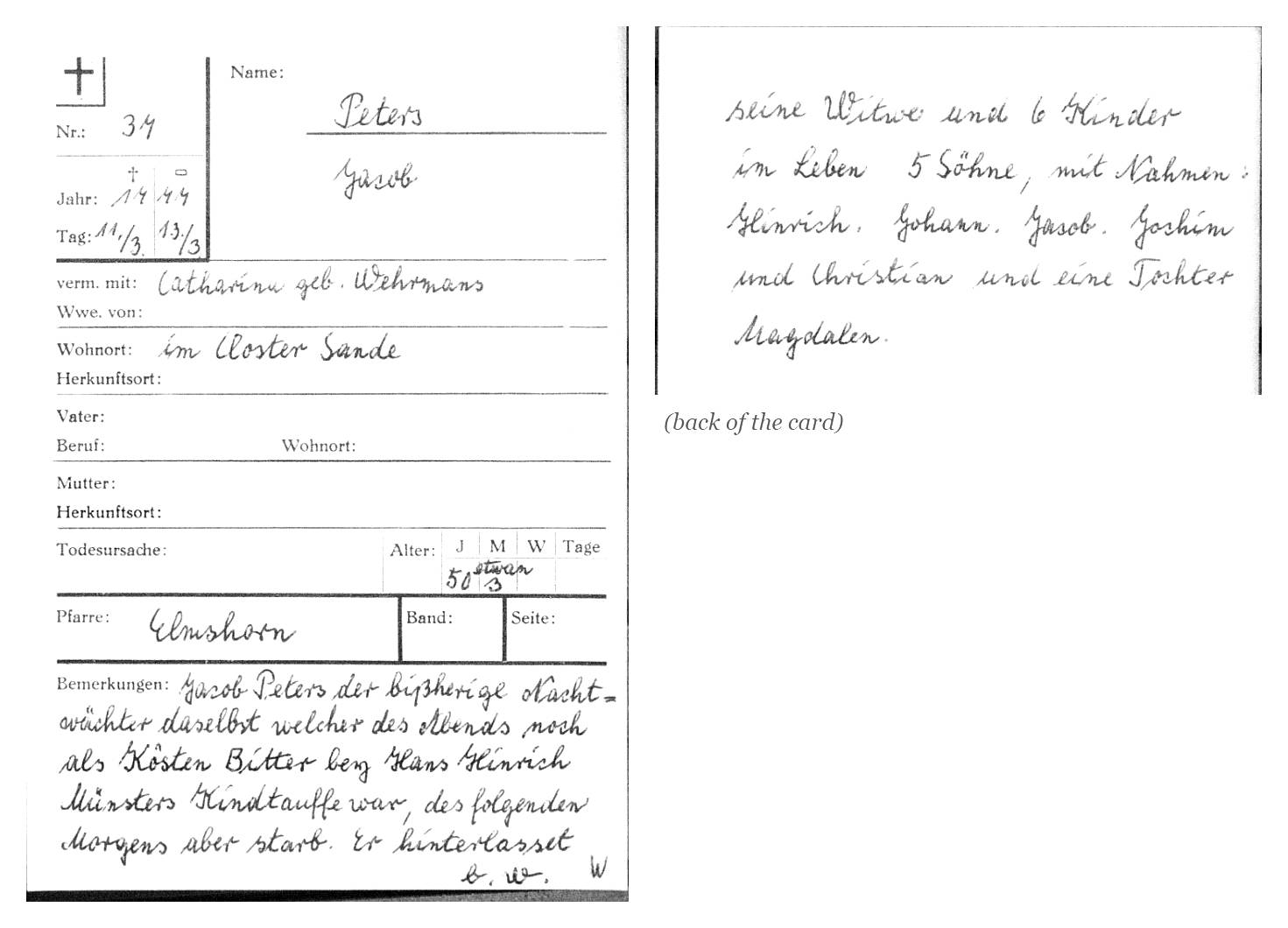
Jacob Peters was Klostersande’s night watchman. His burial card tells how he died. On an evening in March 1777 he served as Köstenbitter at the christening of Hans Hinrich Münster’s child; the Köstenbitter was the man who went from house to house inviting the guests to a wedding or christening and acted as master of ceremonies at the feast. He died the next morning, 11 March 1777, aged about fifty.
He left his widow Catharina and six children: Hinrich, Johann, Jacob, Jochim, Christian and a daughter, Magdalen. Jochim was two and a half; Christian was nine months old.
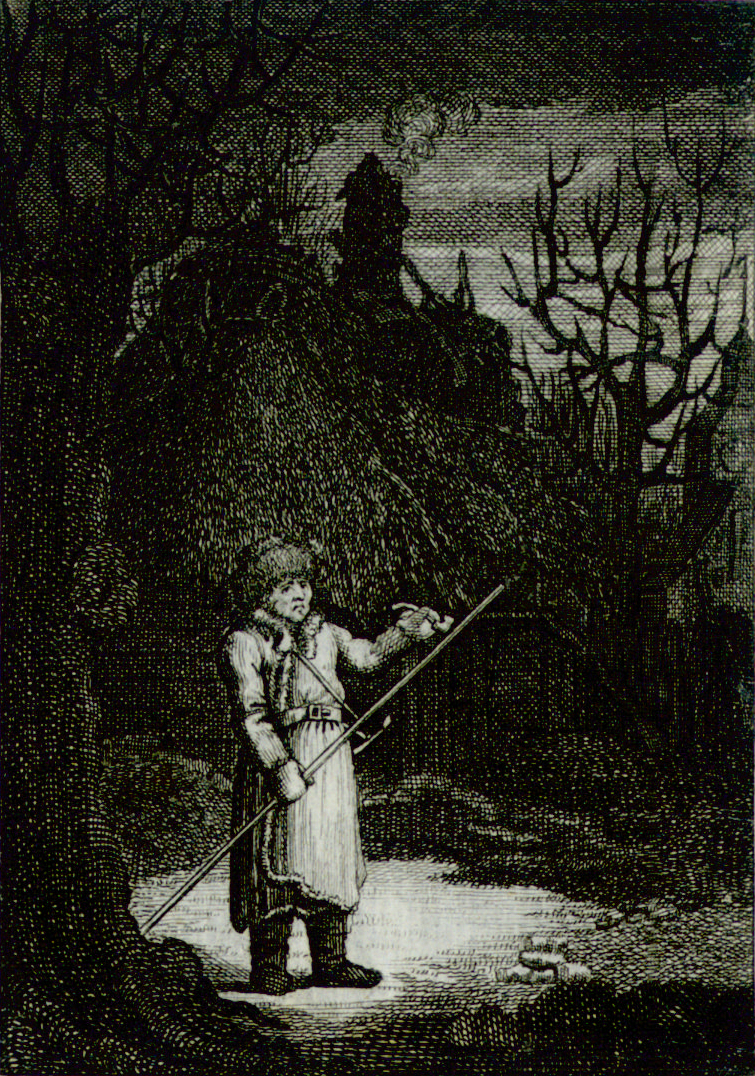
A village night watchman like Jacob walked the streets from dusk to dawn with a lantern, a staff and a horn. He called out the hours, watched for fire and thieves, and raised the alarm if anything went wrong. It was a modest job, but a trusted one. Jacob’s neighbours also trusted him to invite the guests and run the feast at their family celebrations.
Two threads that run through the family
Two Peters brides. The youngest son, Christian Peters (born 1776), is very probably the Christian Peters whose daughter Magdalena married Johann Scharmer in 1823 and died in 1825. If so, Johann’s two wives were first cousins: Magdalena was Christian’s daughter and Anna was Jochim’s. Joseph’s mother was his father’s first wife’s cousin.
The Münsters of Klostersande. The same family turns up three times. Johann Hinrich Münster the younger was a godfather at Jochim Peters’s baptism in 1774. Jacob Peters spent his last evening at Hans Hinrich Münster’s christening in 1777. And in 1847 Joseph’s father Johann Scharmer drowned aboard the ship of skipper Hans Hinrich Münster. Over seventy years the two families stayed neighbours, godparents and shipmates.
Hohenfelde and Glindesmoor
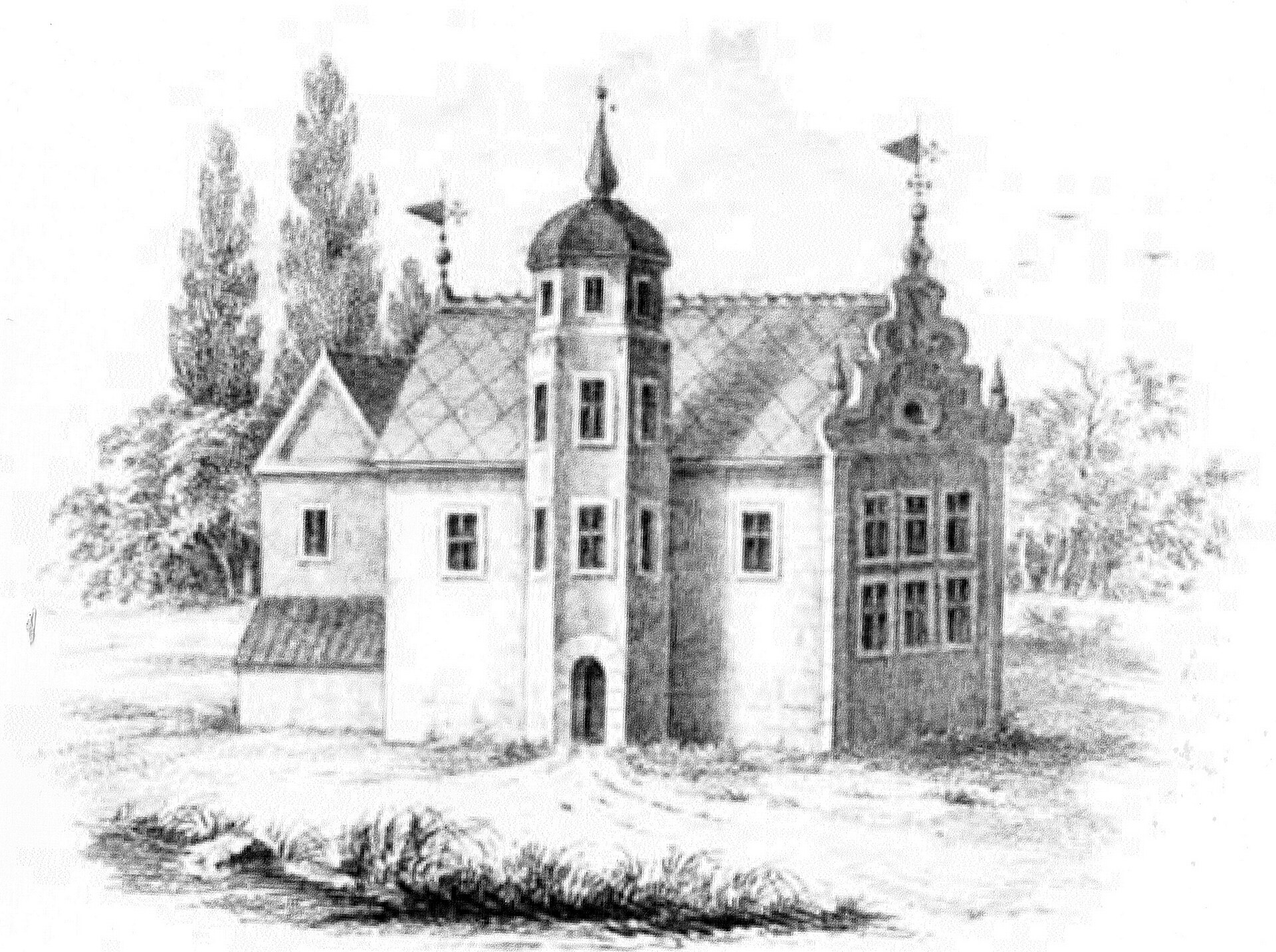
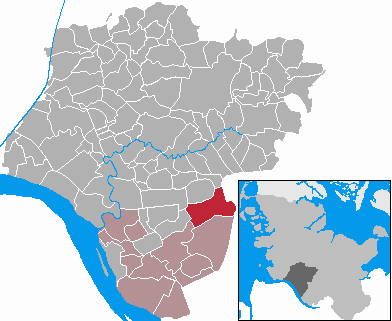
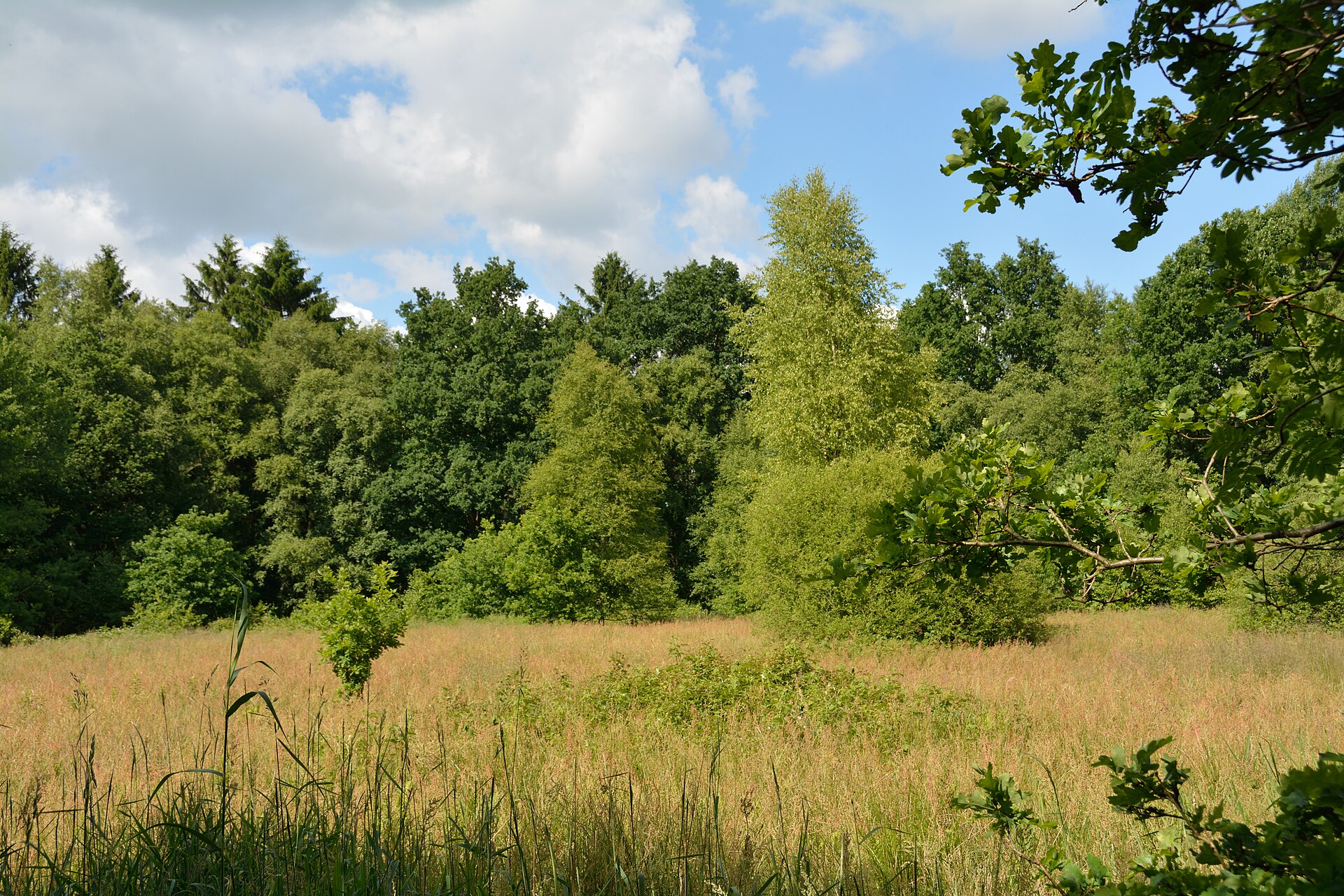
Hohenfelde is a farming village in the low, wet country between Elmshorn and Itzehoe, built around an old manor, Gut Hohenfelde. Glindesmoor, where Joseph’s grandfather Jochim lived, is one of its outlying hamlets on the edge of the moor. The village had its own parish church, whose registers go back to 1647.
What became of Anna?
After the wreck of 1847, Joseph’s mother was left a widow with three younger children. Her daughter Anna Magdalena married in Elmshorn in 1859 and again in 1871; her daughter Anna died there in 1874.
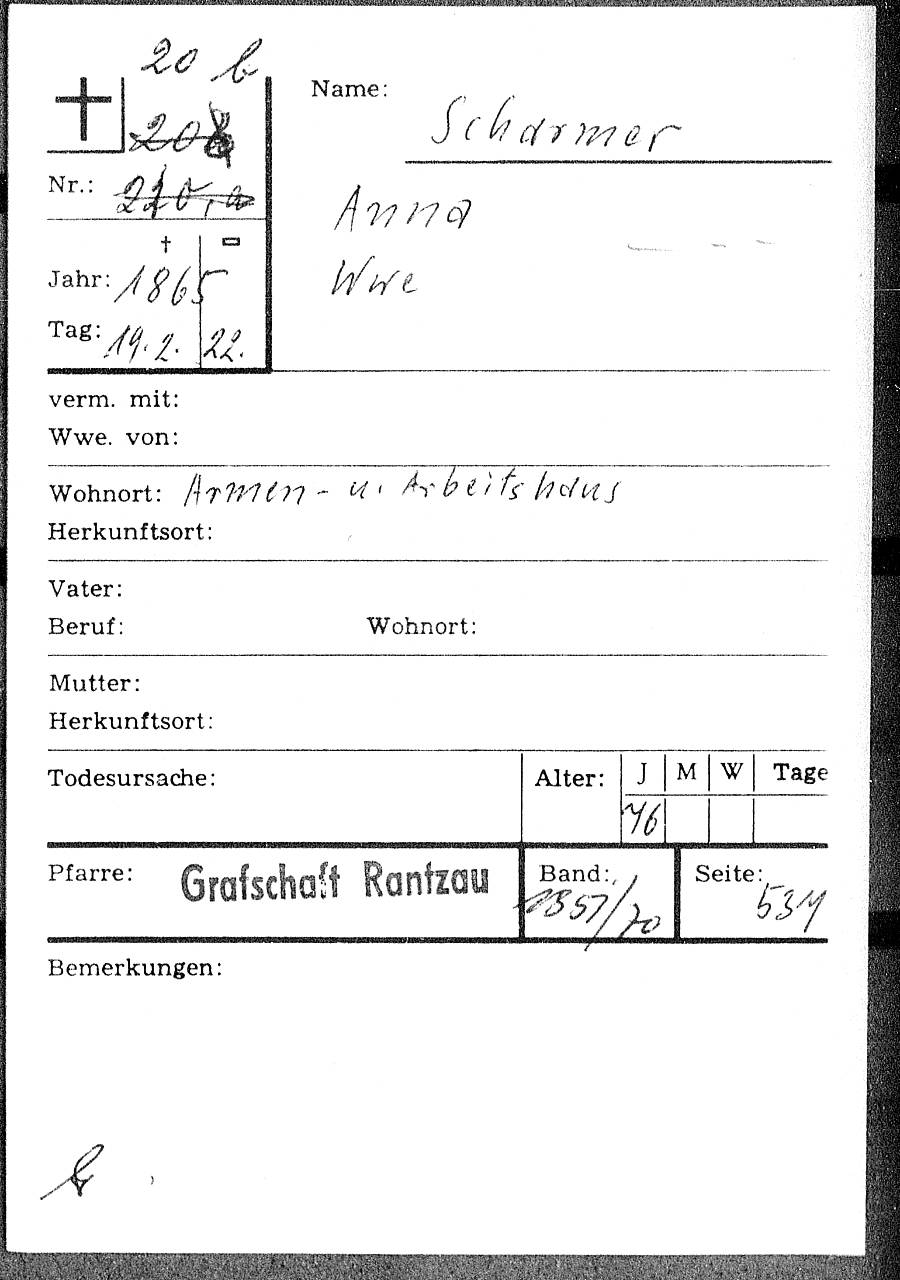
The only later trace that might be Anna herself is this card. A widow named Anna Scharmer died on 19 February 1865 in Elmshorn’s poor- and workhouse, the town’s refuge for the old and destitute, and was buried three days later. The register gives her age as 76. Joseph’s mother would have been 66, so either the age is wrong (common for the elderly poor) or this is another Scharmer widow. The entry doesn’t name her husband, so for now it stays a possibility rather than a fact.
By 1865 her son was a rancher in the American West. Whether he knew, or sent money home, the family story doesn’t say.
1847: the shipwreck and the leaving
Joseph’s obituary says he came to America in 1847 and “followed the sea for several years” as a ship’s carpenter, “sailing to many ports in different parts of the world.” The Elmshorn burial register for that same year records a disaster. A card in the parish burial index transcribes the entry:
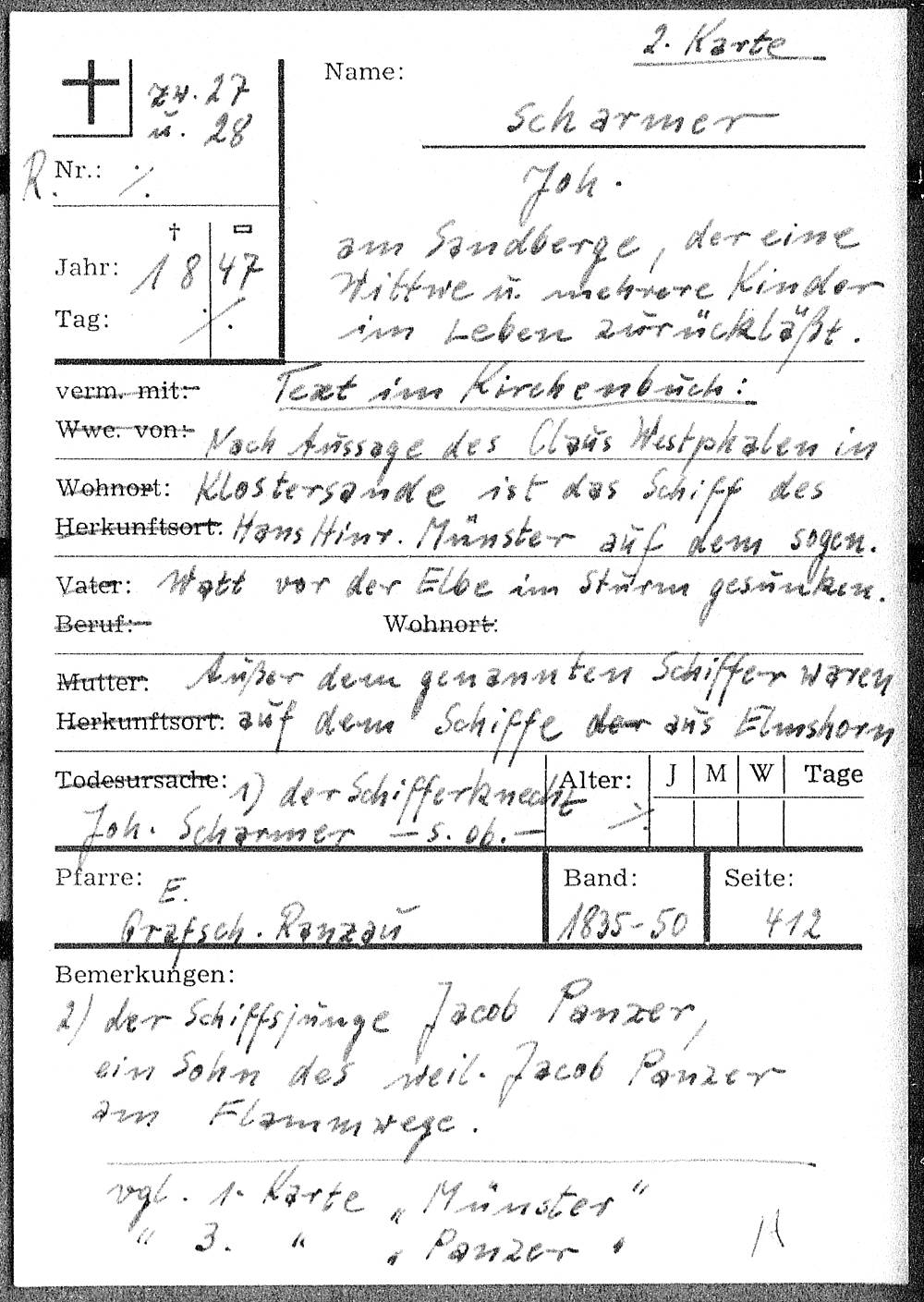
Scharmer, Joh., am Sandberge, who leaves a widow and several children living. According to the statement of Claus Westphalen of Klostersande, the ship of Hans Hinr. Münster sank in a storm on the so-called Watt off the Elbe. Besides the said skipper, there were on the ship, from Elmshorn: 1) the ship’s hand Joh. Scharmer; 2) the ship’s boy Jacob Panzer, a son of the late Jacob Panzer on the Flamweg.
Elmshorn burial register, 1847, translated from the parish card index. Index · Image of the card
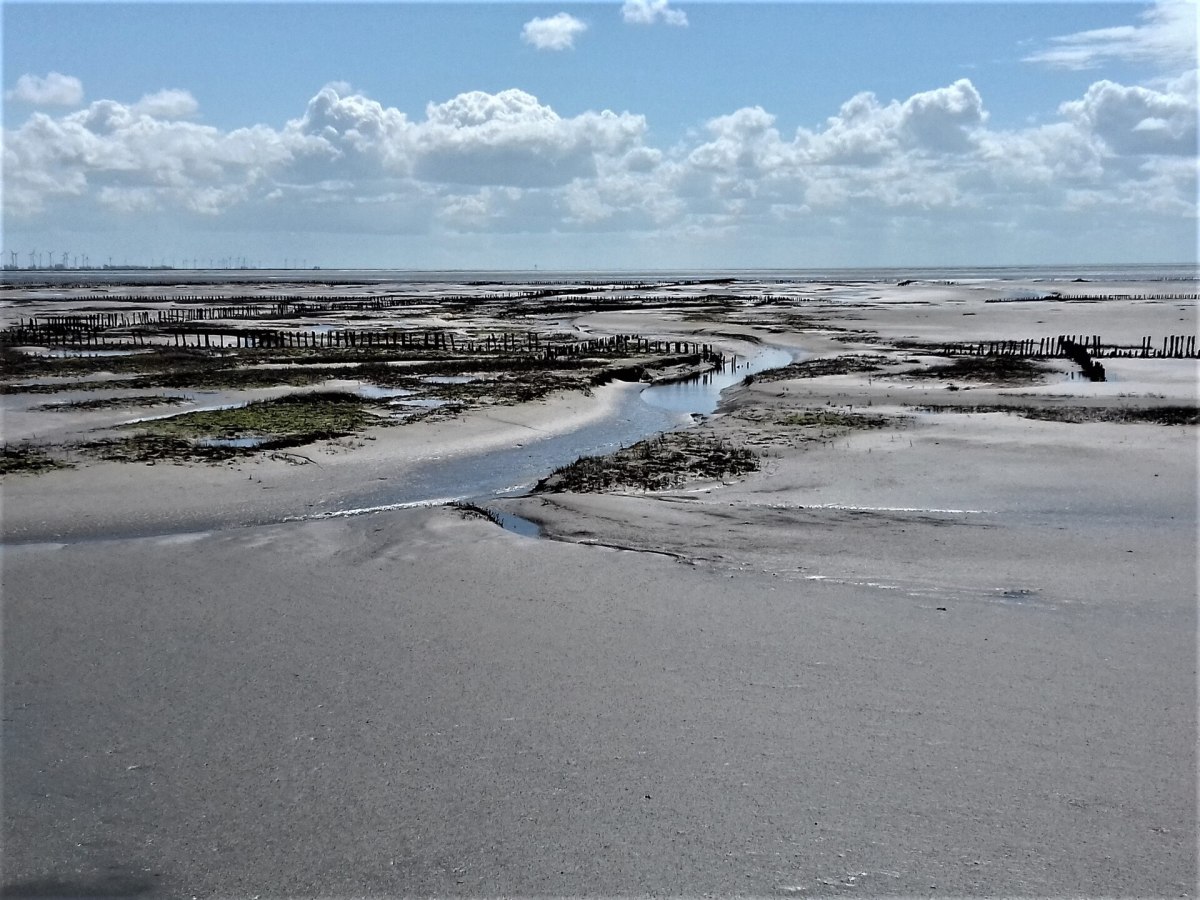
The Watt is the great expanse of sand and mud flats at the mouth of the Elbe, notorious for wrecking small ships in a storm. The drowned seaman Johann Scharmer of the Sandberg, with a widow and several children, was very likely Jochim’s father. Jochim, the eldest, was eighteen; his sisters were fifteen and twelve, his brother ten.
The skipper’s card
The skipper, Hans Hinrich Münster, has his own card in the same burial index. It tells the same story and adds what happened afterwards.
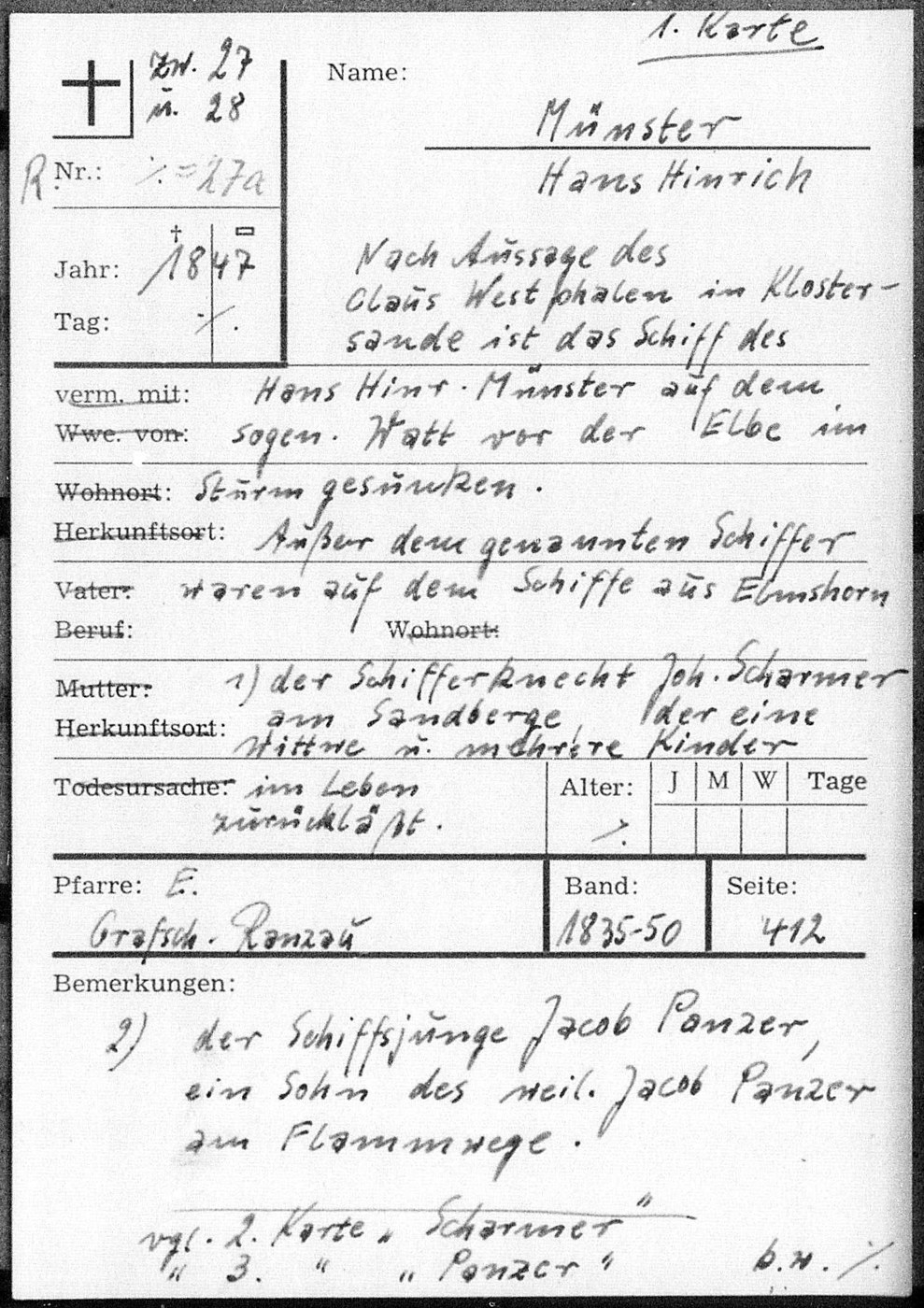
Münster, Hans Hinrich. According to the statement of Claus Westphalen of Klostersande, the ship of Hans Hinr. Münster sank in a storm on the so-called Watt off the Elbe. Besides the said skipper, there were on the ship from Elmshorn: 1) the ship’s hand Joh. Scharmer am Sandberge, who leaves a widow and several children living; 2) the ship’s boy Jacob Panzer, a son of the late Jacob Panzer on the Flamweg.
Elmshorn burial register, 1847, entered between nos. 27 and 28; translated from the parish card index.
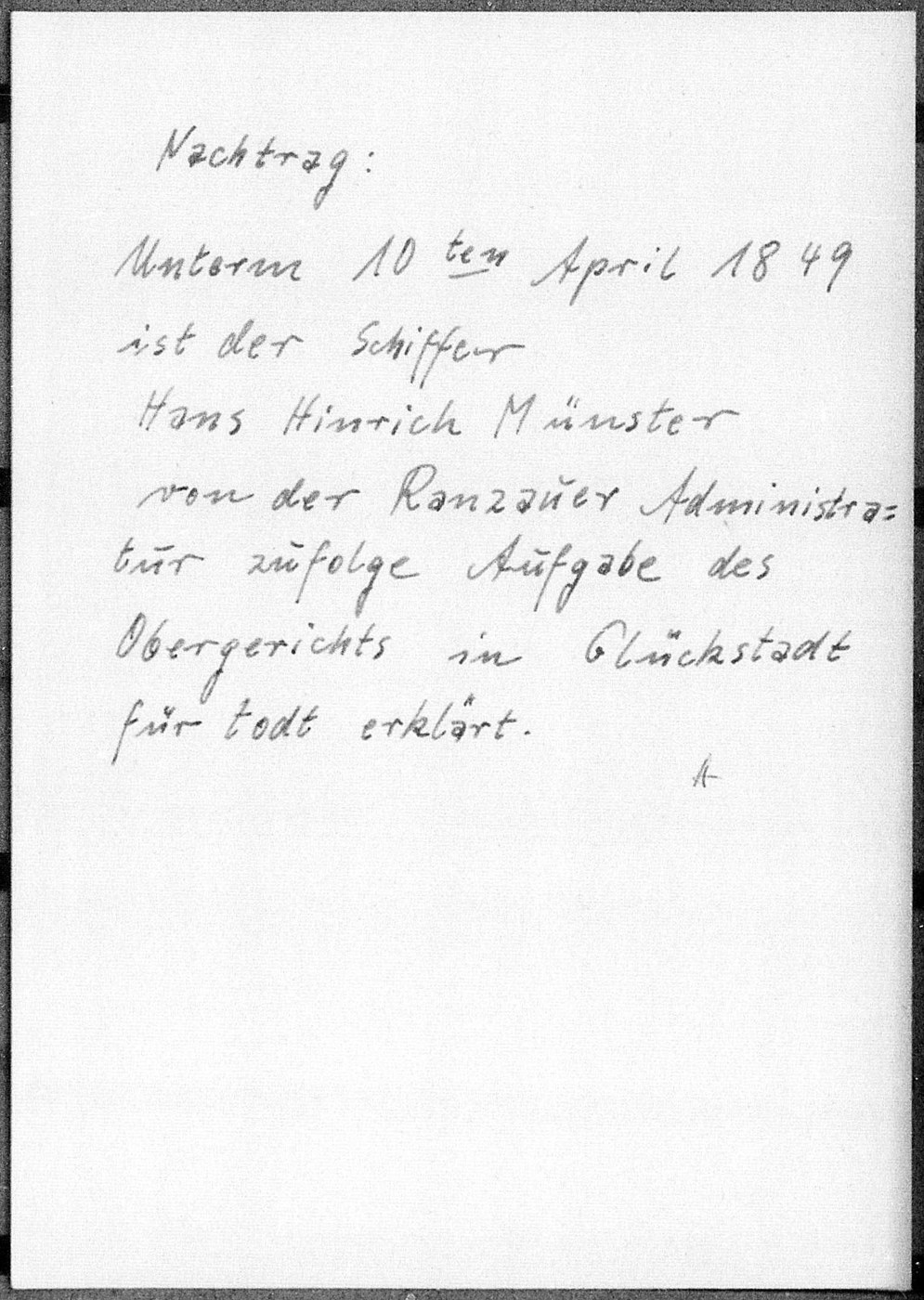
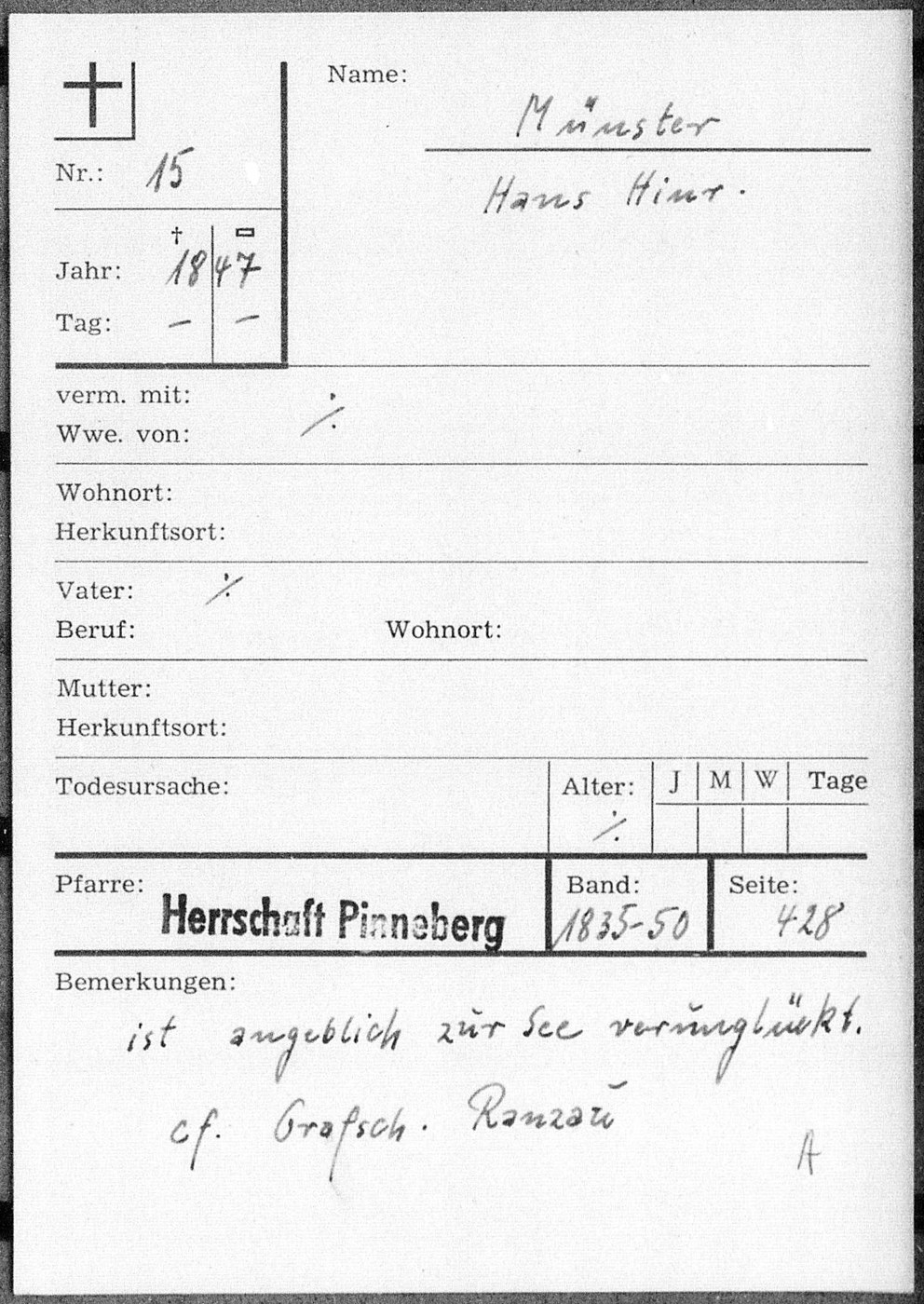
Three things stand out. No date of death is given: the entry was squeezed into the register between nos. 27 and 28 of 1847, among the burials of the spring. Nobody from the ship seems to have come home to tell what happened; the news came secondhand, from Claus Westphalen, and the Pinneberg clerk would only write that the skipper was “reportedly” lost. And it took a court order, two years later, before the skipper could be declared dead. As far as Elmshorn knew, the ship and everyone on it simply never came back.
The family’s story
From the family
“Joseph I went to sea with his father, who was a ship’s cabinet maker. Young Joseph learned some of the trade until the ship was lost at sea and all hands, save 18-year-old Joseph, were lost. The boy was picked up by a passing ship on its way to California and the gold rush.”
Laurel Sharmer, Joseph I’s granddaughter
Handed down for more than 170 years, the story keeps the heart of what happened. Checked against the records, this is how it stands:
- True: his father went to sea and was lost. Johann Scharmer drowned in 1847 when skipper Münster’s ship went down in a storm off the mouth of the Elbe.
- True: Joseph was eighteen. He turned eighteen on 25 May 1847, and 1847 is the year his obituary and the 1882 History of Nebraska both give for his leaving.
- True: Joseph learned a ship’s trade. Both sources say he “followed the sea for several years” as a ship’s carpenter.
- Not quite: his father’s job. The register calls Johann a Schiffsknecht, an ordinary ship’s hand, not a carpenter. The family may have carried the son’s trade back to the father.
- Not recorded: Joseph aboard. Both cards list everyone from Elmshorn on the ship: the skipper, Johann Scharmer and the boy Jacob Panzer. Joseph isn’t named. A survivor would have been the natural witness, yet the news came from someone else and the skipper’s fate was still unknown two years later. The records can’t rule it out, but they make it unlikely.
- Not quite: straight to the gold rush. The wreck was in the shallow flats at the river’s mouth, and gold wasn’t found in California until January 1848, so no ship in 1847 was bound for the gold rush. Joseph sailed the world for several years and reached California in 1853.
The likeliest reading is that the loss of his father and his own going to sea came together in the same year, and over the generations the two became one story.
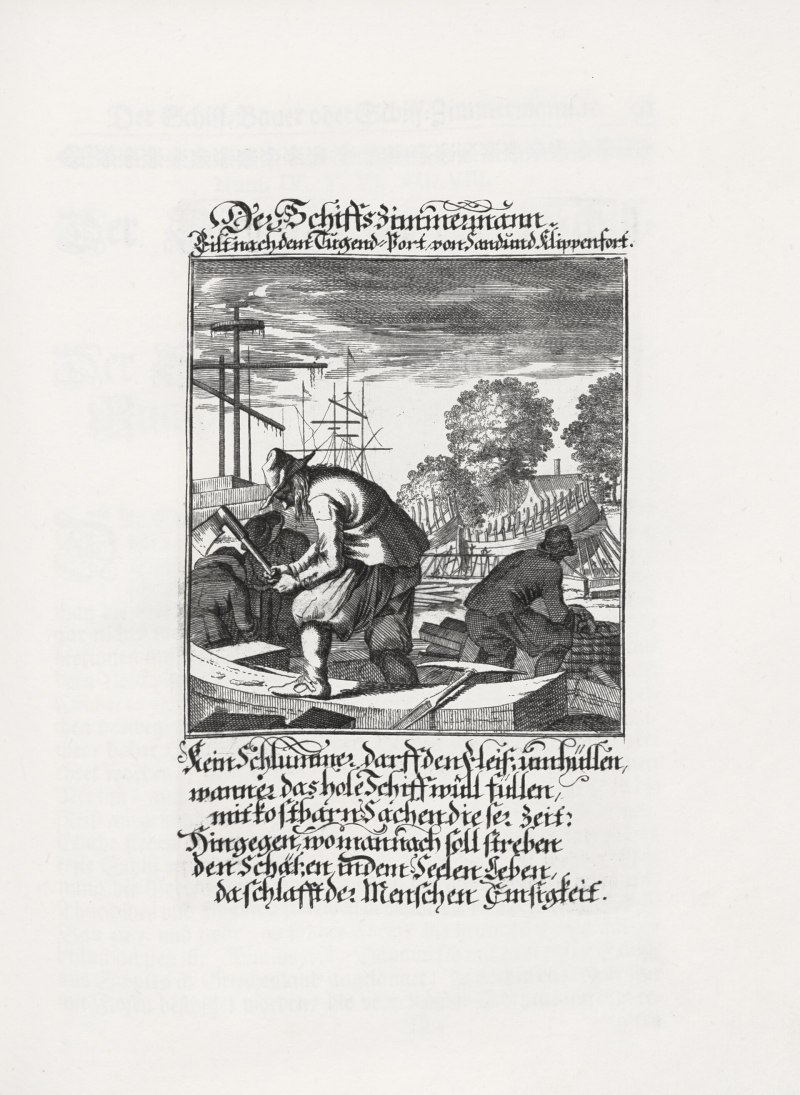
A ship’s carpenter was one of the most valued men aboard a sailing ship. He kept the hull, masts and spars sound, plugged leaks, made repairs at sea after storms, and in port mended the boats and fittings. It was skilled work, and a carpenter could find a berth on almost any ship in any port. It is the trade Joseph’s obituary gives him for his years at sea, from 1847 until he came ashore in California.
The sailor’s earring
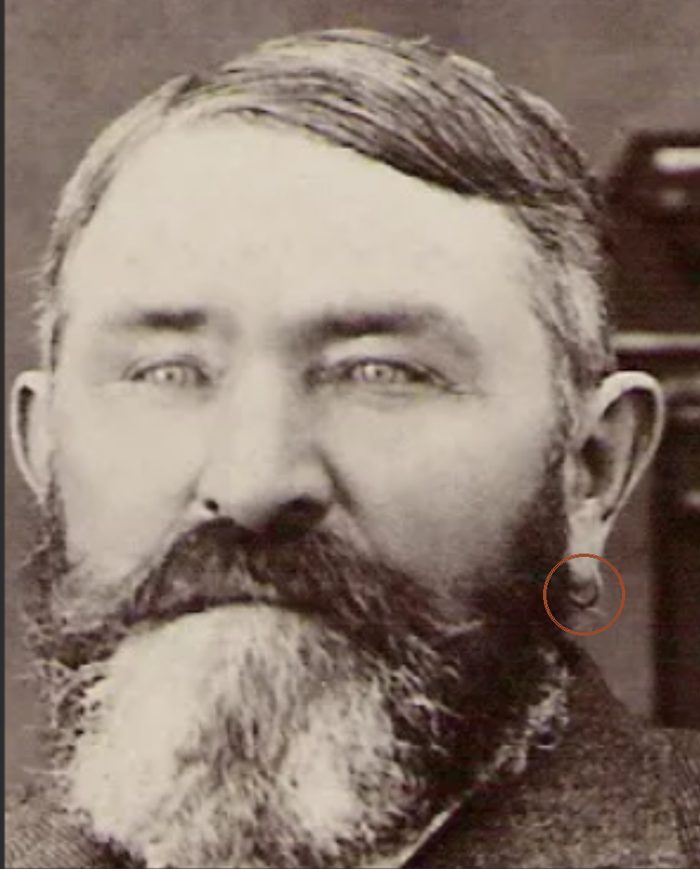
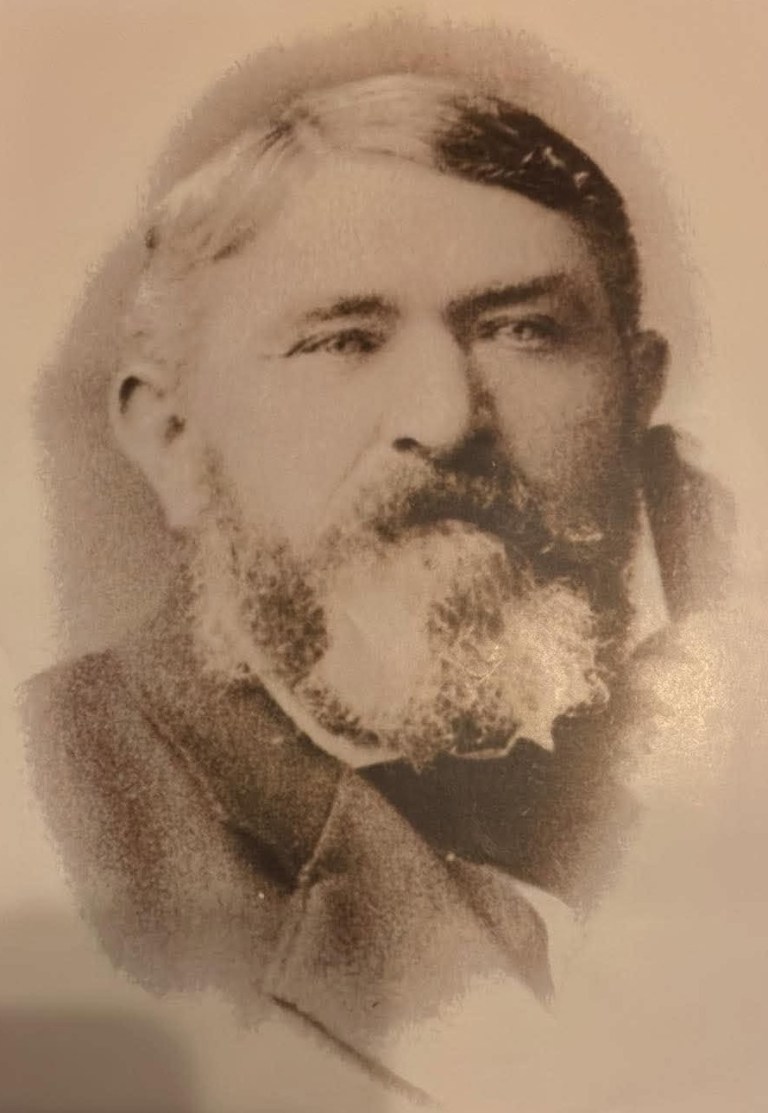
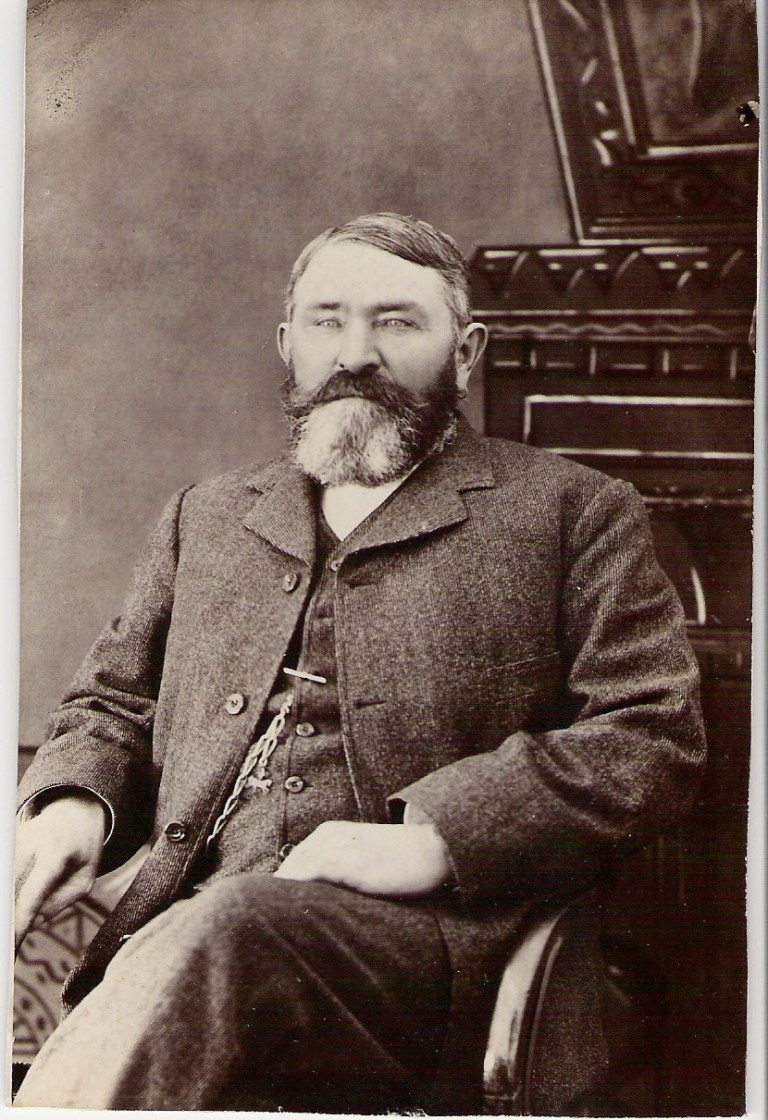
Look closely at Joseph’s portrait and there is a small ring in his left earlobe. In his day an earring on a man was the mark of a seafarer. European sailors wore them well into the twentieth century. The usual explanation is that if a sailor drowned and washed up on a foreign shore, the gold would pay for a Christian burial. Some deep-sea sailors had their initials engraved on theirs so they could be identified.
North German carpenters had the same custom. A journeyman carpenter wore a gold earring for the same reason: to pay for his burial if he died far from home. A man caught cheating had it torn out, which is where the German word Schlitzohr (“slit ear”), meaning a rogue, comes from.
Joseph was both: a sailor out of Elmshorn and a ship’s carpenter. The photograph can’t tell us which custom his earring came from, but the portrait shows a man long past his sailing years who was still wearing it.
Gold, cattle and a bank
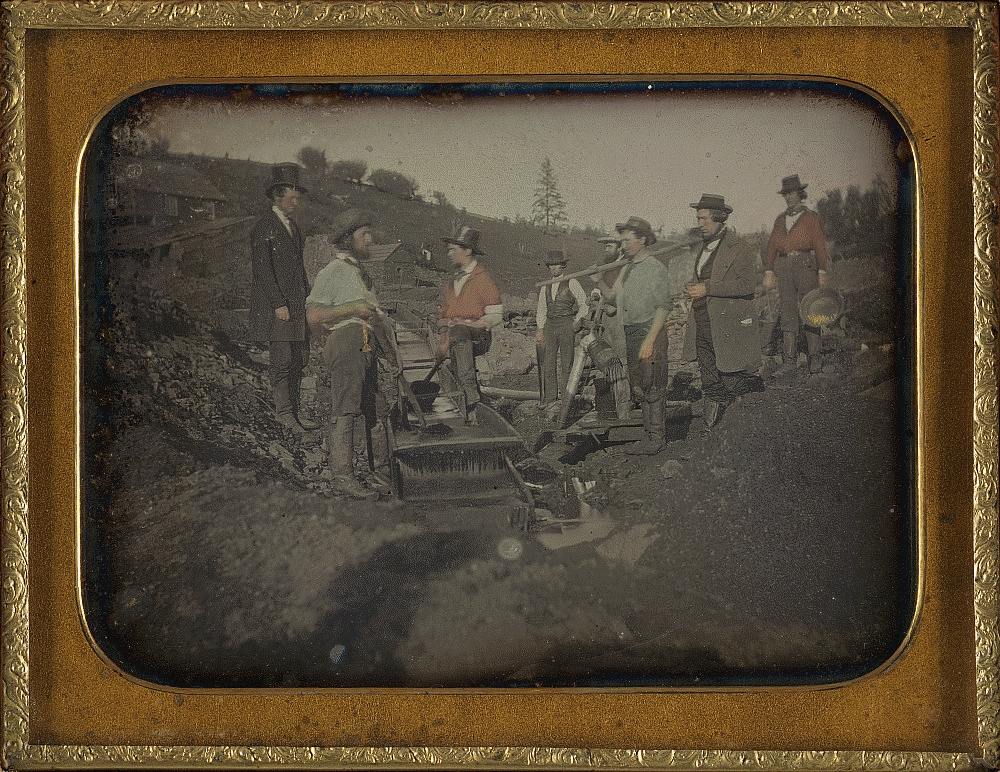
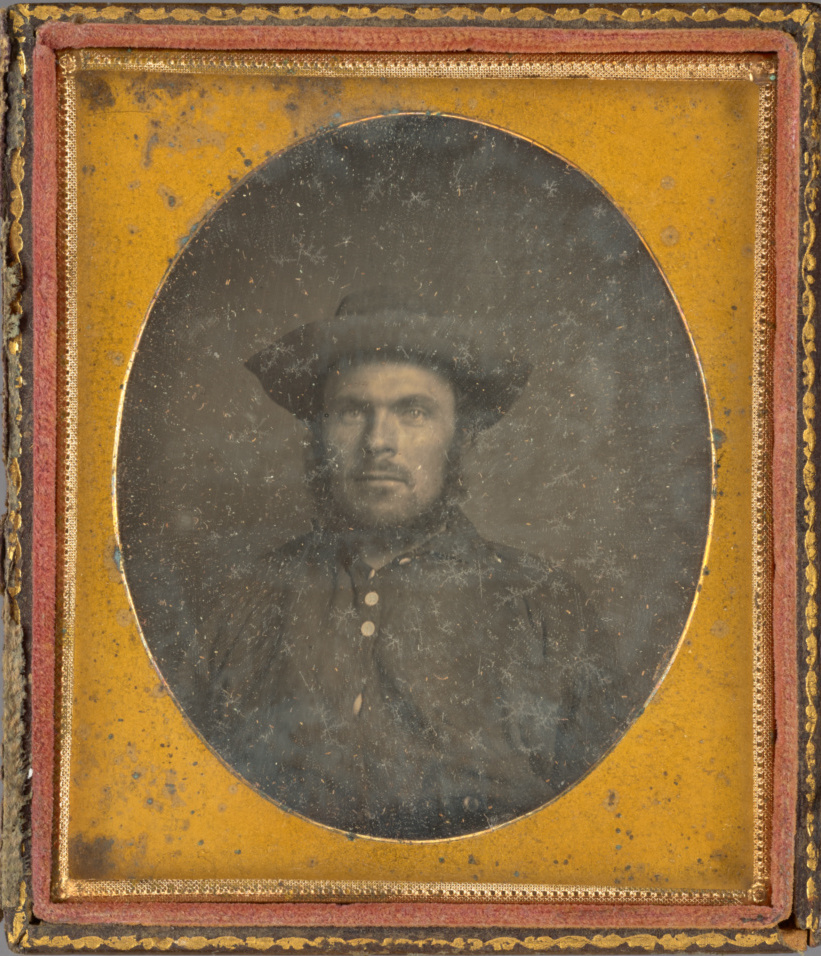
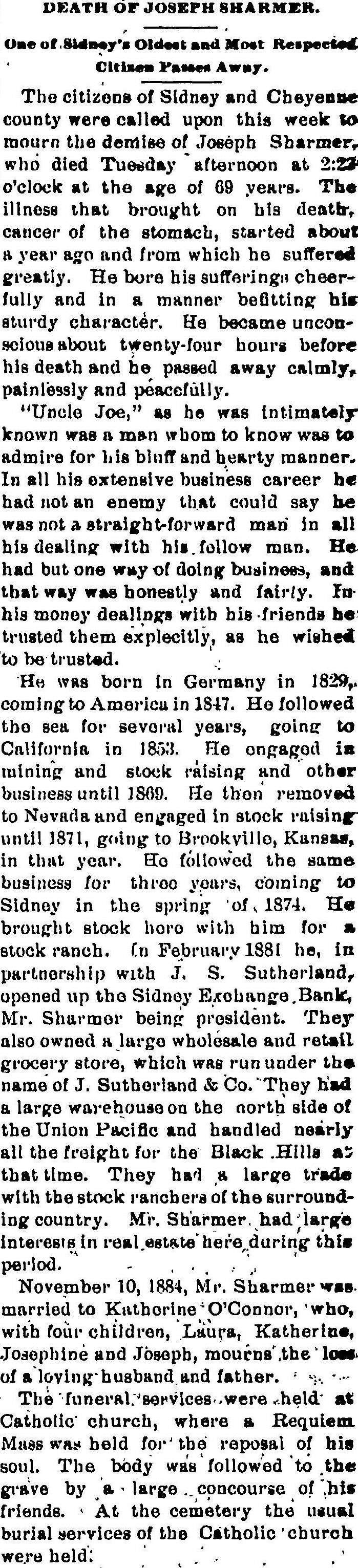
From his two obituaries and the 1882 History of the State of Nebraska:
| 1847–1853 | At sea as a ship’s carpenter, “sailing to many ports, in different parts of the world. He had a knowledge of the world equalled by few.” |
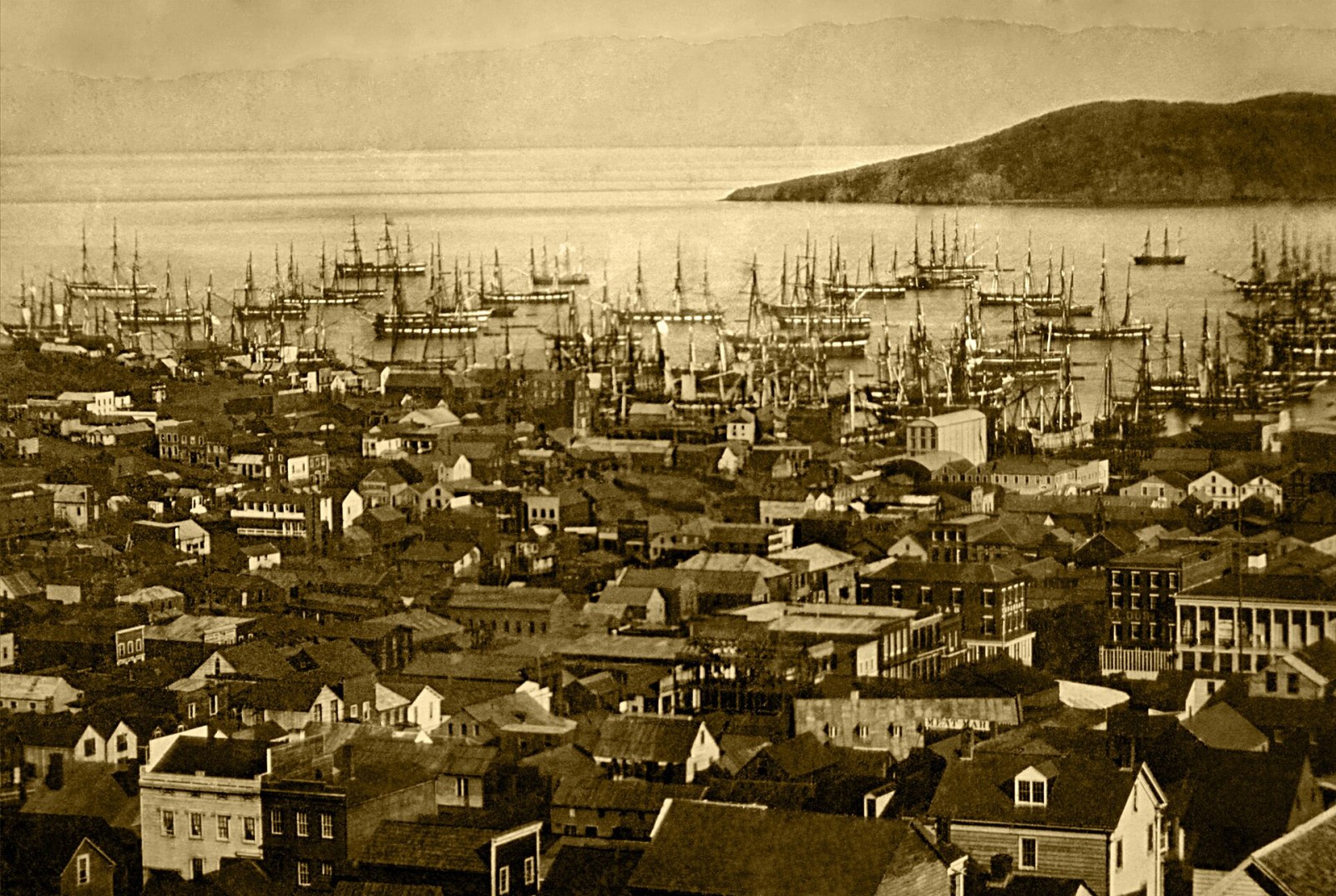
| 1853–1869 | California, in the last years of the Gold Rush: mining, stock raising “and other business,” where “he made much money.” |
| 1869–1871 | Nevada, raising stock. |
| 1871–1874 | Brookville, Kansas, a cattle town on the Kansas Pacific Railway, in the same business. |
| 1874 | Brings his cattle to Sidney, Nebraska, on the Union Pacific, and starts a ranch. |
| 1881 | With James Sutherland opens the Sidney Exchange Bank, with Joseph as president. Their wholesale and retail grocery, J. Sutherland & Co., has a warehouse beside the Union Pacific tracks and handles “nearly all the freight for the Black Hills.” He is one of the largest owners of real estate in town. |
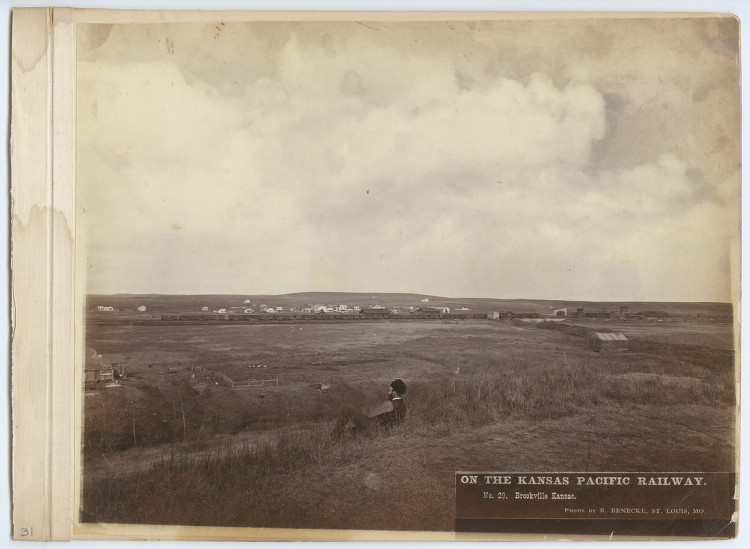
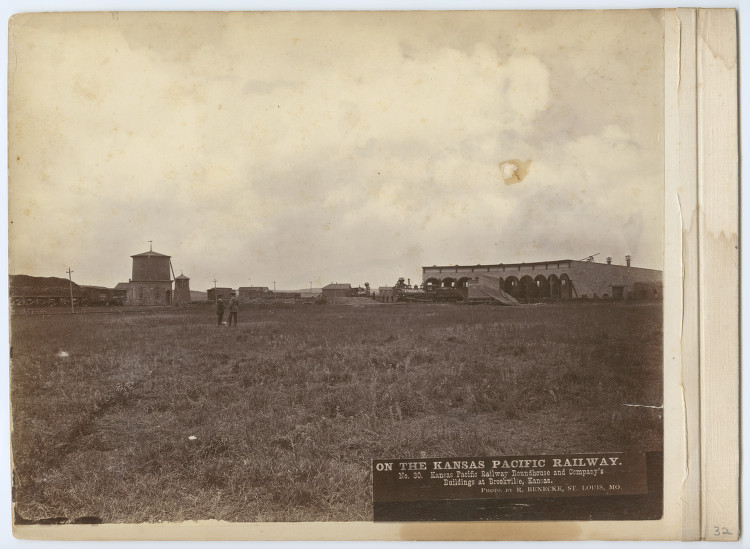
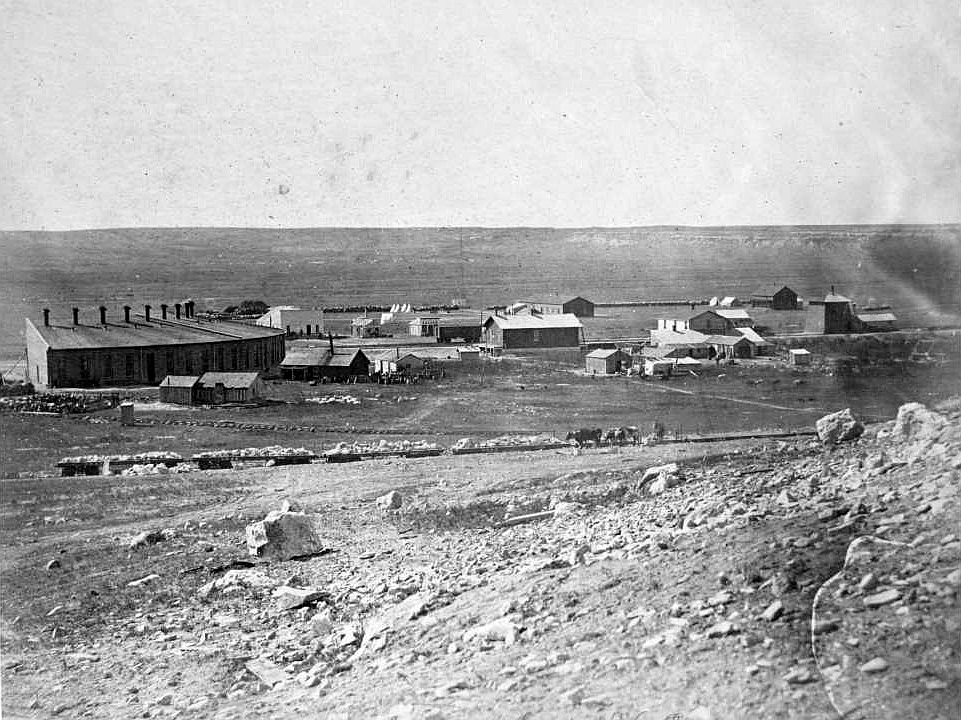
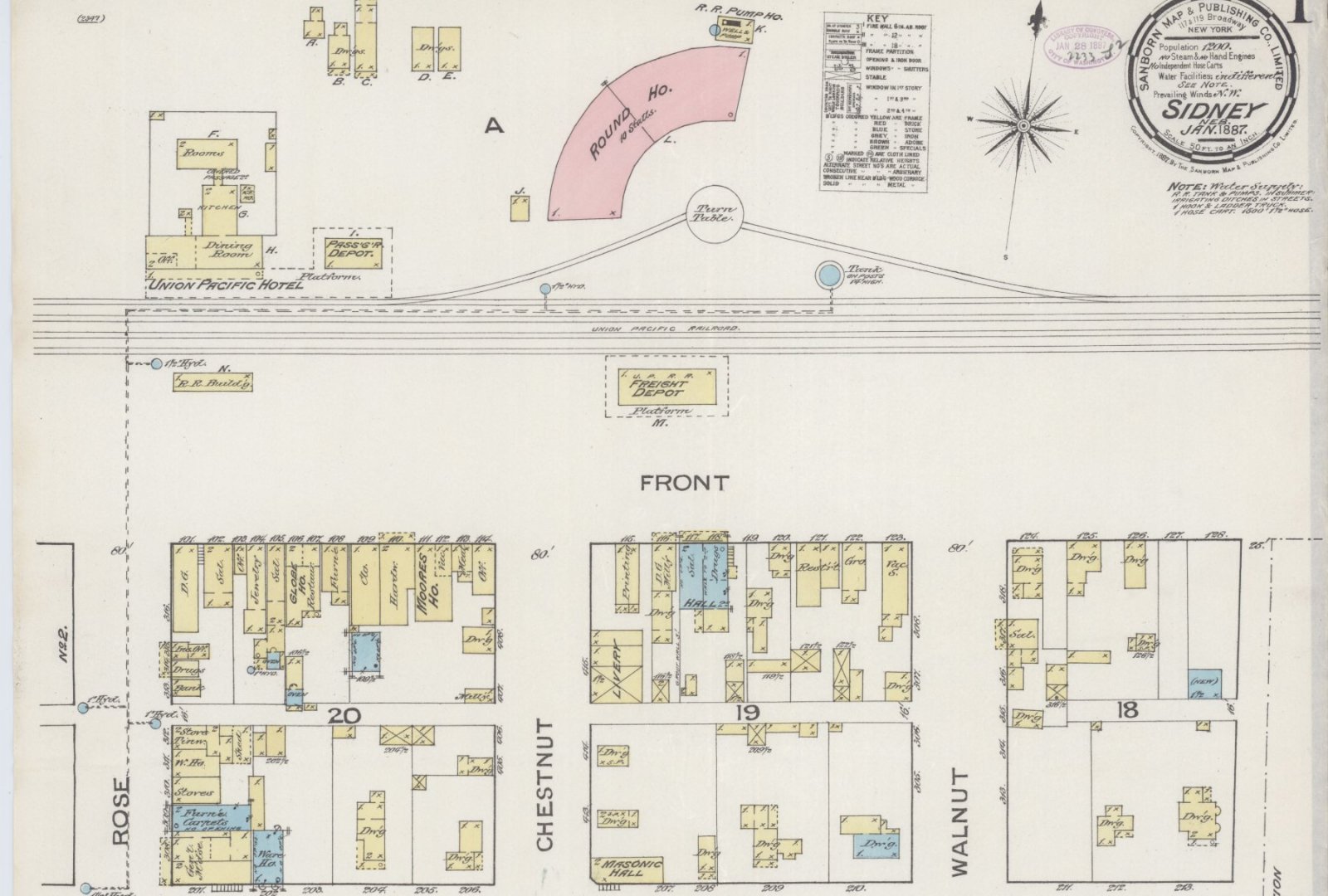
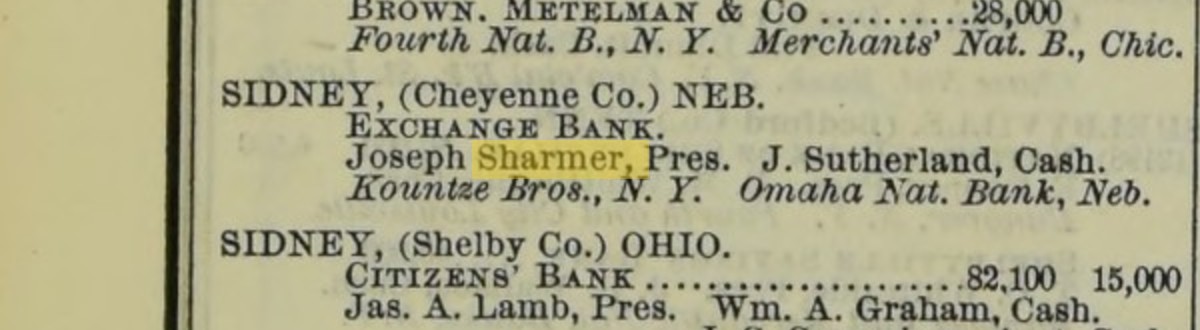
Bankers’ directories of the early 1880s list “Exchange Bank, Sidney, Cheyenne Co., Neb.: Joseph Sharmer, President; J. Sutherland, Cashier.”
He reached California in 1853, the same year as another young German born in 1829, Levi Strauss, who arrived in San Francisco early that year. Whether the two ever met, no one knows. A third near-contemporary came from Joseph’s own corner of Germany: the composer Johannes Brahms, born in Hamburg, about twenty miles from Elmshorn, lived from 1833 to 1897, almost the same span as Joseph.
The Sidney Joseph settled in was a rough railroad and cattle town. The 1882 History of the State of Nebraska says that although murders were frequent, “there has never to this day been a murderer executed legally” there; instead, crowds took men from the jail and hanged them from telegraph poles, in 1879 and again in 1881. The family remembers a line from another history of Nebraska: that when Joseph was elected mayor, the town was relieved, because from then on “all the hangings would be legal.” That book and the record of his time as mayor have not yet been found.
The State Bank of Sidney
Later he worked at the State Bank of Sidney, run by Samuel C. Morgan and Frank B. Johnson. When Morgan died in June 1889 the bank proved insolvent, owing Joseph $4,477.71 for his deposits and his work. He held a bundle of the bank’s notes and county warrants as security and went to court to keep them. He won in the district court in Cheyenne County, but on appeal by James J. McIntosh, Morgan’s administrator and later the bank’s receiver, the Nebraska Supreme Court in January 1895 cut his claim back to two warrants and a single note (Sharmer v. McIntosh, 43 Neb. 509). It is probably why Katie was left, three years later, “with scant supply of this world’s goods.” The family never forgot the name: Joe always called “McIntosh and Callahan” the men who, he said, tried to take Katie’s estate after she died (A Night Train to Denver).
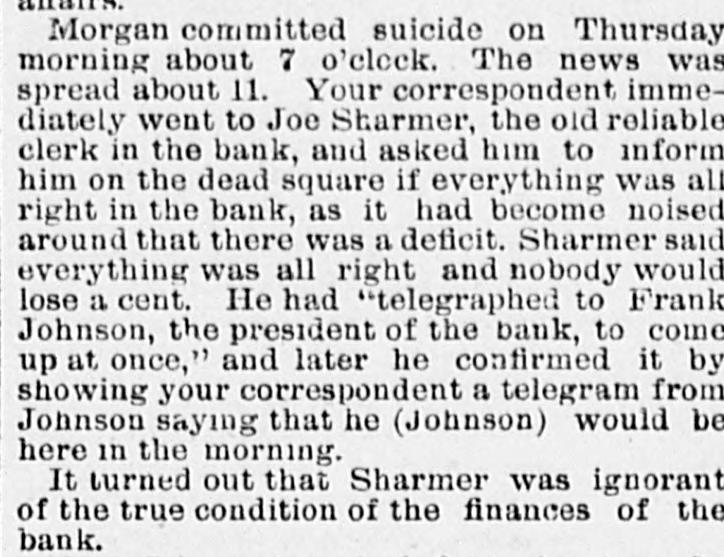
Morgan’s death was a suicide. On the morning of Thursday, 27 June 1889, S. C. “Chat” Morgan, the bank’s cashier, shot himself at home with a revolver he had sent his hired man to fetch from Joe Sharmer’s desk at the bank, saying he wanted to kill rats; when the man found him, he ran uptown to tell Joseph (Omaha Daily Bee and Beatrice Daily Express, 28 June 1889, via Nebraska Newspapers, University of Nebraska–Lincoln). A week later the Bee’s Sidney correspondent wrote that when the news spread he went straight to “Joe Sharmer, the old reliable clerk in the bank,” to ask whether everything was all right, “as it had become noised around that there was a deficit.” Joseph told him nobody would lose a cent and showed him a telegram from Frank Johnson, the bank’s president, saying he was on his way. “It turned out,” the paper added, “that Sharmer was ignorant of the true condition of the finances of the bank.” The next day Joseph went into the bank with Johnson and the county treasurer while the books were examined.
Read the decision in Nebraska Reports, vol. 43
Family and last years in Sidney
On 10 November 1884, at fifty-five, he married Catherine “Katie” O’Connor (recorded as Kate Conner), the daughter of Peter Conner and Catherine Caldwell of Quincy, Massachusetts, who had come to Sidney with her mother. Katie’s sister Lizzie and Joseph’s best friend Jacob Heintz were the witnesses. They had four children:
- Laura, born December 1885 (“Aunt Larry”)
- Kathryn, born 26 September 1887
- Josephine “Dodie”, born 22 November 1889
- Joseph, born 10 November 1897, who wrote the letters on this site
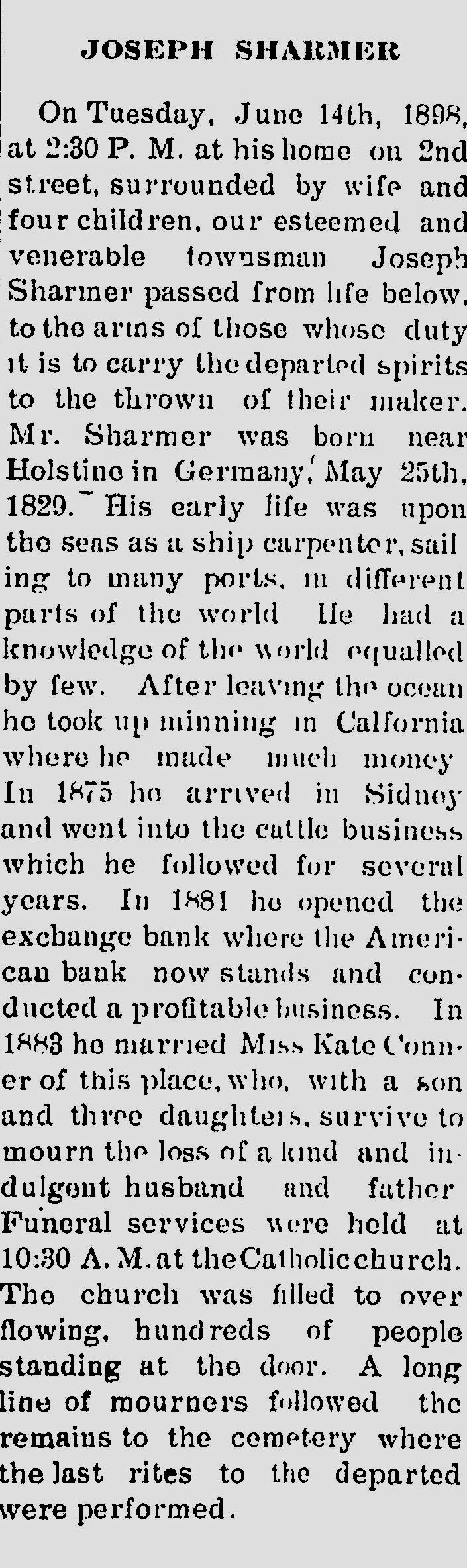
Joseph died at his home on Second Street at 2:30 in the afternoon of Tuesday, 14 June 1898, of stomach cancer, “surrounded by wife and four children.” His son Joe was seven months old. After a Requiem Mass at the Catholic church, “filled to overflowing, hundreds of people standing at the door,” he was buried in Greenwood Cemetery. “‘Uncle Joe,’ as he was intimately known, was a man whom to know was to admire for his bluff and hearty manner.”
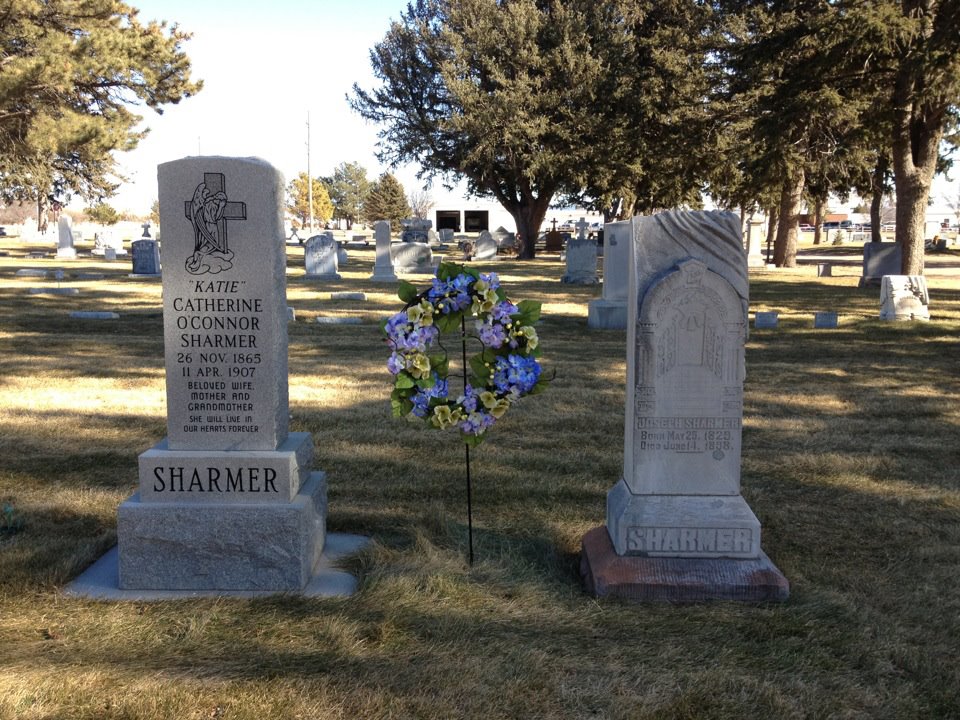
Timeline
| 25 May 1829 | Born in Elmshorn, Holstein; baptized Jochim Scharmer on 31 May |
| 1831–1837 | Sisters Anna Magdalena and Anna and brother Johann born in Elmshorn |
| 1847 | His father very likely drowned in a shipwreck off the Elbe; Jochim goes to sea and leaves for America |
| 1853 | Arrives in California |
| 1869 | Moves to Nevada |
| 1871 | Moves to Brookville, Kansas |
| 1874 | Brings his cattle to Sidney, Nebraska |
| February 1881 | Opens the Sidney Exchange Bank with James Sutherland |
| 10 Nov 1884 | Marries Kate Conner in Sidney |
| 1885–1897 | Laura, Kathryn, Josephine and Joseph born |
| June 1889 | The State Bank of Sidney fails, owing him $4,477.71 |
| January 1895 | Loses his case in the Nebraska Supreme Court |
| 14 June 1898 | Dies in Sidney, aged 69 |
The paper trail
Joseph Sharmer turns up in print again and again in the 1880s and 1890s. These are the pages themselves, from books and directories now in the public domain. Click any one to read it full size.
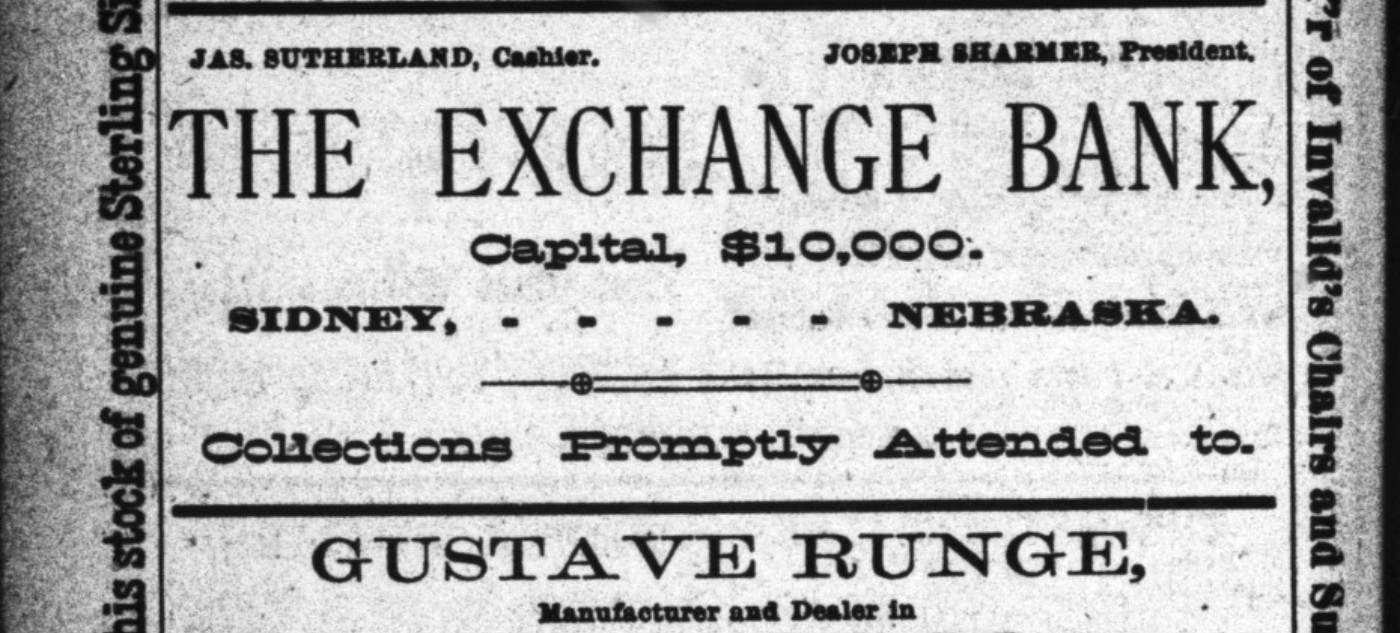
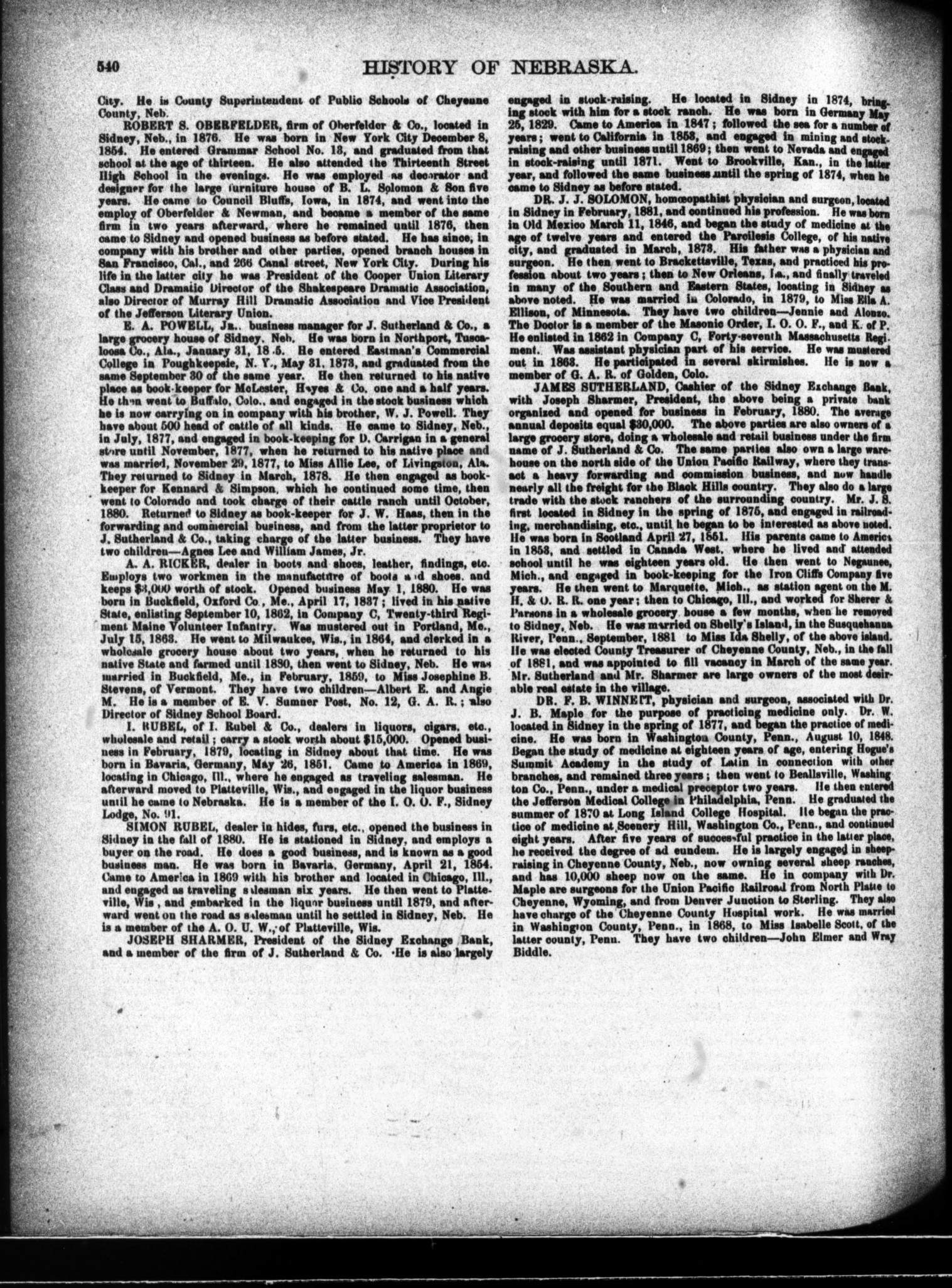
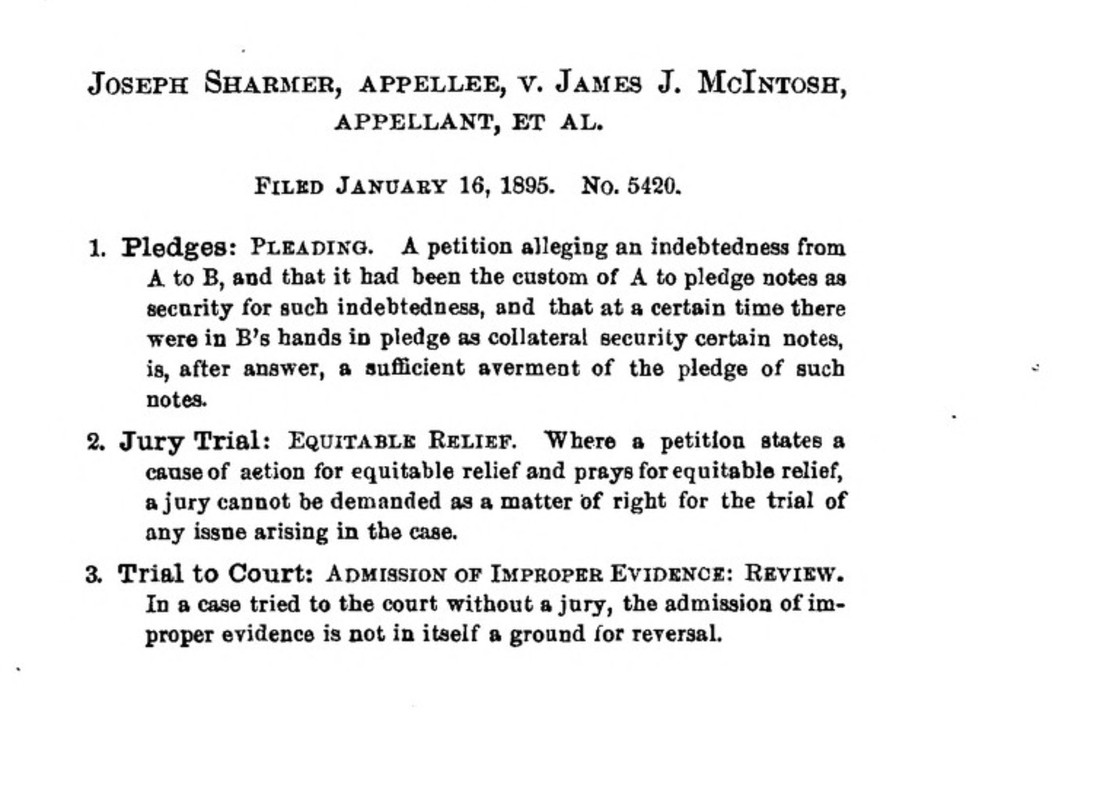

The Elmshorn church records on this page (baptisms of 1774, 1798 and 1829, the 1777 burial card, marriages of 1823 and 1829, and the 1847 burial cards of Johann Scharmer and skipper Münster, and the 1865 burial card) are shown with the permission of the church archive. The Nebraska marriage record and the census pages are on FamilySearch and are quoted on this page rather than reproduced; they are linked in the table below, and anyone with a free FamilySearch account can open the originals.
The records
Every record behind this page, with links. FamilySearch is free but needs a sign-in; once signed in, open an image and use the download button (the arrow at the top of the viewer) to save a copy.
| Record | What it says | Where to see it |
|---|---|---|
| Baptism, Elmshorn, 1829 | Jochim Scharmer, born 25 May, baptized 31 May; parents Johann Scharmer and Anna Peters | Index · Image |
| Marriage, Elmshorn, 1829 | Johann Scharmer and Anna Peters, 8 February 1829; their parents named | Index · Image |
| Marriage, Elmshorn, 1823 | Johann Scharmer and Magdalena Peters, 30 November 1823 | Index |
| Baptisms, Elmshorn | Anna Magdalena (1831), Anna (1834), Johann (1837) | 1831 · 1834 · 1837 |
| Burial, Elmshorn, 1847 | Joh. Scharmer, ship’s hand, drowned when Hans Hinrich Münster’s ship sank off the Elbe | Index · Image |
| Burials, Elmshorn, 1847 | Skipper Hans Hinrich Münster: his ship sank on the Watt; crew from Elmshorn named; declared dead by court order 10 April 1849; “reportedly lost at sea” (Pinneberg card) | Card · Back · Pinneberg card |
| Marriages, Elmshorn | Anna Magdalena Scharmer to Johann Thede (1859) and Georg Heinrich Hoffmann (1871) | 1859 · 1871 |
| Marriage, Sidney, 1884 | Joseph Sharmer, 52, born Holstein; parents John Sharmer and Annie Pearson | Index |
| Andreas’ History of Nebraska, 1882 | Biographical sketch of Joseph Sharmer | Kansas Collection |
| Sharmer v. McIntosh, 1895 | The State Bank of Sidney case | Nebraska Reports, vol. 43 |
| Obituaries, June 1898 | Sidney Telegraph and a second Sidney paper | On this site |
| 1900 census, Sidney | Katie and the four children | Index |
| Find a Grave | Memorial for Joseph “Uncle Joe” Sharmer | Memorial |
Two documents
A promissory note signed by Joseph and Katie Sharmer at Sidney in March 1893 (A Note for $150, 1893), and Joseph’s will, signed on 13 June 1898, the day before he died, leaving everything to Katie and declaring the “Sharmer cattle” hers (Uncle Joe’s Will, 1898).
Still to find
- The papers of Sharmer v. Johnson, on the Nebraska Supreme Court’s docket in April 1893; Frank B. Johnson was the State Bank’s president
- Whether he served as mayor of Sidney, and the history of Nebraska that tells the family’s “legal hangings” story
- A record giving his birthplace as Prussia; the records found so far say Holstein
- The ship and port where he first landed in America, and his naturalization papers, which may survive in California or Nebraska
- Whether he ever saw his mother and sisters again, and what became of his brother Johann
- Firm proof that Jochim Peters (born 1774) and Christian Peters (born 1776) are the grandfather and great-uncle shown here, for example in the Elmshorn marriage register for the 1790s
- When his mother Anna died. A widow named Anna Scharmer died in Elmshorn’s poor- and workhouse on 19 February 1865, aged 76 according to the register. Anna Peters would have been 66, so it may or may not be her.
- His father Johann’s baptism and the Scharmer family of Hohenfelde. The Hohenfelde church books survive (baptisms from 1713, marriages and burials earlier still) and can be viewed on Archion, the German church-records site.
- The exact date of the 1847 wreck. Neither burial card gives it; the court file behind the skipper’s 1849 declaration of death (High Court, Glückstadt) may, and may also say who was aboard
Picture credits: Elbe Ewer: Wilhelm Dreesen, about 1890 (public domain); the Watt at the Elbe mouth: 16Exul82, CC BY-SA 4.0; ship’s carpenter: Christoph Weigel, 1698 (public domain, Deutsche Fotothek); San Francisco harbor, 1850–51: daguerreotype, unknown maker (public domain); all via Wikimedia Commons. map of Holstein and Lauenburg, Royal Danish Sea Chart Archive, Copenhagen, 1848 (public domain, Bibliothèque nationale de France, via Wikimedia Commons). Holstein in 1848: Känsterle, CC BY-SA 3.0, via Wikimedia Commons. St. Nikolai tower: Dguendel, CC BY 3.0; St. Nikolai font and Sandberg house: Uwe Barghaan, CC BY 2.5 and CC BY 3.0; via Wikimedia Commons. Lower Elbe map: Gebrüder Suhr, Hamburg; Hamburg harbour: Adolph Friedrich Vollmer; gold-miner daguerreotypes: George H. Johnson (Nelson-Atkins Museum of Art and J. Paul Getty Museum); Brookville photographs: Robert Benecke, 1873 (SMU Central University Libraries); Sidney 1868: Arundel C. Hull; Sanborn map: Library of Congress. All public domain, via Wikimedia Commons. Obituaries: Sidney newspapers, 1898. Directory, history and court pages: Internet Archive (public domain). Headstone photographs: Joseph Sharmer IV. Gut Hohenfelde, 1862: Köhler and Roisternitz (public domain); Hohenfelde locator map: ClausG, CC BY-SA 3.0; Hohenfelder Moor: Nightflyer, CC BY 3.0; Hohenfelde church: Nightflyer, CC BY 3.0; Klostersande houses and the Krückau: Uwe Barghaan, CC BY 3.0 / CC BY-SA 3.0; night watchman: W. Arndt, 1795 (public domain); all via Wikimedia Commons. Elmshorn church records (1774 and 1798 baptism cards, 1777 burial card, 1823 and 1829 marriage registers, 1829 baptism register, 1847 burial cards of Johann Scharmer and skipper Münster, and the 1865 burial card): courtesy of the Landeskirchliches Archiv der Nordkirche, used with permission. If you are a descendant of the Scharmers, the Peterses or the Münsters of Elmshorn, please share a memory.

